Sales funnel strategy: How to build, optimize, and convert more in 2026
 20 minutes
 23.06.2026
Most B2B SaaS companies lose 80–90% of their pipeline before it ever reaches a sales conversation. The gap is rarely the product or the team. It is the absence of a coherent strategy connecting the moment someone lands on the site to the moment they sign a contract.
A sales funnel strategy changes that. It is the operating system for your revenue, not just a marketing diagram. Companies that treat the funnel as a living system, with assigned owners, defined conversion criteria, and regular optimization cycles, consistently outperform those that treat it as a one-time setup project.
This guide covers what a sales funnel strategy actually is, the playbook for each of the four funnel stages, how to build one from scratch in five steps, what B2B SaaS teams specifically need to do differently, and seven optimization levers ranked by ROI.
What is a sales funnel strategy?
A sales funnel strategy is a deliberate plan for moving potential customers from first awareness of your product to a closed deal, with specific tactics, content, and automation assigned to each stage. It defines what happens at Awareness, Interest, Decision, and Action, who is responsible at each point, and how you measure whether the system is working.
The word “strategy” is what separates this from a diagram on a whiteboard. A funnel strategy specifies the offer at each stage, the channel mix, the qualification criteria, and the handoff rules between marketing and sales. Without those specifics, leads fall through gaps that are invisible until you check the numbers at the end of the quarter.
The classic AIDA model (Awareness, Interest, Desire, Action) describes buyer psychology. A sales funnel strategy operationalizes that into a documented sales process: it assigns ownership, content, and measurement to every transition in the buyer journey. A marketing funnel covers awareness and intent; a full funnel strategy extends further to include qualification, sales handoff, and retention logic that marketing alone does not own.
The goal is conversion efficiency: more of the right people progressing through each stage, fewer dropping out because of friction, slow response times, or messaging that misses where the buyer actually is in their decision process.
Learn more about the fundamentals of what a sales funnel is before building the strategy on top of it. The structural understanding matters because the strategy decisions at each stage flow directly from how buyers behave, not from how we prefer to sell.
The funnel strategy for each stage
Each stage of the sales funnel requires a different playbook. What works at the top, high-volume and low-commitment content, destroys conversion at the bottom, where buyers need proof and speed. Mapping a specific strategy to each stage is the difference between a funnel that leaks and one that compounds over time.
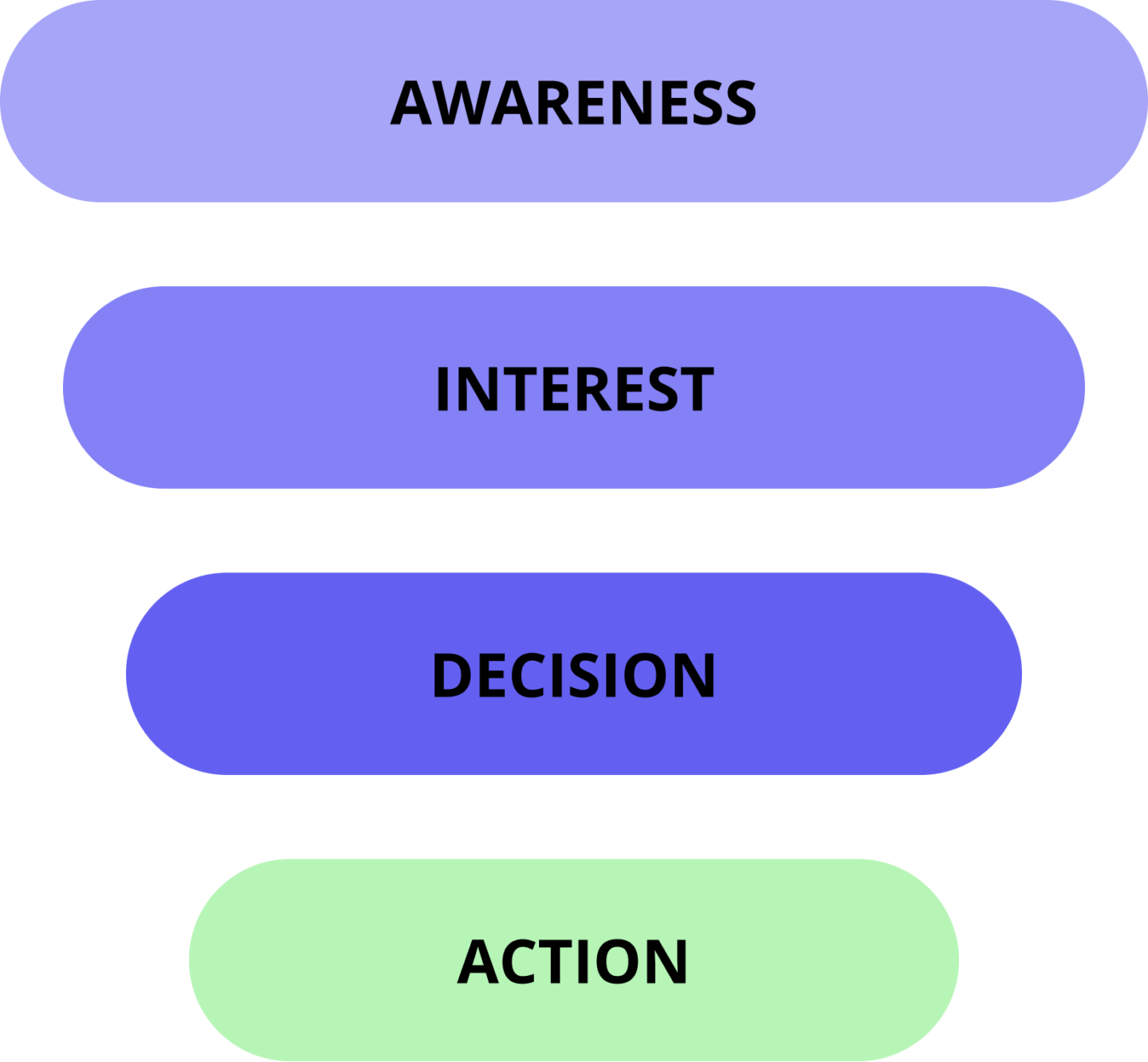
Awareness
At Awareness, the buyer does not know they have a solvable problem yet. Your job is to surface the cost of the status quo. Organic search, paid social, and LinkedIn thought leadership are the main acquisition channels here.
The content goal at Awareness is to frame the problem in terms the buyer recognizes and to build enough trust that they want to keep reading. Conversion metrics at this stage are traffic volume, organic CTR, and returning visitor rate, not demo bookings. Using demo-booking CTAs on awareness-stage content is one of the most common funnel strategy mistakes because it signals to the buyer that you are selling before they are ready to buy.
Interest
At Interest, the buyer is actively researching solutions. They are reading comparison articles, watching product walkthroughs, and consuming use-case content. Your job is to build conviction that the category of solution is worth investing in, and that your product belongs in the evaluation.
Gated assets (ROI calculators, benchmark reports, teardowns of real funnels) convert attention into contact data at this stage. Email nurture sequences then move contacts toward a decision without requiring SDR intervention on every lead. This is where most B2B SaaS funnels lose their biggest batch of leads: promising Interest signals that never progress because no follow-up triggers, no nurture sequence exists, and the prospect cools off while evaluating a competitor.
Decision
At Decision, the buyer is comparing specific vendors. Speed matters here more than almost anything else. According to GoConsensus research, responding to an inbound lead within 1 minute increases conversion by 400%. The same research found that 30% of prospects go to a competitor if they do not get a fast response.
Decision-stage tactics: demo booking, pricing page visits, ROI calculators, case studies, and direct SDR or AI outreach within minutes of the qualifying signal. The playbook is speed plus personalization, delivered through whatever channel the buyer is most likely to respond to.
Action and retention
Action is the close, but the funnel does not end there. Retention and expansion live in the same funnel logic. A customer who renews and expands drives a higher customer lifetime value than one who churns after year one, and the cost of expanding an existing account is a fraction of acquiring a new one.
Onboarding sequences, health scores, and proactive check-ins are the retention-stage equivalents of lead nurturing. The mistake most B2B SaaS companies make is building the acquisition funnel first and the retention system when churn becomes a problem. Build them in parallel, or you pour water into a leaking bucket and wonder why CAC keeps rising.
See the full breakdown of sales funnel stages for a deeper look at each phase and the specific triggers that move buyers from one stage to the next.
How to build a sales funnel strategy from scratch
Building a sales funnel strategy from scratch requires five steps: (1) define your ICP, (2) map the real buyer journey, (3) assign content and channels to each stage, (4) set up qualification and routing, and (5) instrument everything for measurement. Skip any step and the strategy looks coherent in a presentation but breaks down in execution.
Step 1: Define your ICP and ideal deal
Start with the customer, not the funnel. Who is the target buyer, what problem do they have, and what does a qualified opportunity look like? Build buyer personas that capture both firmographic criteria (company size, industry, tech stack) and behavioral criteria (what actions signal intent, such as a demo request, a pricing page visit, or specific feature usage).
Without a clear ICP, you optimize for volume instead of quality. The funnel fills with leads that look good in a dashboard but waste expensive SDR time and produce a close rate that makes the whole system look broken when it is actually just untargeted.
Step 2: Map the buyer journey against your funnel
Buyers move through Awareness, Interest, Decision, and Action on their own timeline, not yours. Your job is to map that journey and identify where your funnel intersects it and where it misses entirely. Talk to five recent customers and ask three questions: How did you first hear about us? What made you consider us seriously? What almost stopped you from buying?
Those three questions reveal the real friction points. Funnel design should follow friction removal, not content planning. The conversation with recent customers tells you which stages are leaking before you look at a single metric.
Step 3: Assign content and channels per stage
Now match content formats and distribution channels to each stage. SEO-driven blog content and paid social fill the top. Case studies and comparison content move buyers through the middle. Demo-booking flows and direct outreach close the bottom.
Every piece of content should carry a stage label and a conversion goal: what does the reader do next? A ToFu article converts to an email capture. A MoFu comparison page converts to a demo request. A BoFu case study converts to a signed proposal. When every asset has a goal, you can measure whether it is doing its job.
Step 4: Set up qualification and routing
Qualification is where most funnels lose money quietly. A lead that looks like an ICP based on job title but has no budget authority costs an SDR’s time and distorts your conversion data. Build explicit qualification criteria into your funnel before the lead reaches a human: lead scoring based on behavioral signals, data enrichment to fill firmographic gaps, or an AI qualification layer that asks the right questions and routes only the deals worth pursuing. Only leads that clear these criteria enter the active sales pipeline, keeping the pipeline clean and forecast-reliable.
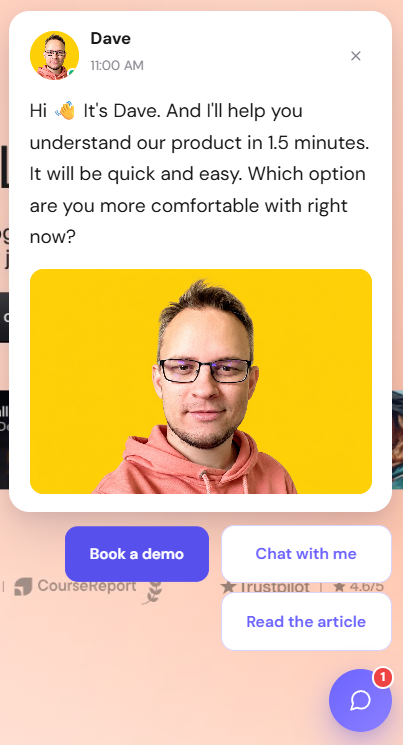
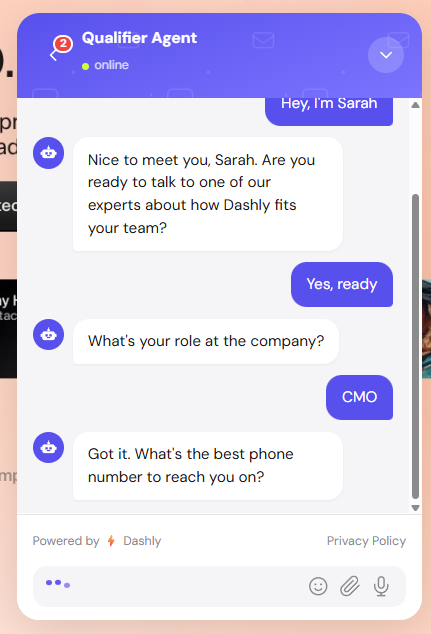
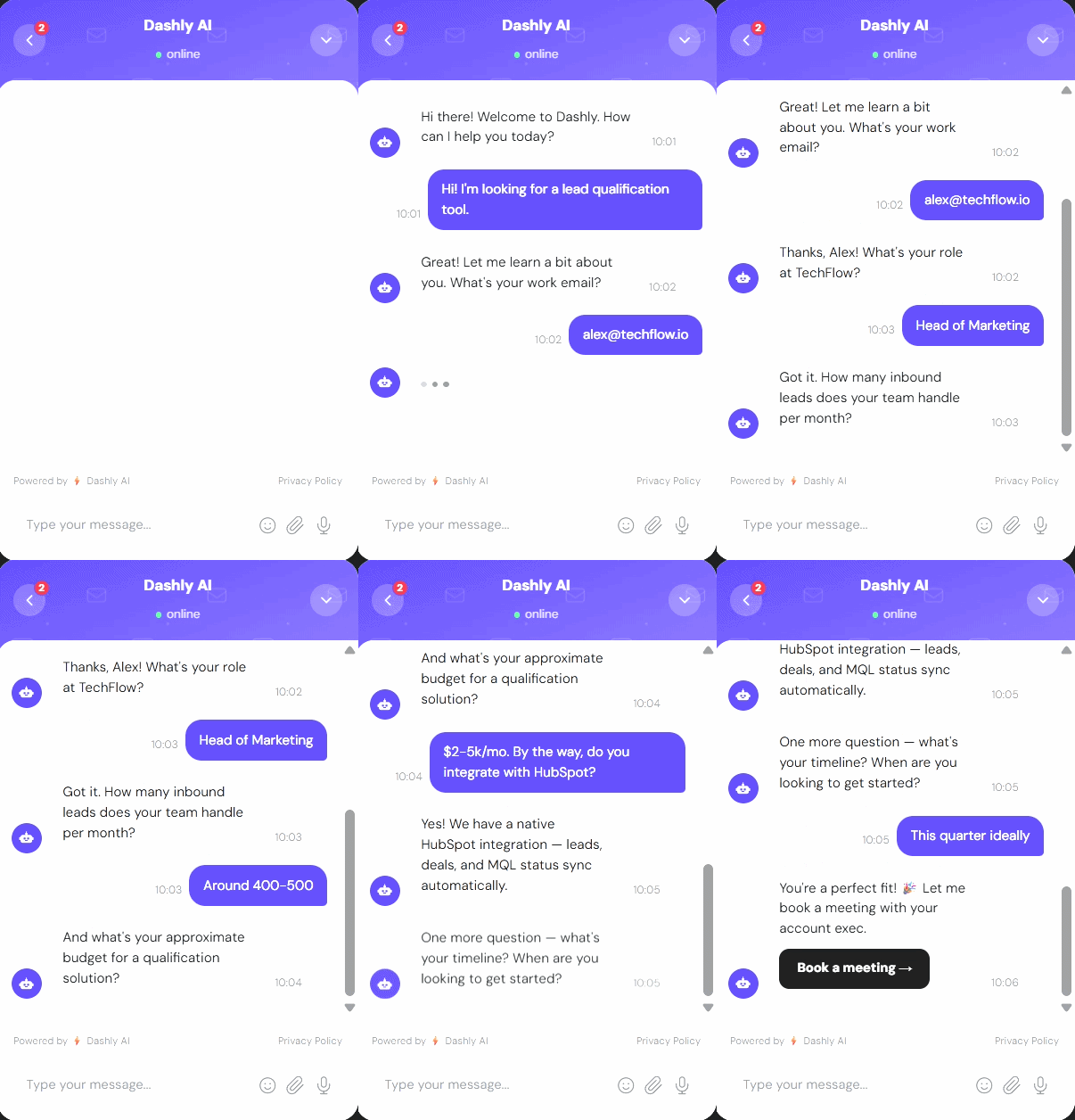
Here’s how Dashly’s AI Qualifier agent determines your ICPs in a conversation:
Step 1: Engagement
Step 2: Qualification
Step 3: Booking
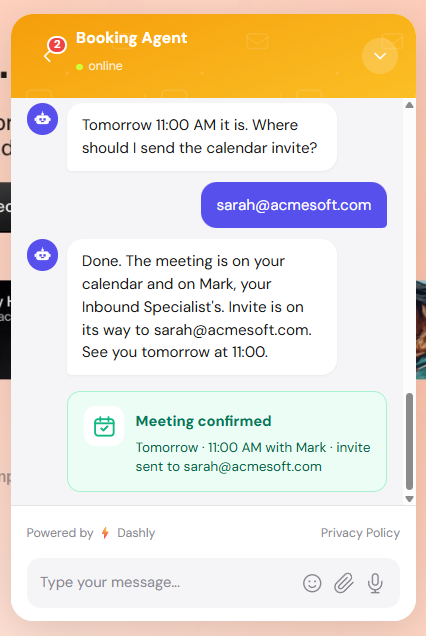
For the top of the funnel, a structured approach to inbound lead generation ensures the leads entering the funnel are worth pursuing before they ever reach qualification.
For the middle, a well-designed lead nurturing sequence keeps qualified prospects moving without requiring manual SDR touches on every contact.
Step 5: Instrument for measurement
You cannot optimize what you cannot see. Before launching the strategy, define the metrics for each stage: traffic and CTR at the top, lead volume and MQL rate in the middle, demo bookings and win rate at the bottom. Set a baseline in the first 30 days. Then run a data-driven review cycle: monthly for stage conversion rates, quarterly for channel mix and ICP criteria.
The most common instrumentation mistake is measuring only bottom-of-funnel revenue and working backwards when results disappoint. Stage-by-stage measurement gives you a clear view of where exactly the constraint is before it shows up in closed revenue numbers.
Sales funnel strategy for B2B SaaS
B2B SaaS funnels have structural characteristics that make them different from e-commerce or SMB funnels. Long evaluation cycles, multi-stakeholder buying committees, product-led and sales-led motions running simultaneously, and often a freemium or trial layer sitting between Awareness and Decision. Each of these requires a specific strategic adjustment.
PLG vs SLG: different funnels, different strategies
Product-led growth funnels convert users through the product itself. A free tier or trial does the persuasion work, and the funnel strategy focuses on activation (getting users to a value moment fast) and expansion (converting free users to paid accounts).
Sales-led growth funnels convert through human conversation: demos, discovery calls, and proposals. The funnel strategy here focuses on speed-to-lead and demo quality rather than product activation metrics.
Most B2B SaaS companies run both motions in parallel, which means two distinct funnel tracks with different qualification signals and handoff triggers. The strategic risk of running both without clear rules is that the same prospect gets both an automated onboarding sequence and an SDR cold call, creating a confusing buyer experience and making attribution impossible.
The demo as the BoFu moment
In most B2B SaaS funnels, the demo is the bottom-of-funnel conversion event. Everything above it exists to get qualified prospects to book one. That means the demo experience is where your funnel strategy either pays off or falls apart, regardless of how strong the upstream marketing is.
A weak demo kills deals that your marketing team spent months building. A strong demo, personalized to the prospect’s use case and delivered fast, closes significantly more. Pre-demo qualification flows have become standard in high-performing B2B SaaS funnels for exactly this reason: the AI agent asks qualifying questions before routing to a calendar, so the human demo is already half-sold before it starts. See how B2B sales funnels increasingly use this approach to raise close rates without adding headcount.
Speed-to-lead is a revenue variable
Speed-to-lead is a measurable revenue driver in B2B SaaS, not a soft operational metric. Dashly handles this end-to-end:
- The AI Qualifier Agent identifies inbound leads in real time and qualifies them against your ICP criteria;
- The AI Booking Agent then routes qualified leads straight to a calendar slot, all within minutes of the first signal.
- The result is a Decision-stage funnel that compresses the time-to-demo without adding SDR headcount or creating a worse buyer experience.
How to align content marketing with the sales funnel
Content marketing and the sales funnel work best when every piece of content is assigned to a stage, a persona, and a conversion goal. Producing content without those assignments creates a volume illusion: lots of organic traffic, minimal pipeline impact. The alignment fix is straightforward: map every content type to ToFu, MoFu, or BoFu before you produce it.
ToFu: problem-aware content
Top-of-funnel content targets buyers at the Awareness stage. They are searching for answers to problems, not vendors to buy from. SEO-driven blog articles, LinkedIn thought leadership, YouTube explainers, and podcast appearances all belong here. The conversion goal is an email capture or a follow-on content click, not a demo booking.
The common mistake at ToFu is treating every blog post as an implicit sales pitch. Buyers at Awareness are looking for information that helps them understand the problem better. Inserting product pitches they did not ask for signals that you care more about conversion than about helping them. That is one of the fastest ways to lose a buyer before the funnel even starts.
MoFu: solution-aware content
Middle-of-funnel content targets buyers who are actively evaluating solutions. Comparison guides, case studies, ROI calculators, webinars, and email nurture sequences are the formats that work here. The conversion goal is a demo booking or a direct sales conversation.
Most content programs underinvest here. ToFu gets attention because it drives traffic. BoFu gets attention because it is close to revenue. MoFu is the bridge that converts blog readers into pipeline, and skipping it means you have a content program that generates awareness but does not drive deals. If your funnel has strong top-line traffic and weak demo volume, this is almost always the gap. For a SaaS-specific breakdown of how MoFu content maps to the buying journey, see SaaS sales funnel strategy.
BoFu: decision-stage content
Bottom-of-funnel content closes deals. Pricing pages, detailed product comparison pages, customer case studies with specific metrics, and sales decks all live here. The reader at this stage has already decided to buy in the category. They are deciding who to buy from.
Speed of access to BoFu content matters. If a prospect is comparing two vendors and one sends a personalized case study within 24 hours while the other sends a generic brochure in 48, the first wins more often than product quality would predict. Personalization and responsiveness are the differentiation levers at this stage, not just the content itself.
Sales funnel optimization: 7 strategies
Funnel optimization is not a one-time project. It is an ongoing process of identifying the highest-friction stage, applying a targeted fix, measuring the impact, and moving to the next constraint. These seven strategies cover the most common levers across all four funnel stages, roughly ordered by ROI for a typical B2B SaaS funnel.
1. Fix speed-to-lead first
If your funnel has a sub-1-minute response time problem, fix it before anything else. Sub-1-minute response to an inbound lead delivers a 400% conversion uplift compared to slower competitors, making it the single highest-ROI lever available without new content, new channels, or additional headcount. This is the highest-ROI optimization in the list for most B2B SaaS funnels because it requires no new content, no new channels, and no additional headcount.
The practical fix is AI chat on demo-request pages and high-intent landing pages, with automatic routing to a calendar. The goal is to eliminate the “we’ll follow up within 24 hours” confirmation email and replace it with an immediate qualified conversation.
2. Reduce friction at the top of the funnel
Every unnecessary form field at ToFu costs conversion. The benchmark for a gated asset is 3 to 4 fields maximum: company email, first name, company size, and one qualifying question. Anything beyond that requires strong justification. A/B test your forms regularly. Removing a single field can meaningfully lift conversion without changing anything else about the page, and A/B test data from B2B SaaS consistently supports single-field removals as a high-ROI change.
Progressive profiling is the longer-term solution: collect the minimum data needed at each stage and enrich over time through behavioral signals and third-party enrichment, rather than front-loading the qualification form and killing conversion at the very first touchpoint.
3. Build a persistent follow-up cadence
Most deals require multiple touchpoints before a prospect commits. According to GoConsensus, 44% of salespeople stop after one follow-up, yet 80% of sales happen after five or more touchpoints. That gap is not a sales execution problem in most cases. It is a systems problem: no structured cadence, no automation, and no reminder that a promising lead went cold.
Build a structured follow-up cadence into your funnel: day 1, day 3, day 7, day 14. Automate the early touches with personalized email sequences that reference the specific asset or page the prospect engaged with. Reserve human SDR time for prospects who have engaged at least twice and show clear buying signals.
4. Personalize the mid-funnel experience
Personalization at MoFu increases conversion in a measurable way. The practical implementation is segmenting your nurture sequences by ICP attribute (company size, industry, primary use case) rather than sending every contact the same 5-email drip regardless of context. A B2B SaaS founder and an SDR manager at a 500-person enterprise have different buying triggers, different objections, and different timelines, even if they downloaded the same white paper.
Enrichment tools and CRM integrations make this tractable at scale. You do not need to manually customize every email. You need the right data fields to trigger the right segment automatically.
5. Add pre-demo qualification
Demo requests that go directly to a sales calendar without qualification waste expensive AE time on poor-fit prospects. A pre-demo qualification layer, whether a form or an AI qualification agent, filters out non-ICP leads before they reach the calendar. The result is a higher-quality demo pipeline and a better close rate, with no increase in SDR headcount.
AI-powered qualification in real time
The qualification criteria should match your ICP definition from Step 1 of the strategy build: budget range, company size, use case fit, and urgency signal. Leads that do not meet criteria get routed to a lower-touch nurture sequence rather than being rejected outright, keeping them warm for a future cycle.
6. Reduce drop-off at the Decision stage
The Decision stage has the highest concentration of last-mile friction. Pricing complexity, contract length concerns, and integration effort objections kill deals that marketing spent months building. Equip your sales team with a Decision-stage content kit: a pricing FAQ, an integration overview, a security one-pager, and two or three case studies from companies similar to the prospect.
Review your lost-deal notes every quarter and categorize them by the stated objection. The patterns tell you which Decision-stage content to build next. “Too expensive” means you need a ROI calculator or a clearer value narrative. “Not sure about implementation” means you need a technical integration guide and customer onboarding testimonials.
7. Use AI tools for high-volume touchpoints
AI tools are now mature enough to handle the high-volume, low-judgment touchpoints in the funnel: initial outreach, qualification conversations, follow-up scheduling, and basic objection handling. This frees your human team to focus on the high-judgment work: complex demos, negotiation, and key account expansion.
For a structured overview of what is available and how to evaluate tools for your specific stack, see the best AI tools for sales funnel automation. The right tool selection depends on where your funnel is leaking. There is no universal stack that works for every motion.
How to measure your sales funnel: KPIs and benchmarks
Measuring a sales funnel means tracking conversion rate at each stage, not just total revenue at the bottom. A single overall conversion number tells you whether the funnel is working. Stage-by-stage conversion rates tell you where to fix it, which is the only information that actually leads to improvement.
The three essential KPIs
Lead-to-MQL rate. What share of raw leads meet your qualification criteria? A typical range for B2B SaaS companies is 20 to 40%. Below 20% means your acquisition channels are pulling in too many non-ICP leads. Above 40% may indicate your qualification criteria are too permissive and you are letting unqualified leads through to waste SDR time.
MQL-to-demo rate. What share of qualified leads book a demo? A typical range for inbound-led funnels is 15 to 25%. If yours is consistently below 10%, the problem is usually friction in the demo-request flow, slow follow-up, or a nurture sequence that is not converting interest into intent.
Demo-to-close rate. What share of demos convert to closed deals? A typical inbound benchmark for B2B SaaS is 20 to 30% for inbound demos. For outbound-sourced demos, expect 10 to 15%. If your close rate is significantly below these benchmarks, the problem is usually demo quality, Decision-stage content gaps, or deals going dark after the demo with no structured follow-up.
Sales velocity. How fast is revenue moving through the funnel? Sales velocity combines opportunities, average deal value, win rate, and sales cycle length into a single number that captures overall pipeline momentum. It is the most useful board-level metric for spotting whether funnel changes are accelerating revenue or creating a long-cycle backlog.
Benchmarks by funnel stage
| Stage | Metric | B2B SaaS median | Top quartile |
|---|---|---|---|
| Awareness to Lead | Landing page conversion rate | 2–4% | 6–10% |
| Lead to MQL | Lead qualification rate | 20–40% | 40–60% |
| MQL to Demo | Demo booking rate | 15–25% | 30–40% |
| Demo to Close | Win rate (inbound) | 20–30% | 35–50% |
For a deeper look at which funnel metrics matter most and how to track them in practice, see the full guide to sales funnel metrics and measurement.
Conclusion
A sales funnel strategy is not a set-it-and-forget-it asset. The funnels that perform best over time are measured, stress-tested, and iterated on every quarter. Start with a clear ICP, map the buyer journey from real customer conversations, assign a specific playbook to each stage, and track the three conversion KPIs that reveal where the constraints actually are.
The biggest lever most B2B SaaS teams leave untouched is speed. Responding to inbound leads in under a minute, qualifying them automatically before they reach a human, and running a structured follow-up cadence costs significantly less than adding SDR headcount, and it compounds as the funnel learns which signals predict conversion.
If you want to see what this looks like end-to-end for a company at your stage, the fastest way is a 20-minute walkthrough with someone who has built this for SaaS teams before.
FAQ
A sales funnel strategy is a documented plan that defines how you attract, qualify, and convert potential buyers at each funnel stage: Awareness, Interest, Decision, and Action. It assigns specific content, channels, and automation to each stage, along with the metrics you use to measure progression and identify where leads are dropping off.
Start by defining your ICP and ideal deal criteria. Map the buyer journey through conversations with recent customers to find the real friction points. Assign content and channels per stage, build a qualification and routing layer so only ICP-fit leads reach your sales team, and instrument every stage with conversion metrics before you start optimizing.
A sales funnel is a model describing the stages from Awareness to Action. A sales funnel strategy is the specific plan, covering content types, channels, qualification criteria, handoff rules, and metrics, that makes that model operational for your specific product and buyer. The funnel is the what; the strategy is the how.
A B2B sales funnel strategy accounts for longer buying cycles, multiple decision-makers, and the coexistence of product-led and sales-led motions. It typically includes a mid-funnel qualification layer, a demo as the primary BoFu conversion event, and speed-to-lead optimization at the Decision stage to prevent warm prospects from going to faster-responding competitors.
Assign every piece of content a funnel stage label, ToFu, MoFu, or BoFu, along with a conversion goal. ToFu content builds awareness and captures emails. MoFu content nurtures qualified leads toward a demo booking. BoFu content resolves final objections and supports the close. Without stage labels, most content programs over-index on ToFu and starve the middle.
The three essential KPIs are lead-to-MQL rate (measures acquisition quality), MQL-to-demo rate (measures mid-funnel conversion), and demo-to-close rate (measures sales execution quality). Track all three, not just total revenue, so you can identify which specific stage is causing the leak instead of guessing at the solution.
Speed-to-lead improvements show up in demo volume within 2 to 4 weeks. Nurture sequence changes and qualification layer adjustments typically take 6 to 8 weeks to produce measurable conversion rate shifts. Structural changes, such as new content tiers or channel mix realignment, take 3 to 6 months to show statistically significant results.



![9 steps to master the growth hacking canvas strategy for your business [free template]](https://www.dashly.io/blog/wp-content/uploads/2023/05/Growth-hacking-canvas-free-templates-720x317.png)