B2B lead nurturing: the playbook for turning cold leads into revenue in 2026
 16 minutes
 15.07.2026
80% percent of new B2B leads never turn into revenue. Not because the product was wrong or the price was too high, but because nobody talked to them again after the first form fill.
That gap between “raised a hand” and “signed a contract” is where B2B lead nurturing lives. Get it right and a cold list turns into predictable pipeline. Get it wrong and your sales team spends its week chasing leads that were never going to be ready anyway.
This guide covers what it actually means, the stages a lead moves through before they buy, nine strategies that convert in 2026, real examples, and how AI agents are changing what “automated” nurturing can do.
What is B2B lead nurturing?
B2B lead nurturing is the process of building a relationship with a prospect across multiple touchpoints, email, chat, and sales conversations, from first interest until they’re ready to buy. It replaces a single pitch with a sequence matched to what the buyer needs at each stage. The goal is the right message at the right time.
B2B nurturing differs from the B2C version in three concrete ways: the buying group is larger, the sales cycle is longer, and the content has to satisfy multiple job functions instead of one individual’s taste. A consumer nurture sequence sells to one person’s impulse. A B2B sequence has to survive being forwarded to a CFO, a legal reviewer, and a technical evaluator who never spoke to your sales rep directly.
Lead nurturing is not the same as lead generation. Generation gets a name into your database. Nurturing is everything that happens between that first touch and the deal closing, and it’s usually the longer, more expensive half of the funnel to get right.
Two terms come up constantly in this space and it’s worth being precise about them. Lead qualification is the act of deciding whether a lead fits your ideal customer profile and has real buying intent. Lead scoring is the numeric system, usually built on firmographic and behavioral signals, that automates that qualification decision at scale.
Why B2B lead nurturing matters in 2026
B2B lead nurturing matters because most B2B deals take months to close and involve more than one decision maker. According to Gartner’s 2025 sales survey, 74% of B2B buyer teams show unhealthy conflict during the decision process, exactly why a single sales call rarely closes a deal. Nurturing supplies the proof and time a buying committee needs.
Skip nurturing and the cost shows up later, not immediately.
A lead that isn’t ready this month doesn’t disappear. It moves to a competitor who kept showing up, or it resurfaces in a budget cycle six months out with no memory of your brand.
Building a pipeline generation strategy that only accounts for the first touch and ignores everything after it is building half a funnel.
That’s the cost side. Here’s what the return side looks like in practice.
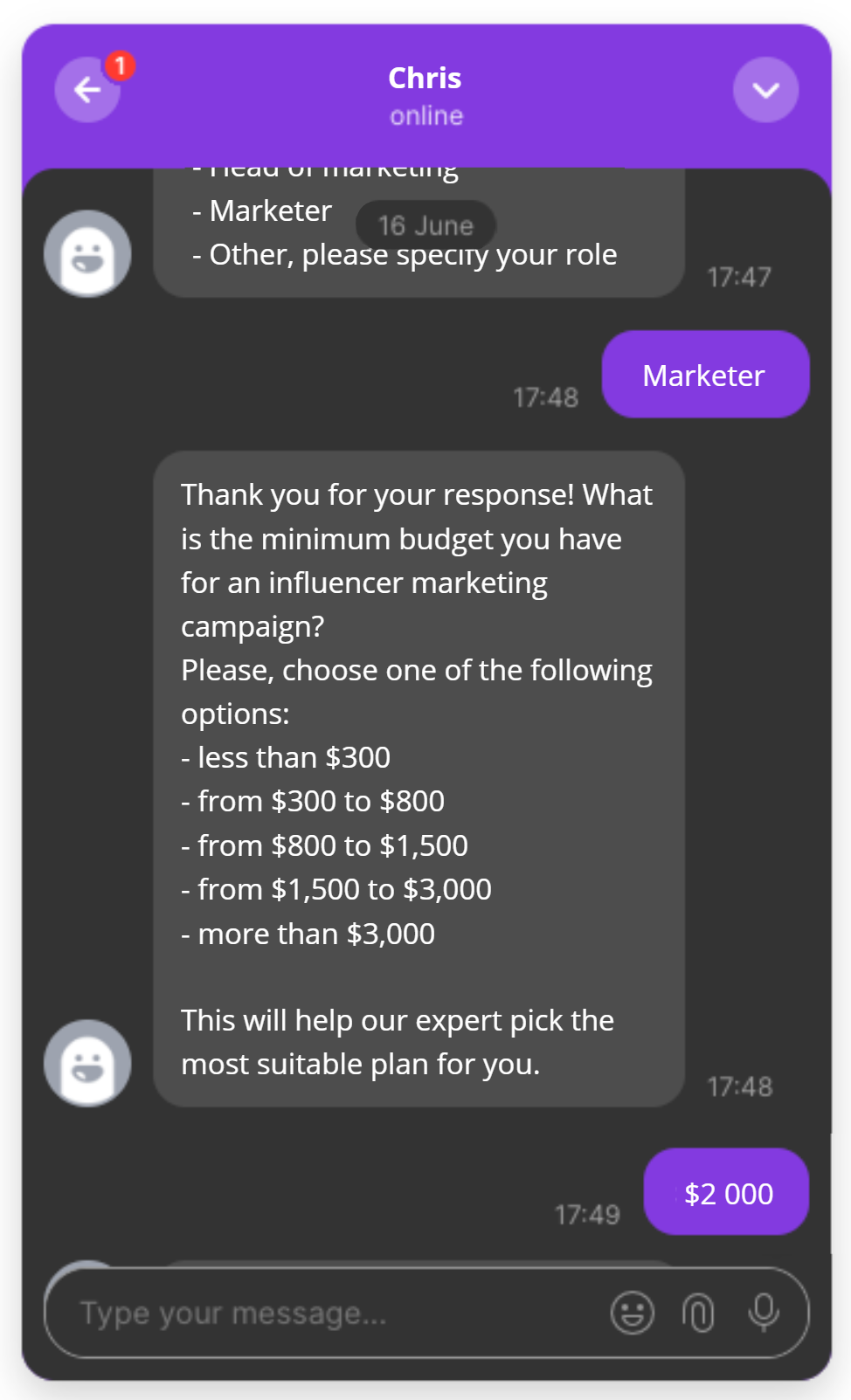
Dashly customers see this play out directly. WOWInfluencer deployed four AI agents to qualify and nurture inbound leads without adding SDR headcount.
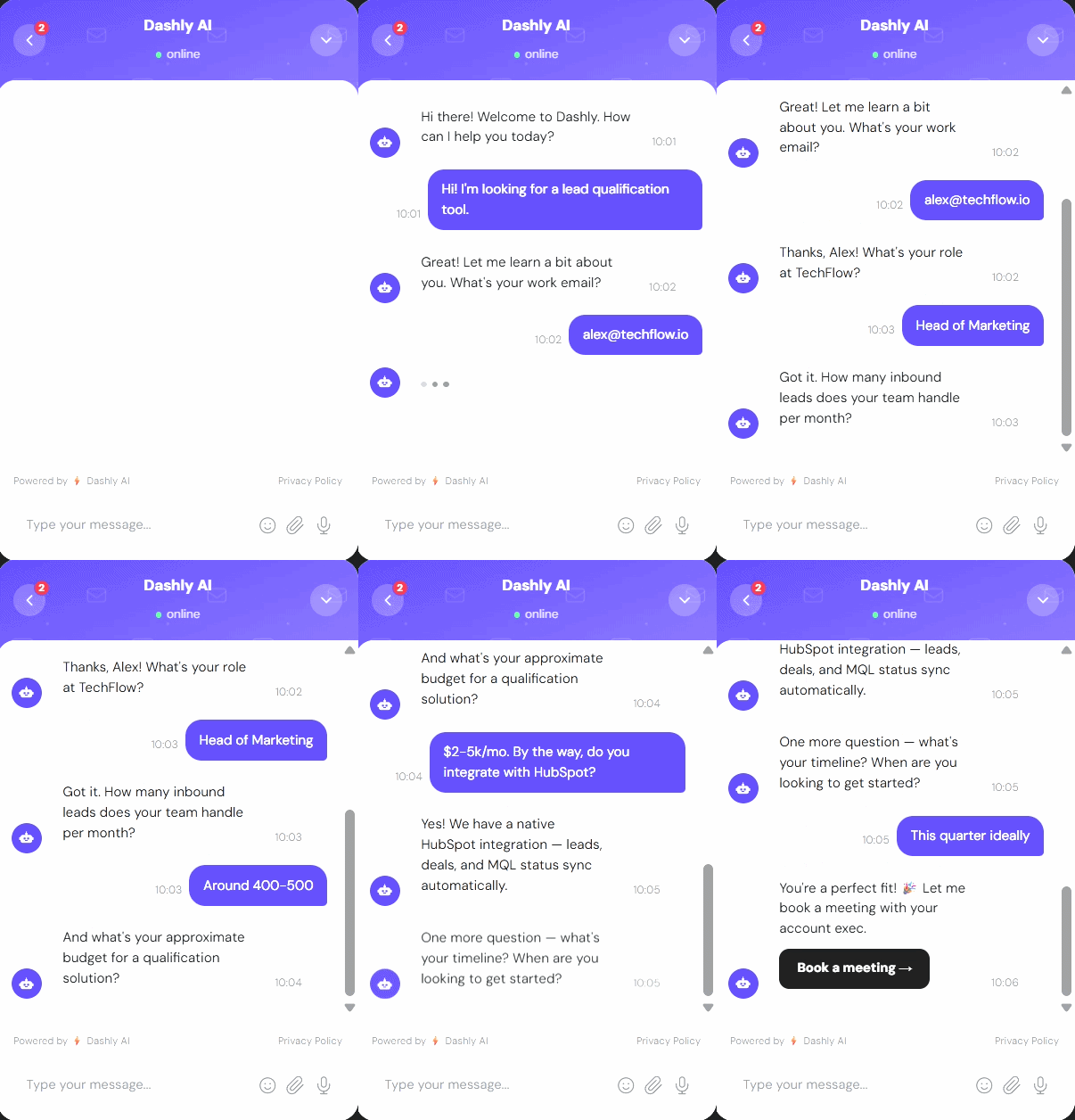
Here’s how AI qualification works:
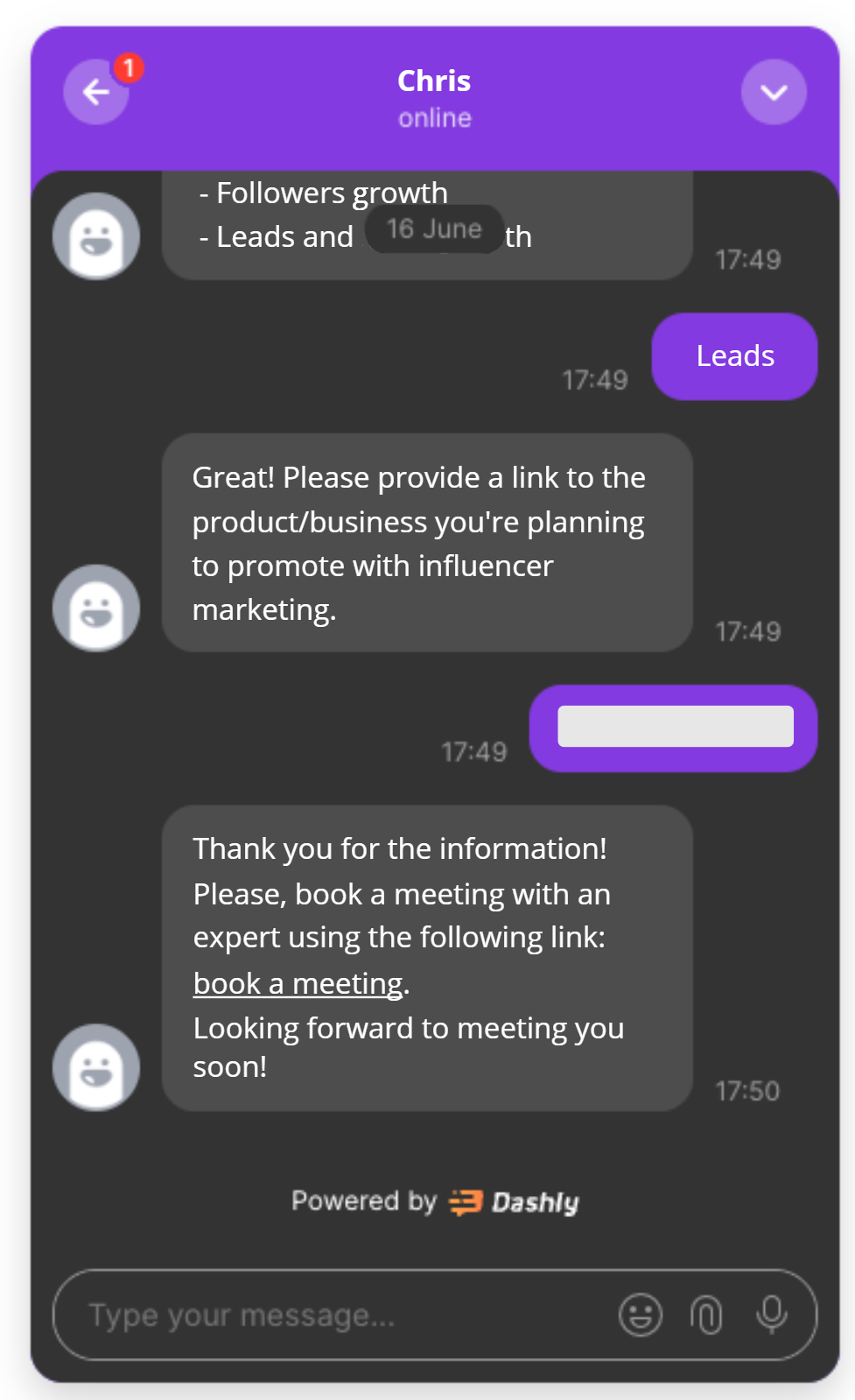
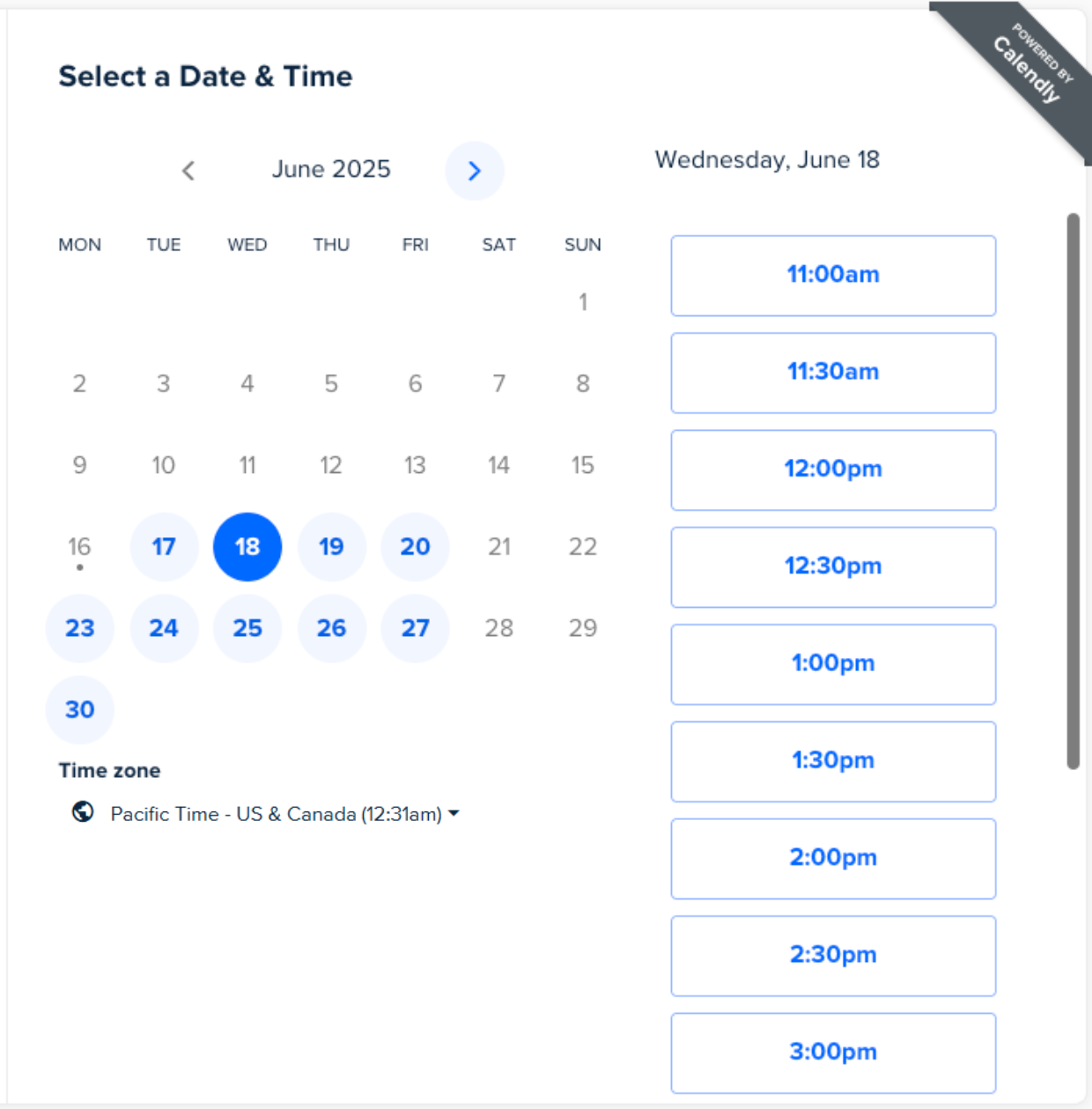
And once the meeting is booked, the nurturing scenarios craft messages to nurture leads to a meeting. Across different channels, whenever your lead prefers.
Here’s what it looks like:
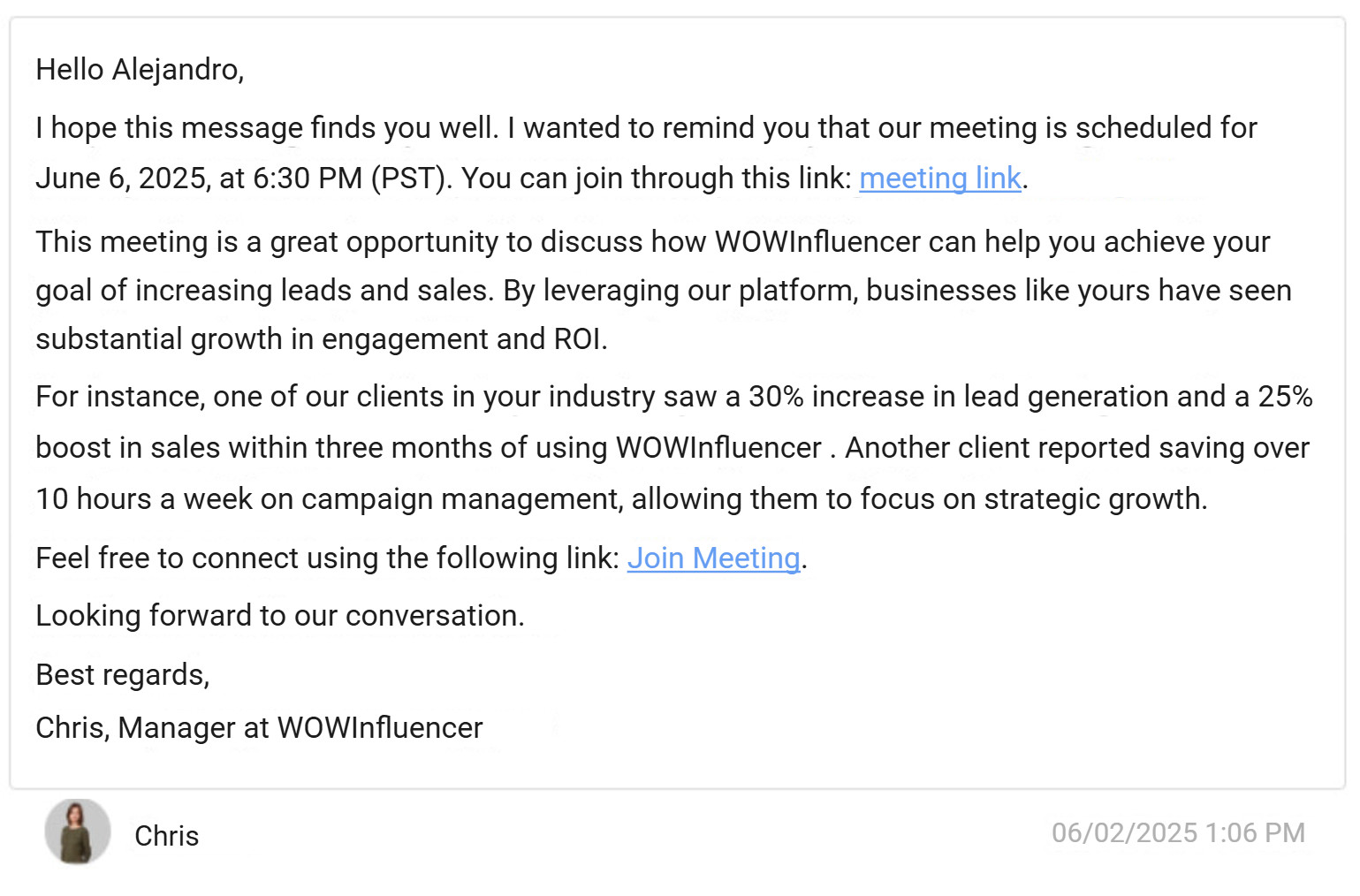
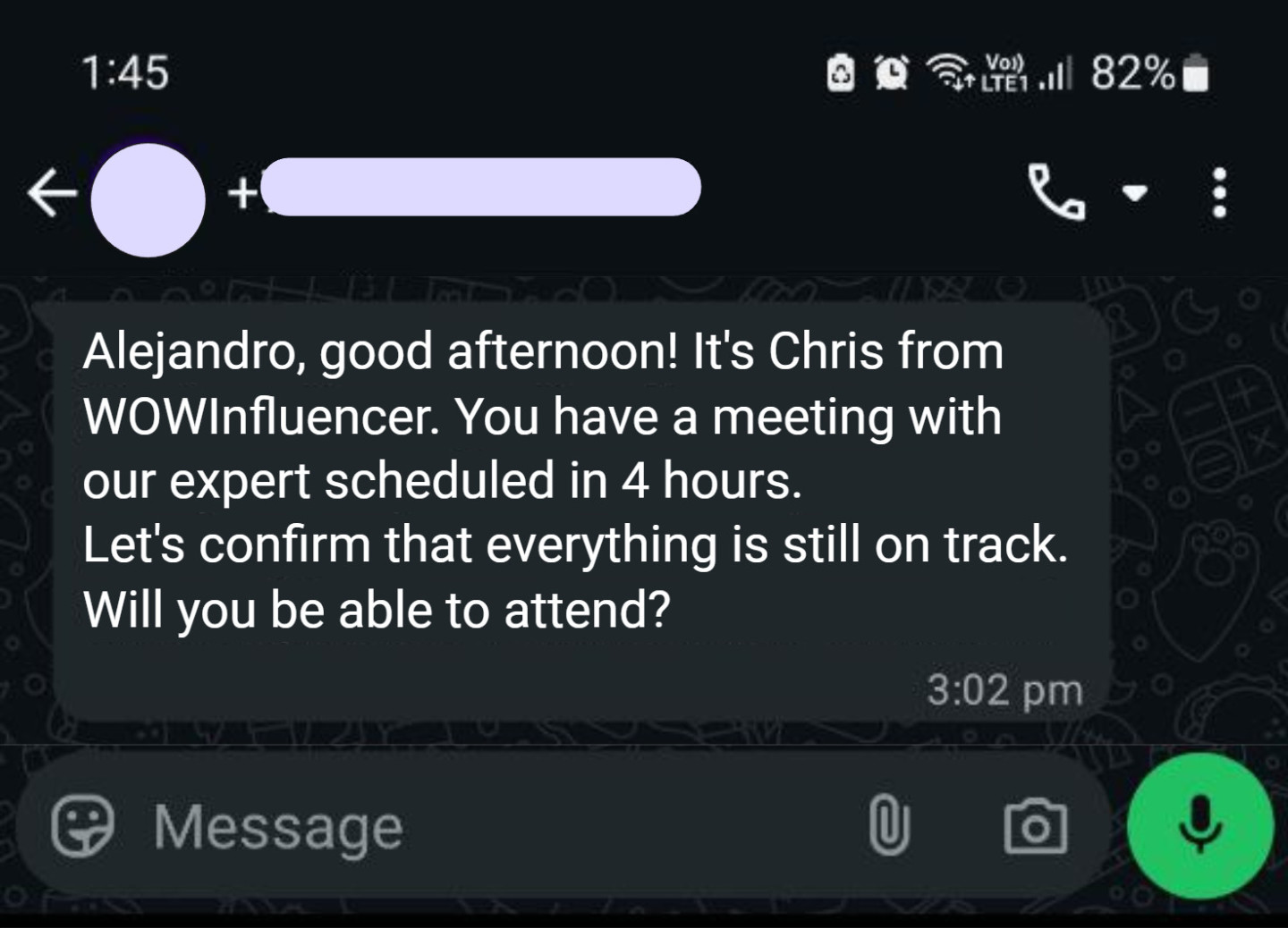
The result: an 82% MQL-to-meeting conversion rate with 653% ROMI in the first quarter (see the full case study). That kind of return doesn’t come from generating more leads. It comes from not losing the ones already in the pipeline.
B2B lead nurturing stages: mapping the buyer journey
B2B lead nurturing typically maps to four stages: awareness, consideration, decision, and post-sale. Each stage needs a different type of content and a different cadence. Sending a demo request to someone still comparing category options wastes the send and can push a lead to unsubscribe before they’re ready to talk to sales at all.
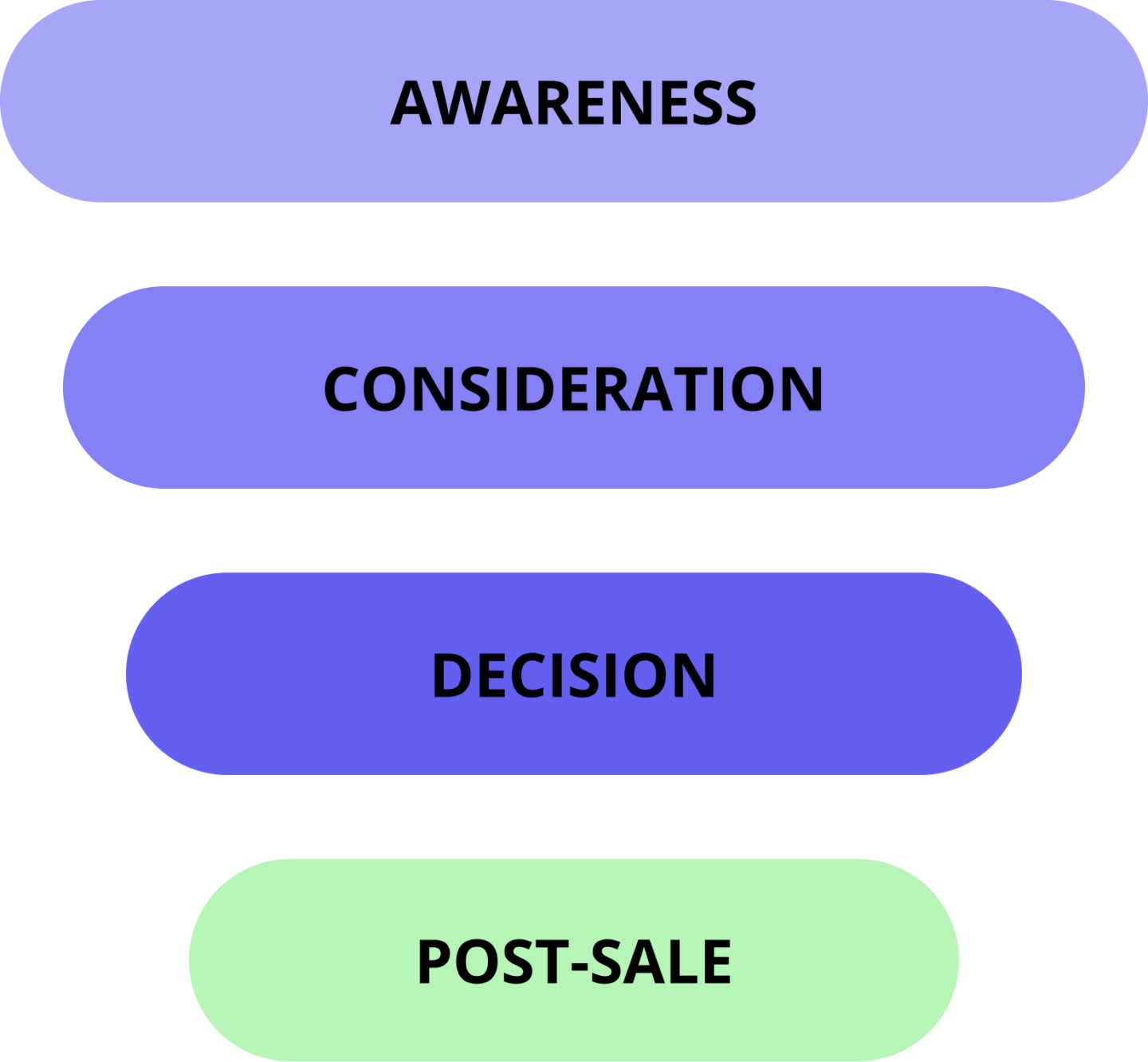
Awareness is where a prospect first recognizes they have a problem worth solving. Content here should educate, not pitch: problem-framing blog posts, benchmark data, and short explainer content. If you want a fuller breakdown of what happens before this stage, generating inbound leads in the first place is worth reading as a companion piece.
Consideration is where the prospect is actively comparing approaches or vendors. This is where case studies, comparison content, and webinars do the heaviest lifting. The reader already believes the problem is real; now they need proof that your category of solution, and specifically your product, solves it better than the alternative.
Decision is where procurement, legal, and technical evaluators get pulled in. Nurturing at this stage means arming your champion, the person internally pushing for your product, with the security documentation, ROI calculations, and reference customers they need to convince people who never spoke to your sales team.
Post-sale nurturing keeps a customer engaged past the signature: onboarding sequences, adoption nudges, and renewal touchpoints. It’s often skipped because it doesn’t show up in a pipeline report, but churn is expensive to backfill with new leads.
If you want to map your funnel stages in more depth, or see how a B2B sales funnel is structured end to end, those breakdowns pair directly with the nurturing stages above.
| Stage | Reader’s question | Content that fits | Nurture channel |
|---|---|---|---|
| Awareness | Do I actually have this problem? | Problem-framing posts, benchmark data | Email, organic content |
| Consideration | Which type of solution fixes it? | Case studies, comparison guides | Email, retargeting |
| Decision | Can I defend this choice internally? | ROI docs, security answers, references | Chat, direct sales |
| Post-sale | Am I getting value from this? | Onboarding steps, adoption nudges | In-app, email |
9 B2B lead nurturing strategies that convert
The strategies that move a B2B lead nurturing program from “we send emails” to “we generate predictable pipeline” share one trait: they treat the buyer’s context, not a generic template, as the input. Here are nine that work in 2026.
1. Segment by ideal customer profile, not just job title
Job title alone tells you almost nothing about buying intent. Firmographic and demographic data, company size, industry, tech stack, tell you more, but behavioral data tells you the most: what a prospect actually clicked, viewed, or asked about. Building a documented ideal customer profile before writing a single nurture email means every subsequent message speaks to a specific buyer persona instead of a generic one.
2. Trigger content on behavior, not on a fixed schedule
A prospect who just viewed your pricing page three times in a week is a different lead than one who downloaded a whitepaper six months ago. Behavior-based triggers send the pricing FAQ to the first prospect and a re-engagement nudge to the second, instead of blasting both with the same weekly newsletter.
The click rate difference is the whole argument for doing this. In VWO’s own case study, Ubisoft’s behavior-triggered nurture messages hit a 17% click rate, against a typical 2 to 4% for untargeted campaigns. A scheduled newsletter can’t replicate that because it has no idea what the reader just did.
3. Orchestrate more than one channel
Most nurturing content online is still written as if email is the only channel that exists. It isn’t. A prospect who ignores three emails might respond instantly to a proactive chat message when they’re back on your pricing page, or a WhatsApp follow-up after a demo request. Multi-channel orchestration means the same nurture logic triggers the right channel for that specific prospect’s behavior, not a single fixed sequence.
4. Automate lead scoring so sales only sees ready leads
Static lead scoring, points for a title, points for a page visit, breaks down fast because it can’t react to a conversation in real time. An AI qualifier agent can ask qualifying questions directly in a chat or form flow and score intent as the conversation happens, instead of waiting for a batch job to run overnight. That’s the difference between sales getting a stale spreadsheet and getting a lead the moment it’s ready.
AI-driven qualification right in the chat:
5. Nurture the whole buying committee, not one contact
A single champion rarely closes a B2B deal alone. Account-based nurturing means tracking every known stakeholder at a target account and tailoring content to each function, technical proof for the evaluator, ROI framing for the economic buyer, security documentation for IT, instead of hoping your champion forwards the right email to the right person.
6. Match content to funnel stage, every time
Sending a demo CTA to someone who just downloaded a definitional guide is the single most common nurturing mistake. Map every piece of content in your library to a funnel stage before it goes into a sequence, and audit sequences quarterly to catch relevant content that’s drifted out of order as your product or market changes.
Here’s how emails can be personalized depending on user behavior:
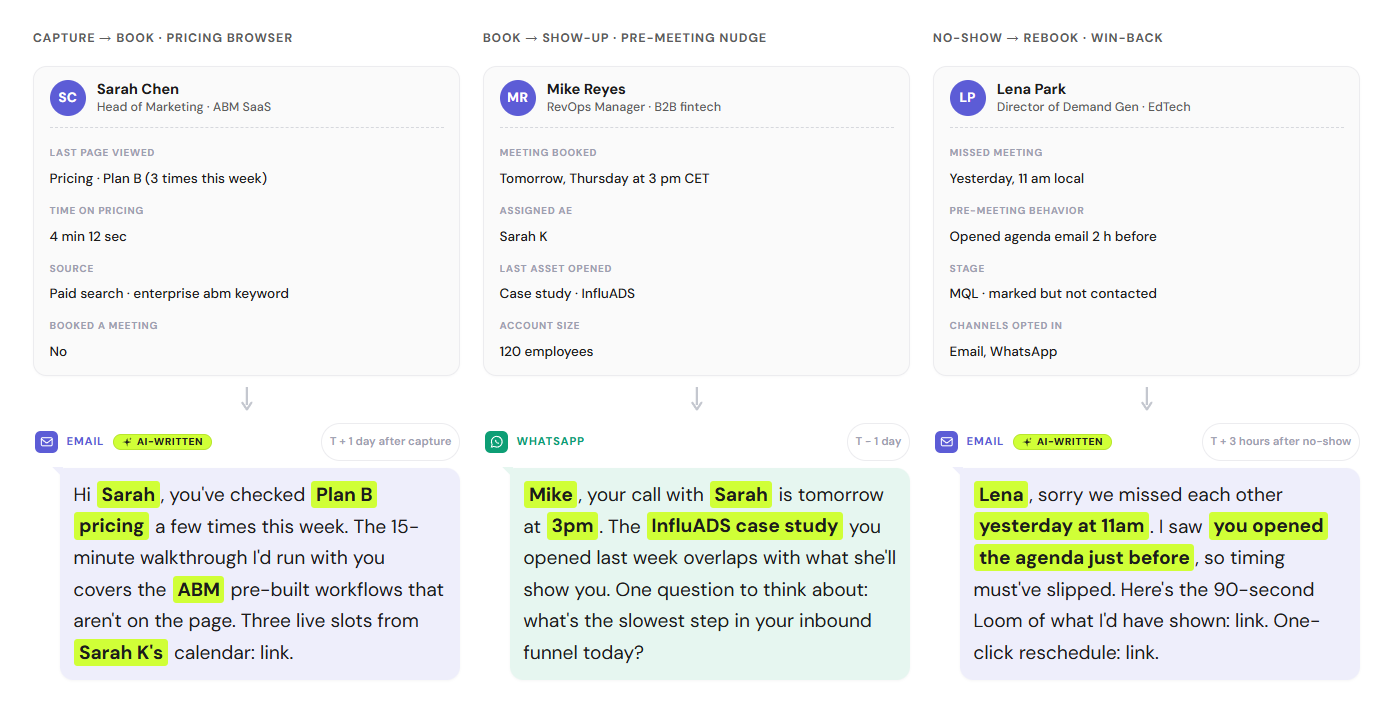
The nurturing sequences that convert best are the ones where every single touch matches exactly where the buyer is, which usually means fewer, sharper messages instead of more generic ones.
7. Set a cadence based on deal size, not habit
A five-figure SaaS deal and a six-figure enterprise contract don’t move at the same speed. Shorter cycles can tolerate a tighter cadence; enterprise cycles need more spacing and more patience between touches, because the buyer is genuinely still gathering internal consensus, not just being slow to reply.
8. Build a clear sales-marketing handoff rule
Most nurturing programs fail at the handoff, not the content. Marketing teams and sales need to agree, in writing, on the exact scoring threshold or behavior that triggers a sales notification, and route the lead automatically the moment it’s hit. A lead sitting in a queue for three days after crossing the qualification line is a lead going cold again.
9. Build a re-engagement track for leads that went quiet
Most nurturing programs have no answer for a lead that stopped responding six weeks ago. That’s a gap, because a dormant lead already knows your brand, which makes it cheaper to win back than a brand-new one. An AI engagement agent can run parallel outreach across email and chat specifically for dormant leads, without pulling an SDR off active deals to do manual follow-up.
B2B lead nurturing email examples (and beyond email)
Most B2B lead nurturing email marketing examples, and any email nurture campaign more broadly, fall into four categories. Each one has a distinct job, and mixing them into one generic drip is the fastest way to get ignored:
- Welcome and education sequences for new leads
- Re-engagement sequences for dormant ones
- Demo follow-up sequences after a sales conversation
- Renewal or expansion sequences for existing customers
A welcome and education sequence introduces the problem space before it introduces the product. The first email answers a question the reader already has; the second offers a case study; the third, only the third, mentions a demo. Leading with the pitch in email one is the single most common reason welcome sequences underperform.
A re-engagement sequence targets leads that went cold after initial interest. The best ones don’t apologize for the silence or restate the original pitch. They lead with something new, a product update, a fresh case study, a direct question about whether priorities changed, and give the prospect an easy way to say “not now” without unsubscribing entirely.
A demo follow-up sequence reinforces what a prospect saw in a live call with the specific proof points that matched their stated use case, not a generic recap. This is where a real estate brokerage automating lead qualification grew MQLs by 96% in six weeks and meetings by 65%, largely because follow-up matched exactly what each prospect had asked about on the call.
Beyond email, a live chat nurture example looks like this: a prospect returns to a pricing page for the third time in a week, and instead of a generic pop-up, they get a proactive chat message referencing the specific plan they’ve been viewing, with a direct question about what’s holding the decision up. That single touch, timed to actual behavior, often outperforms an entire five-email drip aimed at the same prospect.
How to automate B2B lead nurturing
Automating B2B lead nurturing means letting marketing automation software handle lead scoring, sequence triggering, and channel routing, so a human only steps in once a lead is qualified and ready for a conversation. The three things worth automating first are scoring, so sales sees only ready leads, sequencing, so no lead sits untouched, and channel routing, so the follow-up happens where the prospect is actually active.
Static automation, if this field equals that value, send this email, still requires someone to predict every scenario in advance. AI-driven automation reacts to what a specific prospect actually does or asks, which matters most in the moments a template can’t anticipate: an unusual objection in a chat, a question that doesn’t fit a form field, or a lead going quiet mid-conversation instead of at a predictable interval.
When evaluating a platform, look past feature lists and check three things: does it handle more than one channel, can it act on behavior in real time rather than on a batch schedule, and does it hand off cleanly to whatever CRM your sales team already lives in. The best AI lead nurturing tools on the market vary widely on all three, so testing against your actual buying committee’s behavior matters more than a feature comparison chart.
- Does it trigger on real-time behavior, or only on a fixed daily or weekly batch?
- Does it run outreach on more than just email, chat and WhatsApp included?
- Can it ask qualifying questions directly, instead of only scoring form fields?
- Does a qualified lead reach a rep automatically, without a manual export step?
- Can marketing see, in one view, which stage every tracked account is actually in?
Most platforms get one or two of those right. Few get all three at once.
Dashly’s lead nurturing layer pairs Dashly’s engagement automation, which runs the outreach across email and messengers, with AI-generated messages personalized to user’s behavior.
B2B lead nurturing best practices (mistakes to avoid)
The most common B2B lead nurturing mistakes are sending generic content regardless of funnel stage, having no logic that tells a sequence when to stop or escalate, ignoring send-time and cadence entirely, and writing off any lead that goes quiet instead of building a re-engagement path for it.
- Generic blasts that don’t reference funnel stage, industry, or stated use case
- No progression logic between stages, so a lead who’s ready to buy still gets top-of-funnel content
- Ignoring timing, sending at a volume or cadence that doesn’t match deal size or buyer urgency
- Treating a quiet lead as a dead one instead of routing it to a re-engagement track
- No clear handoff rule, so qualified leads sit in a queue instead of reaching sales immediately
Every one of these mistakes is fixable without adding headcount. The fix is almost always a rule, a scoring threshold, a stage tag, an escalation trigger, not a bigger content library.
Key takeaways
B2B lead nurturing works when it treats the buyer’s actual context, stage, behavior, and buying committee, as the input for every message, rather than running one generic sequence for every lead. Map content to the four stages of the buyer journey. Automate scoring and channel routing so sales only sees leads that are actually ready. And build a re-engagement track for leads that go quiet, because a dormant lead is cheaper to win back than a new one is to generate from scratch.
FAQ
Lead generation gets a prospect into your database for the first time. Lead nurturing is everything that happens after that first touch, the emails, chat messages, and content that move a prospect from initial interest to a closed deal. A strategy focused only on generation without a nurturing plan behind it will keep buying new leads to replace the ones that went cold.
Start with the three highest-leverage pieces: lead scoring, so sales only sees qualified leads, sequence triggering, so no lead sits untouched after their first action, and channel routing, so follow-up happens on email, chat, or WhatsApp depending on where the prospect is actually active. An AI agent can handle all three in real time instead of on a batch schedule.
For B2B SaaS specifically, prioritize behavior-based triggers over a fixed calendar, since product page visits and pricing page returns are stronger buying signals than time elapsed. Pair that with account-based nurturing for any deal involving more than one stakeholder, which is most SaaS deals above the smallest self-serve tier.
It depends on deal size and sales cycle, not a fixed number of emails. A shorter, lower-price-point cycle can run a tighter sequence over a few weeks. An enterprise cycle, where a buying committee is still building internal consensus, often needs a sequence that runs for months with a slower, more patient cadence.
Most B2B teams use a mix of a CRM for lead data, an email or marketing automation platform for sequencing, and increasingly an AI agent layer for real-time scoring and multi-channel outreach. A full comparison of options is available in Dashly’s AI lead nurturing tools directory.
An agency can be a fit for teams with no internal marketing operations capacity at all, but it adds an ongoing cost and a layer of communication between your team and your leads. Software, particularly an AI-driven platform, gives an internal team direct control over messaging and scoring logic without a monthly agency retainer.
The four most common types are welcome and education sequences for new leads, re-engagement sequences for leads that went quiet, demo follow-up sequences that reinforce what a prospect saw on a call, and renewal or expansion sequences for existing customers. Each should lead with the reader’s problem, not the product pitch.
Marketing automation runs pre-built rules: if a field matches a value, send this email. AI-driven lead nurturing reacts to what a specific prospect actually says or does in the moment, an unusual question in chat, an objection, a page visit, instead of only the scenarios a rule was written for in advance.
Not necessarily. Standalone email marketing tools handle sending well but rarely handle chat, WhatsApp, or real-time scoring. Most B2B teams get more value from a single platform that runs email nurturing alongside other channels than from stitching together separate tools for each one.



![13 growth hacking examples tested by Dashly experts [+46 free templates]](https://www.dashly.io/blog/wp-content/uploads/2023/05/Growth-hacking-examples-to-inspire-your-team-720x317.png)