9 best agentic marketing platforms for B2B teams in 2026
 17 minutes
 11.06.2026
Most B2B marketing teams have added AI to their stack. A writing assistant for content, a scoring layer in the CRM, an enrichment tool for the SDR queue. What most haven’t built is a marketing system that acts without waiting for a human to trigger the next step.
The gap shows in inbound. A qualified lead fills out a form, gets added to a sequence, and waits 4 to 8 hours for a first reply. By then, that lead has had a demo call with two competitors. That is not a resource problem. It is an operating model problem.
Agentic marketing platforms solve it differently from traditional automation. They do not send emails on a schedule you configured last quarter. They run multi-step workflows autonomously: receive a lead, check ICP fit, send a personalized first reply, route to the right team tier, book a meeting. The agent handles the full first-touch cycle. No human in the loop at each step.
This list covers 9 platforms that deliver genuine agentic capability for B2B teams in 2026. For each one: what it does, where it performs best, and which team profile it fits. At the end, a comparison table and four questions to guide your selection.
What is an agentic marketing platform?
An agentic marketing platform is software where AI agents execute multi-step marketing workflows autonomously, including lead qualification, routing, outreach, and meeting booking, without requiring human approval at every action. The defining characteristic is that agents take actions in external systems based on what leads actually do, not on a fixed calendar you set in advance.
Traditional marketing automation runs rules: if score > 80, enroll in sequence, send email day 3, wait, send follow-up day 7. Agentic platforms run adaptive decision-making. The agent receives a new lead, checks ICP criteria against your CRM data, opens a qualifying conversation, adjusts its next question based on the reply, routes to the right rep tier when threshold is met, and books the meeting. Each step responds to the previous outcome.
For B2B teams, this distinction matters most in three places. Inbound qualification, where speed and consistency across every lead is the bottleneck. Lead nurturing, where fixed drip sequences miss behavioral signals that indicate buying intent. And the SDR handoff, where context gaps between marketing and sales cause warm leads to go cold waiting for a rep to reconstruct context from form fields.
Agentic marketing as a category has grown quickly in the past 18 months. The fuller picture of how agentic AI in marketing plays out across funnel stages is worth reading before you begin evaluating platforms. And if the boundary between agentic AI and generative AI still feels unclear, that distinction matters for vendor evaluation: you are selecting an execution system, not a content generator.
Agentic marketing platforms execute multi-step workflows based on what leads do. Marketing automation runs a schedule you configured last quarter. One adapts in real time. The other runs whether the lead is engaged or not.
How we selected these 9 platforms
Four criteria shaped this list.
- Genuine agentic capability: the platform must execute autonomous multi-step workflows, not surface AI-generated suggestions for a human to approve.
- B2B fit: built for or widely used by B2B marketing and sales teams, with CRM integration central to the product design.
- Coverage of at least one major funnel stage with documented performance.
- Real-world results from actual customers, not vendor positioning language.
Platforms with “AI-powered” labeling but no autonomous action capability were excluded. Pure SDR tools with no marketing workflow coverage were also excluded.
Dashly
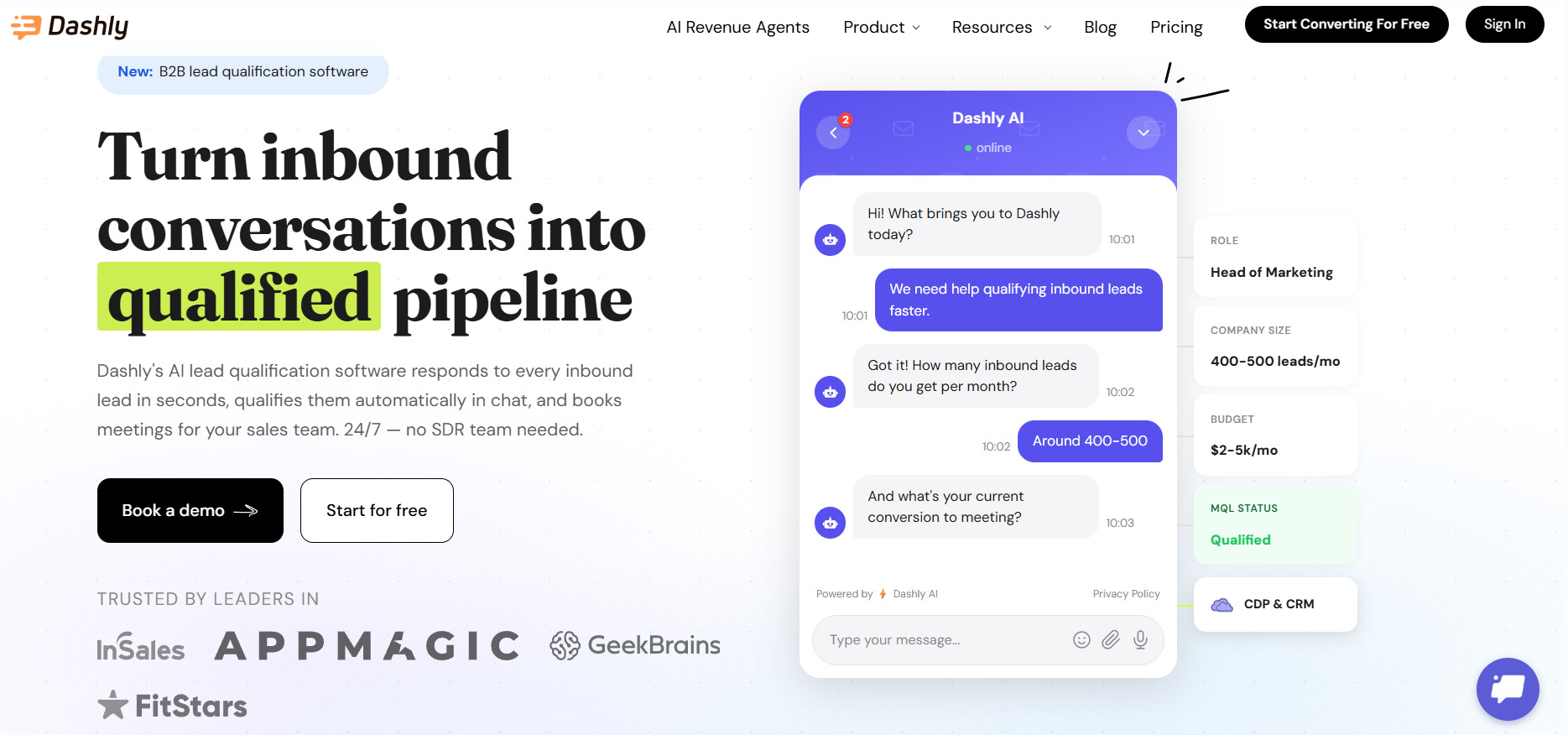
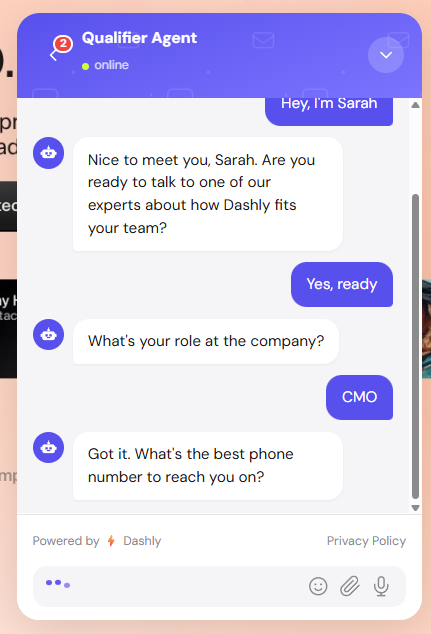
Dashly’s AI Qualifier Agent runs the full first-touch qualification cycle without SDR involvement. A visitor fills out a form or starts a chat. The AI Qualifier Agent checks ICP criteria, qualifies intent through a live conversation, routes to the right rep tier based on deal size and segment, and books a meeting directly into the calendar. The SDR receives a prepared lead profile, not a raw form submission.
Dashly’s engagement scenarios layer proactive triggers on top of the reactive qualification flow, reaching visitors who show purchase-intent signals before they fill out a form. Browsing behavior, page depth, and return visits trigger targeted conversations that move leads into the qualification funnel earlier.
Here is what the flow looks like:
Step 1: Engagement
Step 2: Qualification
Step 3: Booking
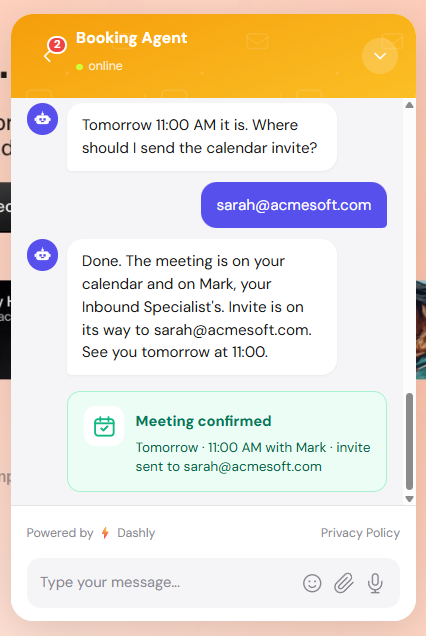
WowInfluencer deployed Dashly’s AI agents to handle all inbound qualification. The result was an 82% conversion rate for booked calls with qualified leads. SDRs worked only the meetings, not the qualification work that generated them.
For B2B SaaS teams where inbound qualification speed is the primary bottleneck, Dashly is purpose-built for that workflow. Additional case studies across industries are documented in agentic AI marketing examples.

HubSpot Marketing Hub
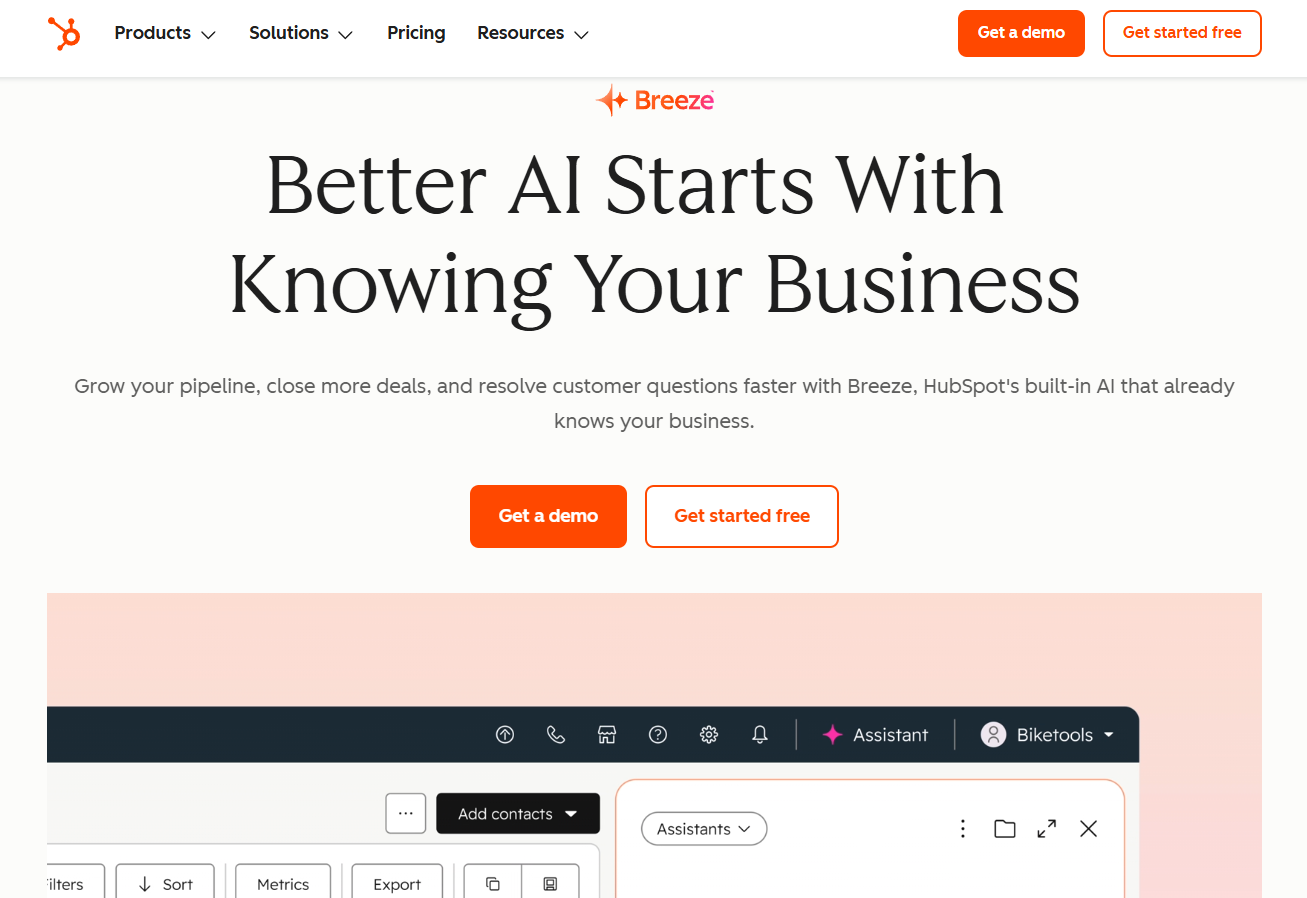
HubSpot’s Breeze AI suite, launched in 2024, brings agentic capability to the HubSpot ecosystem across content creation, prospecting, and customer service workflows. Breeze Agents run multi-step actions within HubSpot’s CRM and marketing tools, handling lead scoring updates, follow-up enrollment, and content publishing without manual triggers at every step.
The primary advantage is ecosystem fit. Teams already running on HubSpot CRM get agents that work on the same lead and contact data without integration overhead. Workflows that previously required manual SDR review can run autonomously based on behavioral signals already captured in HubSpot.
Where HubSpot’s agentic capabilities are currently strongest is in content and social workflows. Lead qualification agents are improving but remain more dependent on rule-based scoring than true adaptive qualification. Teams processing high-volume inbound will likely need a specialist qualification tool alongside HubSpot rather than using Breeze Agents as a full replacement.
Best for: teams already in the HubSpot ecosystem, mid-market B2B where unified CRM and marketing automation in one platform outweighs best-in-class qualification speed.
Salesforce Marketing Cloud + Agentforce
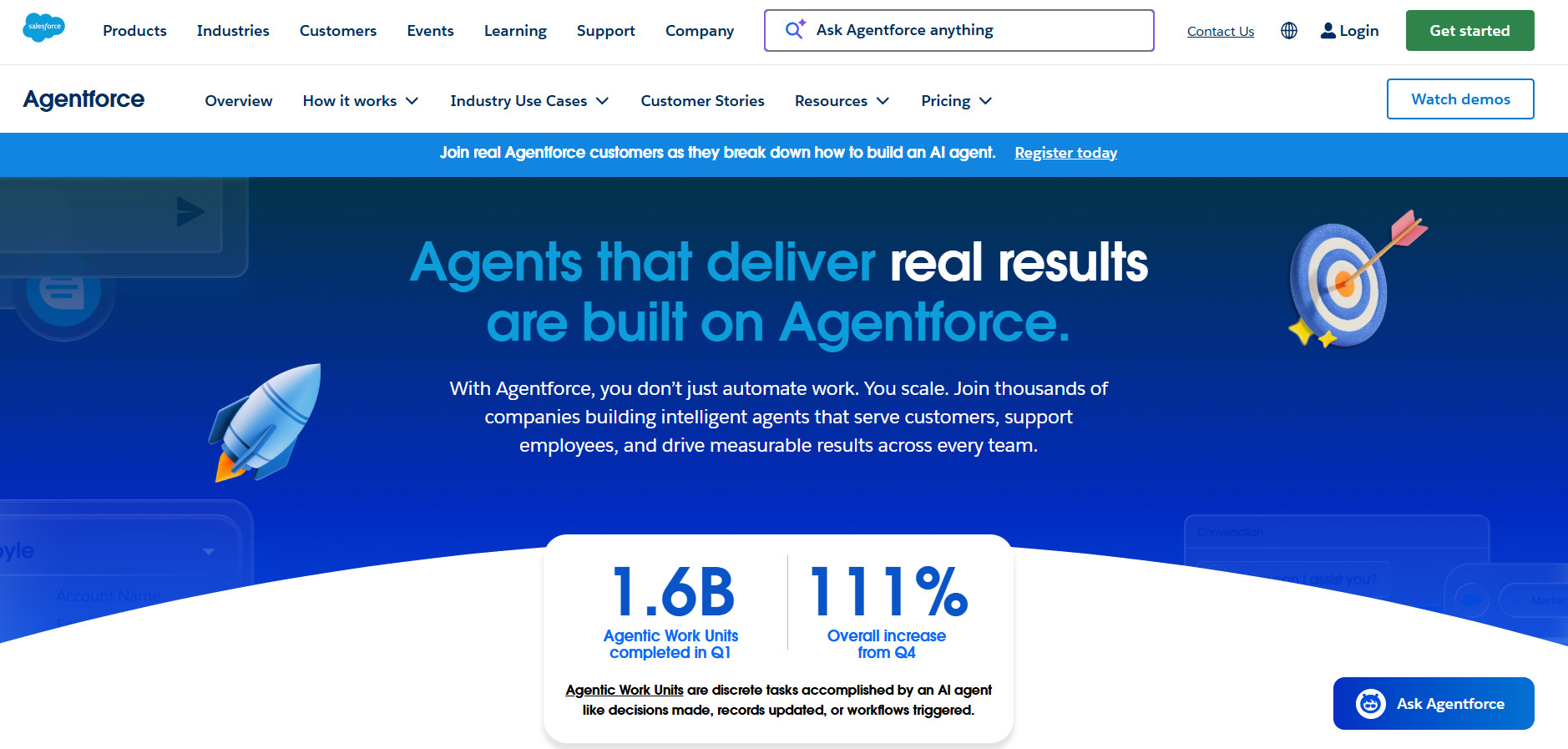
Salesforce’s Agentforce, released late 2024, is the most ambitious agentic platform rollout from a major CRM vendor. Agents are configured to run multi-step tasks across the Salesforce ecosystem: SDR agents handle first outreach, service agents resolve support tickets without escalation, sales agents manage deal progression with Salesforce CRM as the data layer.
For enterprise B2B teams with complex sales motions and large SDR organizations, Agentforce offers a depth of customization that mid-market platforms cannot match. The Einstein AI layer handles lead scoring, next-best-action recommendations, and campaign optimization across large contact databases with the full Salesforce data model available.
The practical constraints are implementation time and cost. Enterprise Salesforce deployments require significant configuration and typically a dedicated Salesforce admin or implementation partner before the agentic components run effectively at scale. Teams that need fast time-to-value will find the setup timeline considerably longer than smaller platforms.
Best for: enterprise B2B with existing Salesforce infrastructure, dedicated admin capacity, and multi-quarter implementation timelines.
6sense Revenue AI
6sense focuses on the account intelligence layer of agentic marketing: identifying which accounts are in-market, scoring intent across anonymous and known signals, and triggering coordinated outreach at the moment of highest intent.
The platform aggregates behavioral signals from web activity, content consumption, third-party data, and CRM history to build a buying-stage model for each target account. Marketing automation and SDR outreach sequences are triggered autonomously when intent thresholds are crossed, without a human reviewing each trigger decision.
What 6sense covers that most conversational platforms do not is the pre-form-fill journey. By the time a lead submits a form, 6sense has already built a weeks-long behavioral profile and can surface which contacts to prioritize and what research topics to reference in the first SDR conversation.
The limitation is that 6sense does not handle inbound conversation or meeting booking natively. It identifies and triggers, then hands off to other tools in the stack.
Best for: enterprise ABM programs, teams with large named account lists and a dedicated revenue operations function to configure and maintain intent thresholds.
Drift
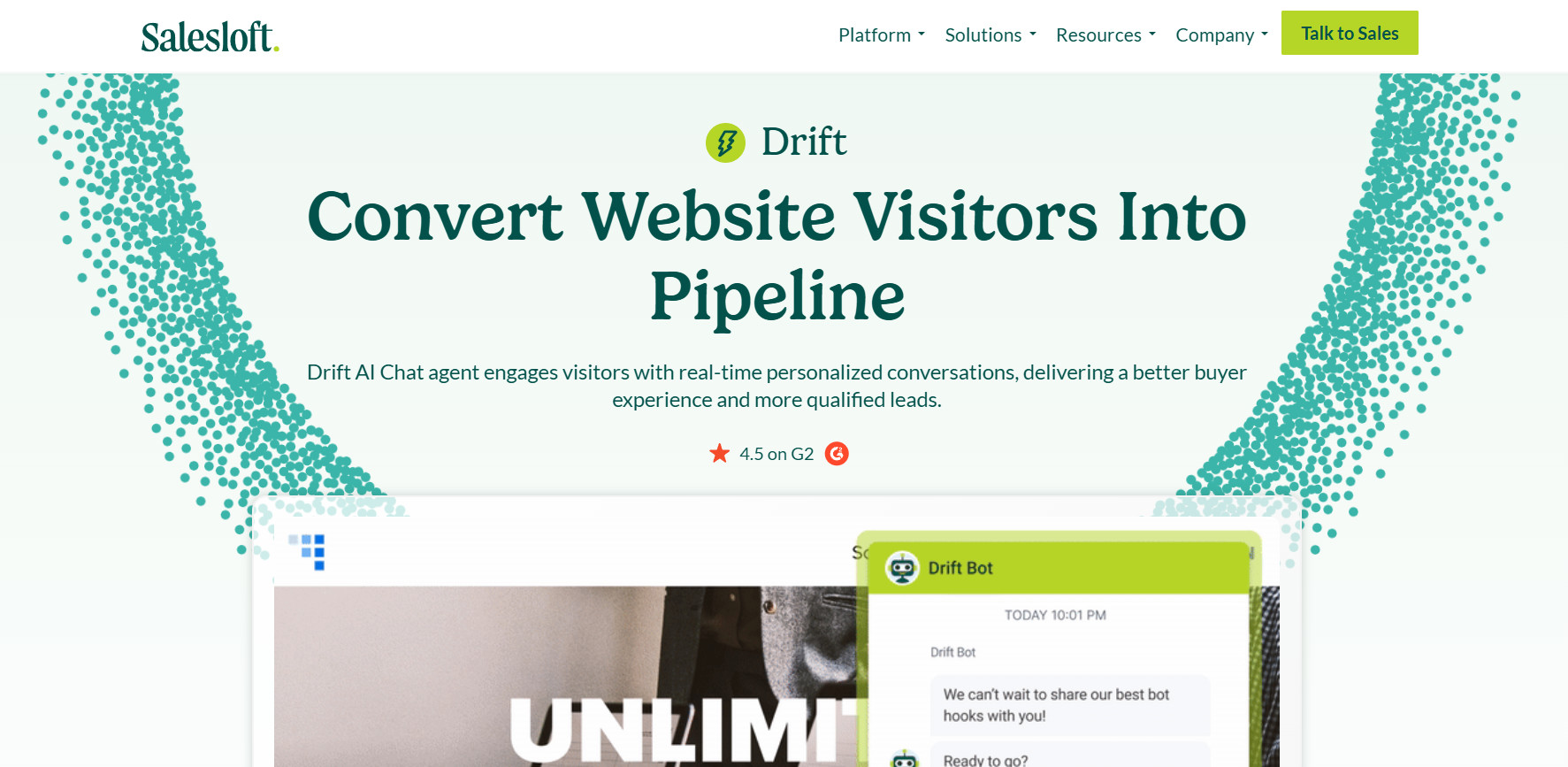
Drift, acquired by Salesloft in 2023, remains widely deployed for conversational marketing in B2B SaaS. The platform’s chat-based AI qualifies website visitors in real time, identifies ICP fit, routes qualified conversations to available reps, and books meetings directly when a visitor meets qualification criteria.
The core use case is website qualification at volume. Teams with consistently high inbound website traffic benefit most from Drift’s routing logic, which handles the first-touch qualification conversation and distributes hot leads based on segment, deal size, or rep assignment rules.
The product roadmap has shifted since the Salesloft acquisition, with deeper integration into Salesloft’s sales engagement layer. Teams evaluating Drift today are effectively evaluating it as part of the Salesloft platform rather than a standalone point solution.
Best for: B2B SaaS with high website traffic volumes, existing Salesloft users, and sales-led growth motions where chat-first lead capture is already part of the funnel.
Intercom
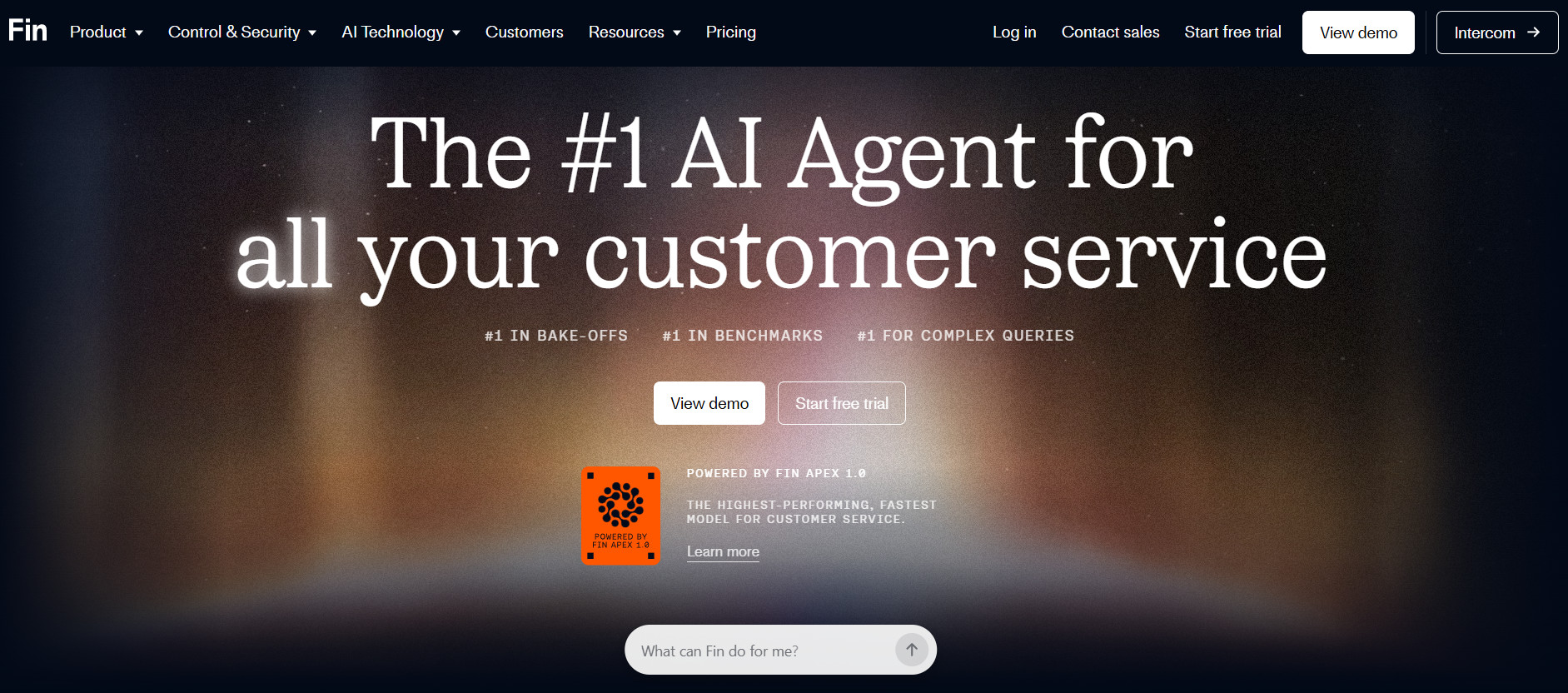
Intercom’s Fin AI Agent handles inbound conversations across support and sales channels, resolving customer questions autonomously and qualifying sales inquiries for handoff. Fin reads from a connected knowledge base, answers questions with source citations, and escalates to a human when the conversation goes beyond its configured scope.
For B2B SaaS companies where support and sales share a single chat surface, Fin reduces the human effort required on both sides. Support tickets that can be resolved with documentation get deflected automatically. Sales inquiries that meet qualification criteria get routed to the sales team with conversation context already attached.
The platform’s strength is the support-plus-qualification combination on a shared surface. Its limitation is that it is built primarily around customer support workflows. Teams looking for proactive outbound triggers, deep marketing automation integration, or ABM-style personalization will find Intercom’s agentic scope narrower than purpose-built marketing platforms.
Best for: product-led growth SaaS, teams handling high volumes of both support and sales inquiries through a shared chat channel.
Marketo Engage
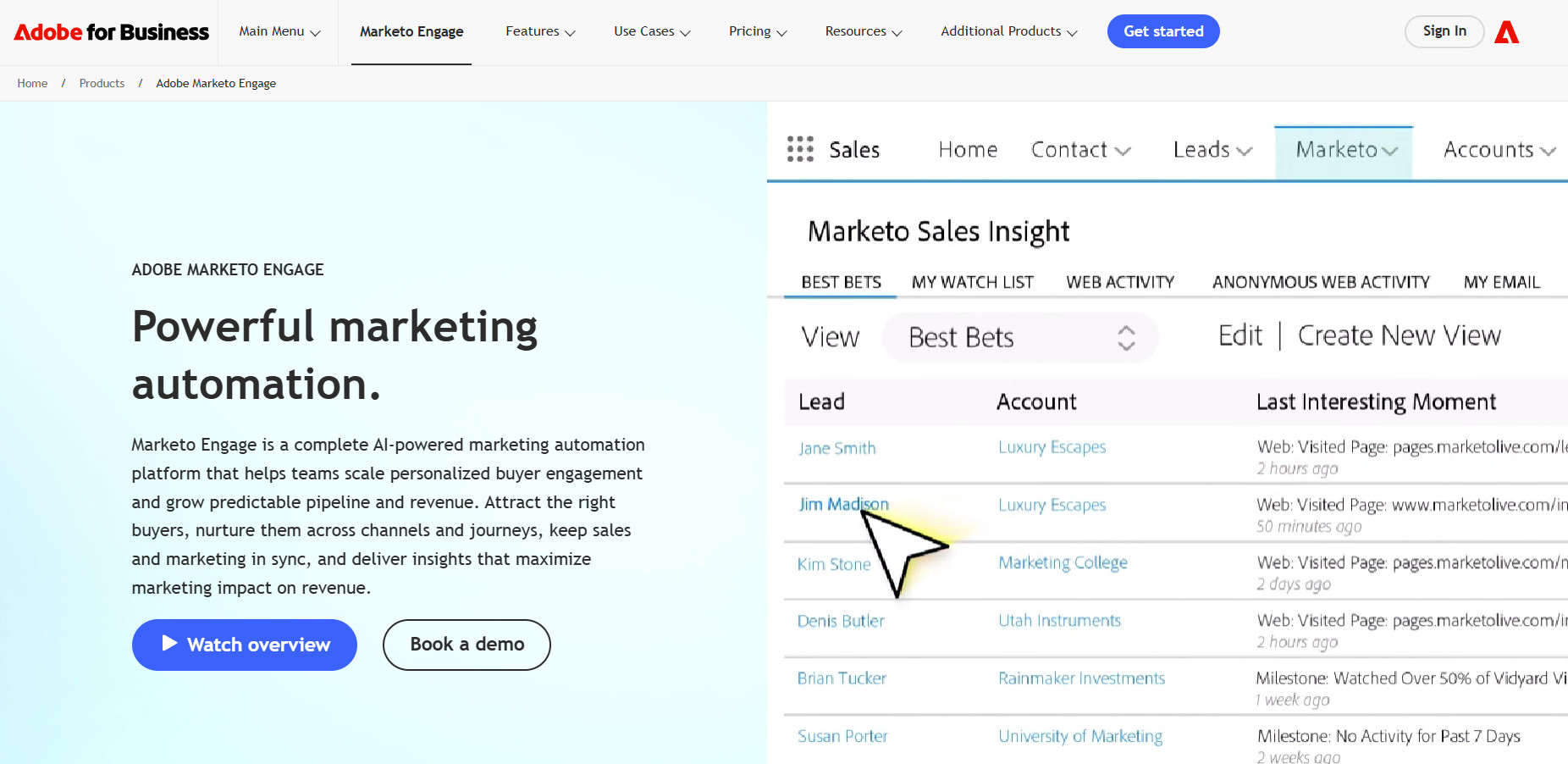
Marketo Engage, part of Adobe’s Experience Cloud, handles enterprise-scale lead nurturing and marketing automation with AI-powered scoring and campaign optimization. Adobe Sensei’s AI layer drives personalization, predictive lead scoring, and content recommendations across large contact databases.
Marketo’s agentic capabilities are strongest in the nurture and campaign layer. The platform autonomously adjusts send times, segments contacts based on behavioral scoring changes, and triggers campaign variations based on engagement signals. Full campaign orchestration across multiple product lines and long sales cycles can run without manual re-configuration at each stage.
Where Marketo differs from conversational agentic platforms is scope. It does not handle first-touch qualification or meeting booking natively. Enterprise marketing teams with complex account-based nurture programs across multiple segments get the most from Marketo. Teams prioritizing inbound qualification speed need to pair it with a complementary tool for that workflow.
Best for: enterprise B2B marketing teams with complex multi-stage nurture programs, Adobe ecosystem users, long-cycle B2B sales.
Outreach
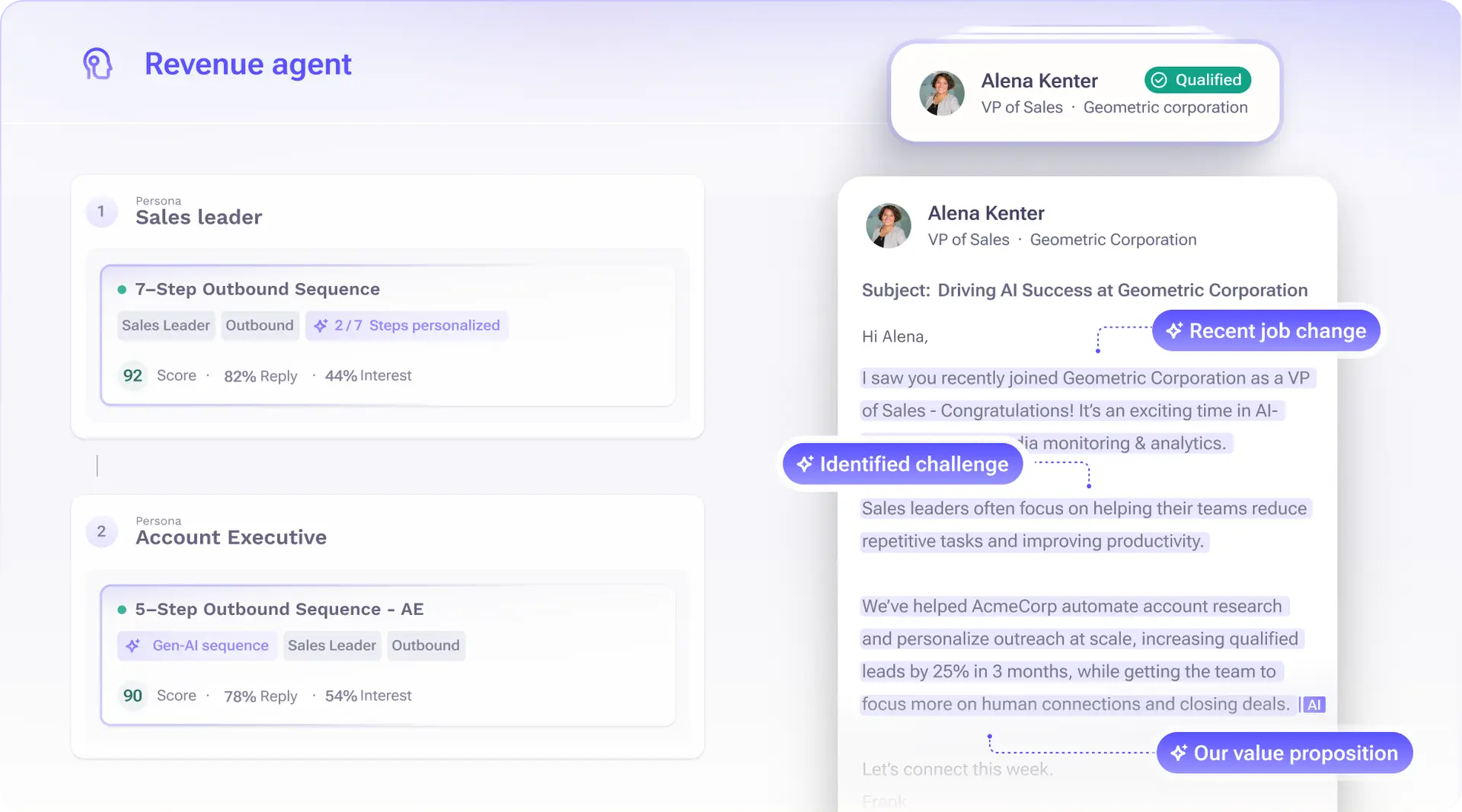
Outreach is primarily an AI sales engagement platform, but its autonomous sequence management and Kaia AI make it relevant for B2B teams that run marketing and sales outreach in close alignment. The platform handles multi-step outreach sequences, AI-generated email personalization, and follow-up logic that runs without manual SDR involvement at each touchpoint.
The agentic angle in Outreach is sequence autonomy: the system decides when to pause, reschedule, or adjust a sequence based on engagement signals, rather than running a fixed calendar. Combined with CRM sync, Outreach can adapt outreach strategy based on deal stage changes or contact engagement without a rep updating their task list manually.
Marketing teams working in close coordination with an SDR team on inbound-to-outbound handoff will find Outreach useful at the sales-side edge of the funnel. It is not a marketing automation tool by design, but it closes the handoff gap efficiently.
Best for: SDR-heavy B2B teams, companies with tight sales-marketing alignment, outbound-plus-inbound pipeline models where the SDR team handles qualified leads from marketing.
Clay
Clay operates at the outbound prospecting end of the agentic marketing stack. The platform automates data enrichment across 75+ data providers in a waterfall model: attempt to find contact data from source A, if not found try source B, verify, then pass to an outreach sequence. AI-generated personalization runs on the enriched data, producing tailored outreach at volume without manual research per contact.
For demand-generation teams running outbound as a primary pipeline motion, Clay replaces the manual research-and-write loop that consumes SDR hours before a first email goes out. The prospecting layer can score and filter contacts against ICP criteria before enrichment begins, so the enrichment budget concentrates on contacts most likely to convert.
Clay does not handle inbound qualification, website visitor engagement, or post-conversion nurturing. It is an outbound prospecting and enrichment tool, designed to complement inbound-focused platforms rather than replace them.
Best for: outbound-first B2B teams, high-volume prospecting programs, teams scaling personalized cold outreach without proportional SDR headcount growth.
Comparison: 9 agentic marketing platforms at a glance
| Platform | Primary use | Agentic scope | Best funnel stage | Best for |
| Dashly | Inbound qualification + routing + booking | Full autonomous cycle | Top-of-funnel inbound | B2B SaaS, fast inbound response |
| HubSpot | Marketing automation + AI agents | Partial (rules + AI assist) | Mid-funnel nurture | HubSpot CRM ecosystem teams |
| Salesforce | Enterprise marketing + SDR agents | Full (complex setup) | Full funnel | Enterprise with Salesforce infrastructure |
| 6sense | ABM + intent-based targeting | Partial (signal-triggered) | Pre-form-fill ABM | Enterprise ABM, large named account lists |
| Drift | Conversational website qualification | Full (chat) | Top-of-funnel website | High-traffic B2B SaaS sites |
| Intercom | Support + inbound sales chat | Full (Fin AI) | Top-of-funnel inbound | PLG SaaS, shared support/sales surface |
| Marketo | Lead nurturing + campaign automation | Partial (scoring + send-time) | Mid-funnel nurture | Enterprise, complex nurture programs |
| Outreach | Sales engagement + sequence automation | Partial (sequence logic) | Bottom-of-funnel | SDR-heavy, outbound-plus-inbound |
| Clay | Outbound prospecting + enrichment | Full (enrichment + outreach) | Top-of-funnel outbound | Outbound-first pipeline teams |
How to choose the right agentic marketing platform for your B2B team
The starting point is your primary pipeline bottleneck, not the platform that gets the most coverage in your peer group. Platforms optimized for inbound qualification, outbound prospecting, ABM signal-triggering, and enterprise nurture programs solve different problems. Buying the most-marketed option for a problem you do not have is the most common selection mistake.
Four questions to answer before you open a single vendor demo:
Where does pipeline leak most in your current funnel? If the leak is at first-response time, you need an inbound qualification agent. If it is at outreach personalization, you need enrichment and sequence automation. If it is at account targeting accuracy, you need intent-based ABM. The answer to this question should eliminate at least half the platforms on this list before you spend time on demos.
What does your CRM integration need to cover? Agentic platforms that do not write bidirectionally to your CRM create a qualification layer disconnected from your sales data. Verify exactly what the integration writes, reads, and syncs before the demo call. A platform with a partial integration can create more data hygiene problems than it solves.
How much setup time can your team realistically commit? Enterprise platforms like Salesforce Agentforce and Marketo require dedicated admin or partner time. Platforms like Dashly and Drift are designed for configuration without an engineering sprint. Your answer to this question determines your realistic time-to-first-qualified-meeting.
What are your SDRs actually doing today? The best agentic platforms augment what your SDRs are effective at, not replace work they never should have been doing. If SDRs spend most of their time on first-response qualification, that workflow gets automated first. If they spend most of it on custom research per account, outbound enrichment is the priority.
For a full framework on structuring the platform selection and deployment decision, the agentic marketing strategy guide covers the 5-phase deployment model with evaluation criteria by company stage. For B2B SaaS teams specifically, AI agents for B2B SaaS adds context on how agentic platforms perform across different growth stages and team sizes.
Conclusion
The 9 platforms on this list cover the full scope of agentic marketing for B2B, from inbound chat qualification to outbound prospecting to enterprise ABM. The difference between the best fit and the wrong choice is rarely about feature depth. It is about alignment with the specific pipeline stage where your team is losing the most qualified pipeline.
For most B2B SaaS teams, the highest-value starting point is inbound qualification speed. That is where the gap between agentic and non-agentic is most visible, most measurable, and fastest to close. A platform that runs the full qualification and booking cycle autonomously changes inbound funnel economics within the first quarter.
Three metrics tell you it is working: first-response time below 90 seconds, qualification accuracy above 80% on SDR review, and pipeline velocity that beats your pre-agent baseline. If those numbers are not moving in the first 60 days, the issue is almost always ICP criteria configuration, not the platform itself.
For documented outcomes across industry deployments, agentic AI marketing examples has case-level breakdowns. For teams comparing this category alongside broader sales AI options, best AI B2B sales tools covers where platforms outside pure marketing deliver comparable pipeline value.
An agentic marketing platform is software where AI agents execute multi-step marketing workflows autonomously, including lead qualification, routing, outreach, and meeting booking, without requiring human approval at every action. Unlike traditional marketing automation, agents adapt to what leads actually do in real time, rather than following a fixed sequence scheduled in advance.
Marketing automation follows rules configured in advance: if score > 80, enroll in sequence, send email on day 3. Agentic platforms run adaptive decision-making: receive a lead, check ICP fit, qualify via conversation, route based on the outcome, book a meeting. Each step responds to the previous one. For a full breakdown of the structural difference, <a href=”/blog/agentic-ai-vs-generative-ai/”>agentic AI vs generative AI</a> explains where automation ends and agency begins.
For inbound-heavy B2B SaaS teams where speed-to-lead is the primary bottleneck, Dashly is built specifically for autonomous inbound qualification and booking. For enterprise teams already on Salesforce looking to add agentic capability within their existing infrastructure, Agentforce is the logical choice. For teams running outbound as the primary pipeline motion, Clay handles enrichment and personalized sequence automation at scale. The right answer depends on which funnel stage is your biggest pipeline leak.
No, and the teams getting the best results are not framing it that way. Agentic platforms replace the parts of SDR work that do not require human judgment: first-response qualification, routing, scheduling, initial follow-up sequences. SDRs focus on the conversations requiring relationship context and deal judgment. Teams using agentic platforms typically see higher meetings-per-SDR per week because the agents handle volume work and route only prepared, qualified leads to the human.
Four steps: identify your primary pipeline bottleneck before looking at any platform, verify what the CRM integration actually writes bidirectionally (not just reads), ask for a pilot on a defined traffic segment before full deployment, and test the qualification logic against real leads from your recent pipeline before committing. Platforms that will not support a limited pilot before a full contract are worth scrutinizing.





![What is sales enablement? Definite guide + Strategy + Tools for 2024 [CSO edition]](https://www.dashly.io/blog/wp-content/uploads/2021/03/sales-enablement-720x308.jpg)