Sales funnel optimization: 8 proven strategies [2026]
 20 minutes
 01.06.2026
![Sales funnel optimization: 8 proven strategies [2026]](https://www.dashly.io/blog/wp-content/uploads/2022/12/cro-guide-1440x634.png)
Sales funnel optimization is the ongoing process of improving each stage of your funnel to increase the percentage of leads that convert into paying customers. It covers everything from refining lead targeting and qualification at the top of the funnel to personalizing nurture sequences in the middle and reducing friction at close.
This guide covers 8 proven strategies organized by funnel stage, the metrics to track at each step, and the tools including AI agents that automate the process.
8 sales funnel optimization strategies at a glance
- Invest in content marketing to attract the right audience
- Fine-tune targeting with ICP-based ad audiences
- Qualify leads automatically at the moment of capture
- Set up automated nurture sequences by funnel stage
- Personalize communication using lead qualification data
- Use personalized offers and social proof to close deals
- A/B test high-drop-off pages and email sequences
- Track 5 core metrics and iterate monthly
If you struggle with poor leads quality, leaky sales funnel and few closed deals, it’s time to dive into some serious sales funnel optimization. Regularly optimizing your sales funnel is like giving your car a tune-up; it keeps everything running smoothly. This article will make the process easier and more effective. We’ll touch on:
- Main stages of the sales funnel and what can be done at each stage to optimize the funnel;
- Which tools can help you with optimization;
- Which metrics to monitor in this process;
- Common mistakes to avoid.
Ready to level up your sales game? Let’s get started!
Defining a sales funnel
Sales funnel is a visual representation of the customer journey, from the moment they become aware of your product to the point they make a purchase.
Organizing lead’s way as a funnel is an effective way to manage your sales process because it helps you understand where prospects are getting stuck. Then you can figure out why and fix it. For effective sales funnel optimization, it’s crucial to know the stages and strategies for how to increase sales conversion.
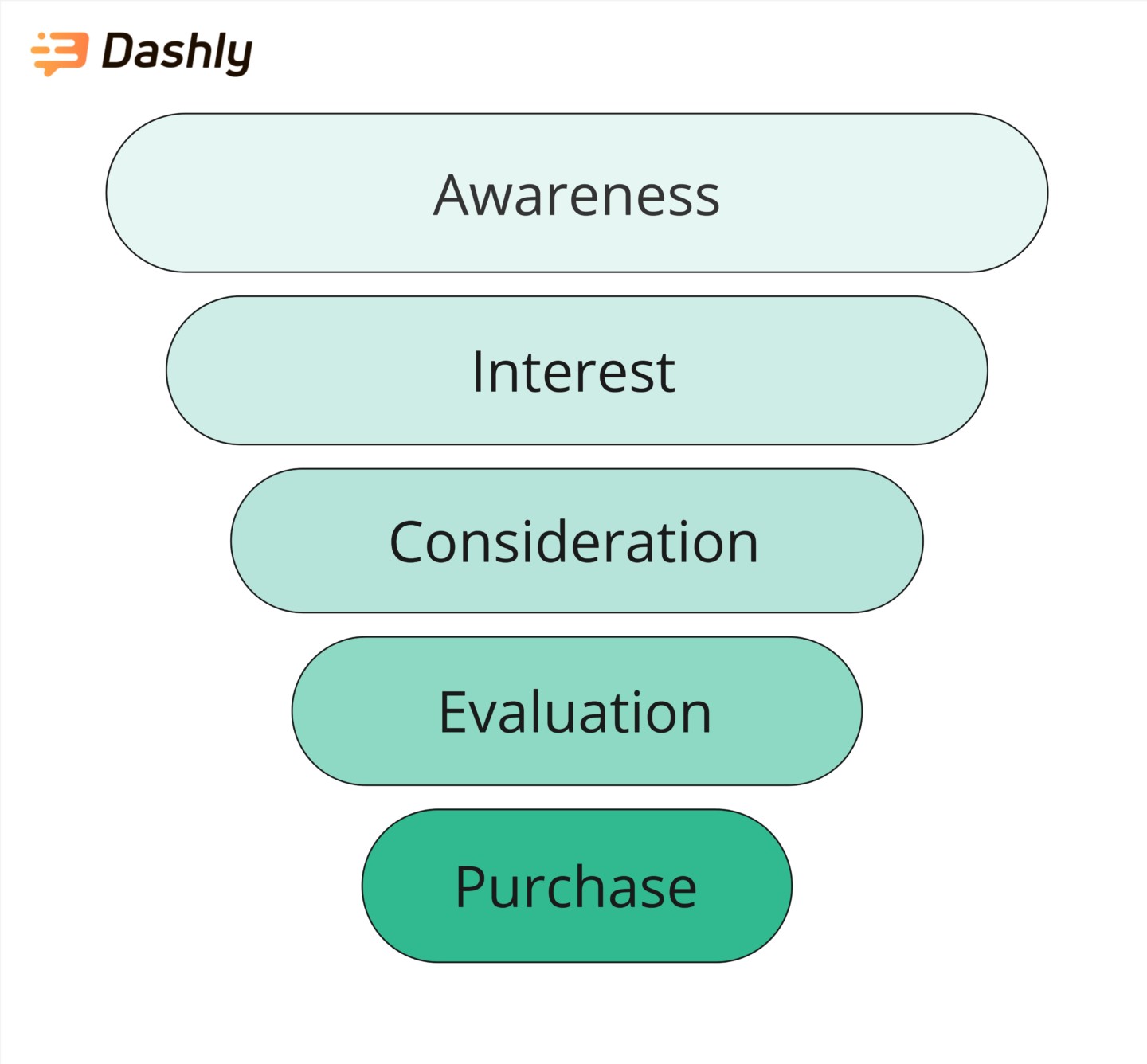
Of course, there are different ways to divide the funnel into stages. Besides, each business customizes it depending on the CJM (Customer Journey Map). But we’ll focus on five main ones: Awareness, Interest, Consideration, Evaluation, and Purchase. We’ll dive into each of these stages in detail next 👇
The main stages of the sales funnel
Awareness
From the customer’s point of view, the Awareness stage is when they first learn about your product or service. They’ve got a problem, and they’re starting to look for solutions. At this stage, the marketing team plays their part. Their role here is to cast a wide net through content marketing, SEO, and social media. These efforts drive traffic to the top of the sales funnel.
Interest
In the Interest stage, the customer is intrigued by what you offer and starts their research. Here, your marketing team should nurture this curiosity through engaging content like blog posts, webinars, and newsletters. The goal is to keep the lead engaged, provide all the necessary info and move a prospect down the sales funnel.
Consideration
At this stage, the customer is considering your product as a viable solution. They might compare you with alternative solutions. Your sales team should step in with personalized communication, offering demos or detailed guides, and addressing any questions or concerns. Show that you can solve their particular issue. This is a critical point for sales funnel optimization.
Evaluation
During Evaluation, the customer is seriously weighing their options. They’re almost ready to make a decision. Here, both the sales and marketing teams need to collaborate closely. Case studies, testimonials, and free trials can be very persuasive. Show that you’re successful at solving the issue they’re facing. You’ll help.
This stage is vital for an optimized sales funnel.
Purchase
Finally, the Purchase stage is where the customer decides to buy. The sales team should ensure a seamless buying process, addressing any last-minute objections. Post-purchase, it’s important to continue nurturing the relationship for future sales and referrals. Knowing how to optimize sales funnel strategies at this stage ensures a smooth transition from lead to customer.
By understanding and optimizing each of these stages, your team can provide a top-notch customer experience that effectively moves leads down the funnel.
Read also:
Unlock the Power of the Inverted Funnel: A Guide to Upside Sales Growth
Sales Funnel Statistics 2024: Essential Data to Fuel Your Company’s Growth
Why you need sales funnel optimization
Alright, let’s talk about why sales funnel optimization is a non-negotiable task for any team aiming to crush their sales goals.
Raise in revenue: Regular sales funnel optimization helps you identify and fix bottlenecks, which means more leads converting into customers. An optimized funnel directly impacts your bottom line by boosting sales revenue.
Improved customer experience: When your sales funnel is smooth and efficient, prospects have a seamless journey. This enhances their experience, builds trust, and increases the likelihood of a purchase. Happy customers are more likely to become repeat buyers and even brand advocates.
Better resource allocation: By focusing on optimization, you can identify which stages of your funnel need the most attention. This allows your team to allocate resources — whether it’s time, money, or people’s attention — more effectively.
Higher quality leads: An optimized sales funnel means you’re not just attracting more leads but attracting better ones. With proper sales funnel optimization strategies, you can filter out the tire-kickers and focus on leads that are more likely to convert. This makes your sales team’s job a whole lot easier.
Data-driven decisions: Regular funnel optimization provides valuable insights into what works and what doesn’t. This data-driven approach enables you to tweak your sales funnel optimization strategy continually, ensuring you stay ahead of the game.
In sum, ongoing sales funnel optimization is essential for sustained growth, higher revenue, and a more efficient sales process.
Now let’s get to the action tips for your funnel optimization 👇
Top of the funnel: optimize lead generation
Awareness. This is where prospects first enter your sales funnel, so giving them a grand entrance is crucial. Here are some tips to optimize lead generation:
Invest in content marketing
Content is king. Create valuable content that addresses your prospects’ pain points. Blogs, eBooks, and especially lead magnets like guides or templates. These help you provide value first and increase trust of your leads, attracting them into your sales funnel.
The key is to offer something so valuable that they can’t resist handing over their contact info. So I recommend putting thought into content creation.
Fine-tune your targeting
Driving a high-quality audience to your website is crucial. One way to fine-tune your targeting is through Facebook ads. Here’s a quick tip: describe your Ideal Customer Profile (ICP) in excruciating detail. The more specific you get, the better your targeting will be.
1. Start with general info: Industry, their position in the company, responsibilities.
2. Tasks and pain points: What tasks do they need to solve? What are their pain points?
3. Custom audiences: Use your existing customer data to find lookalike audiences.
Finely tuned targeting results in high conversion rates, making your sales funnel optimization efforts pay off big time.
Qualify leads while capturing them
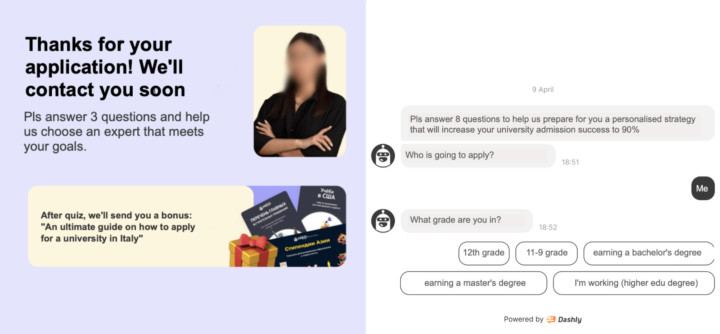
Qualifying your leads as you capture them helps prioritize your work, ensuring your sales team focuses on the most promising prospects. Here’s a pro tip from Dashly: we use a AI agents that automate lead qualification using a conversational flow, asking visitors the right questions, scoring fit against your ICP, and booking meetings with the most promising leads without involving your sales team.
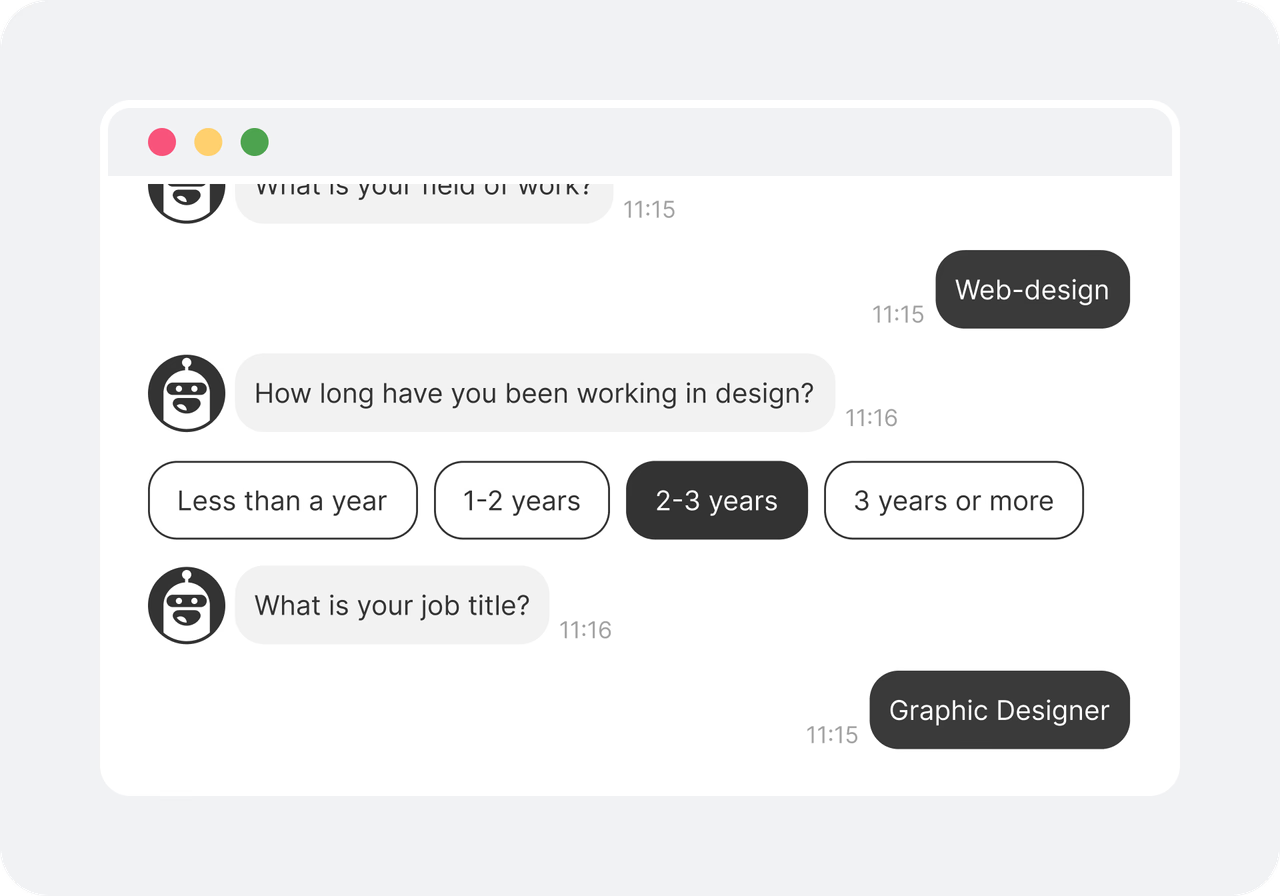
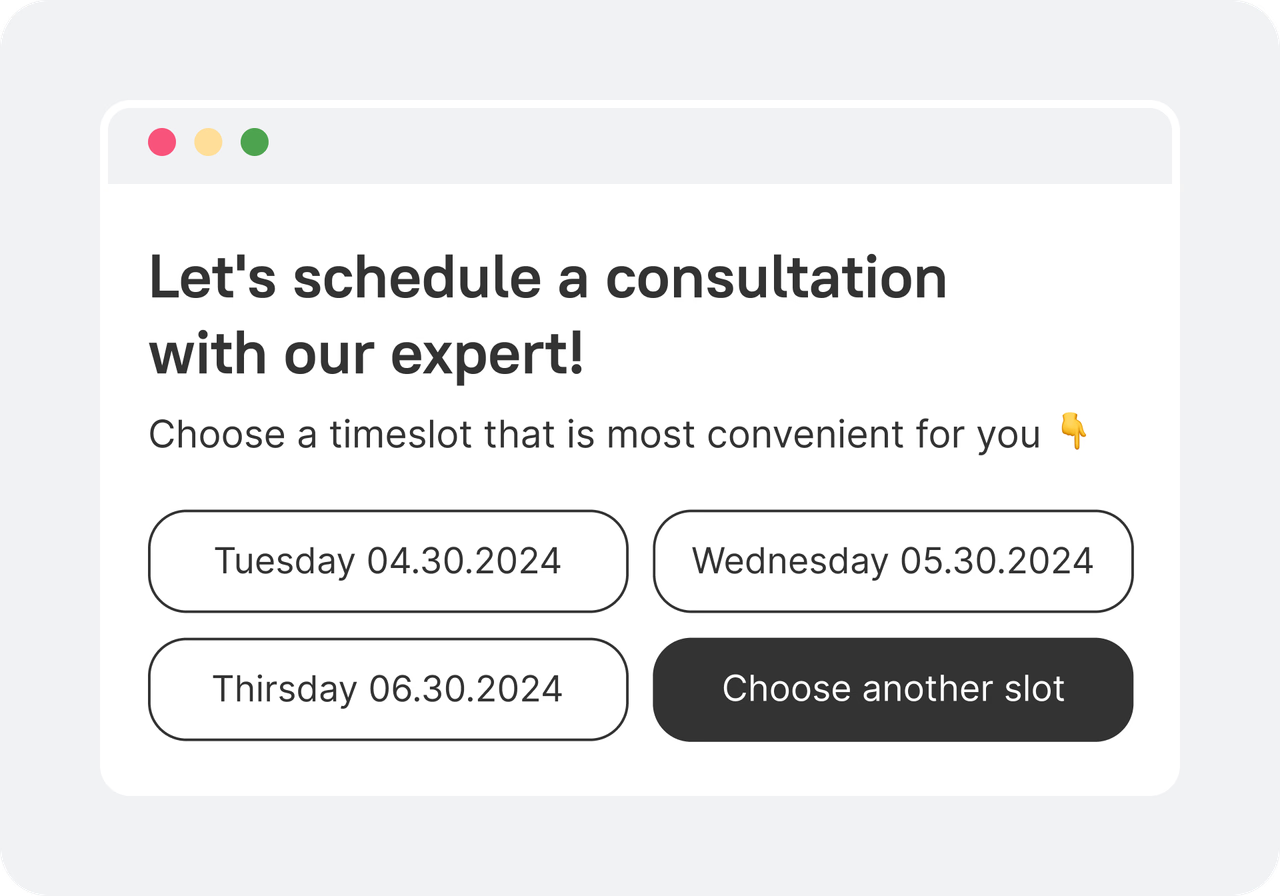
A lead matches your ICP — the bot offers a meeting immediately, without salespeople involvement.
Testing various funnel optimization strategies at the top is critical. Invest in content marketing, fine-tune your targeting, and qualify leads upfront. These actions ensure your funnel optimization efforts yield high-quality leads, setting the stage for a smooth journey down your sales funnel.
Incorporate these steps into your sales funnel optimization strategy, and you’ll see a noticeable improvement in your lead quality and conversion rates at the top of the funnel.
Middle of the funnel: remember about nurturing
Alright, let’s move to the middle of the sales funnel. Here’s where nurturing comes on stage. The middle of the funnel includes the Interest and Consideration stages. It’s all about keeping your leads warm and moving them closer to a purchase.
Here’s how you can optimize this stage effectively:
Set up nurturing sequences
Think of sequences as breadcrumbs leading your prospects to your product. These can be email sequences, messenger sequences, or even social media drips. Pick the channel where your audience is. The even the channel doesn’t matter as much as the value you provide.
1. Email Sequences: Offer valuable insights, tips, or case studies.
2. Messenger Sequences: Quick, interactive messages work wonders. Remind them why they need to keep you in mind.
3. Social Media Drips: Keep them engaged with useful content.
Your sequences should not just be about selling but also show why prospects need to meet with you or sign up for a free trial. Communication is the key here. Always keep it engaging, informative, and valuable.
Include personalization
No one likes generic messages. Personalized communication captures attention and fosters a connection. Analyze the info gathered during lead qualification to tailor your messages. Address your leads’ specific pain points and offer solutions that resonate with them.
1. Personalized communication: Use the lead data you gathered as much as possible.
2. Customized Content: Share articles, videos, or case studies relevant to their industry or problem.
Dashly AI agents use qualification data to send personalized nurture messages at the right moment. Each message is unique and adapts to where the lead is in the funnel.
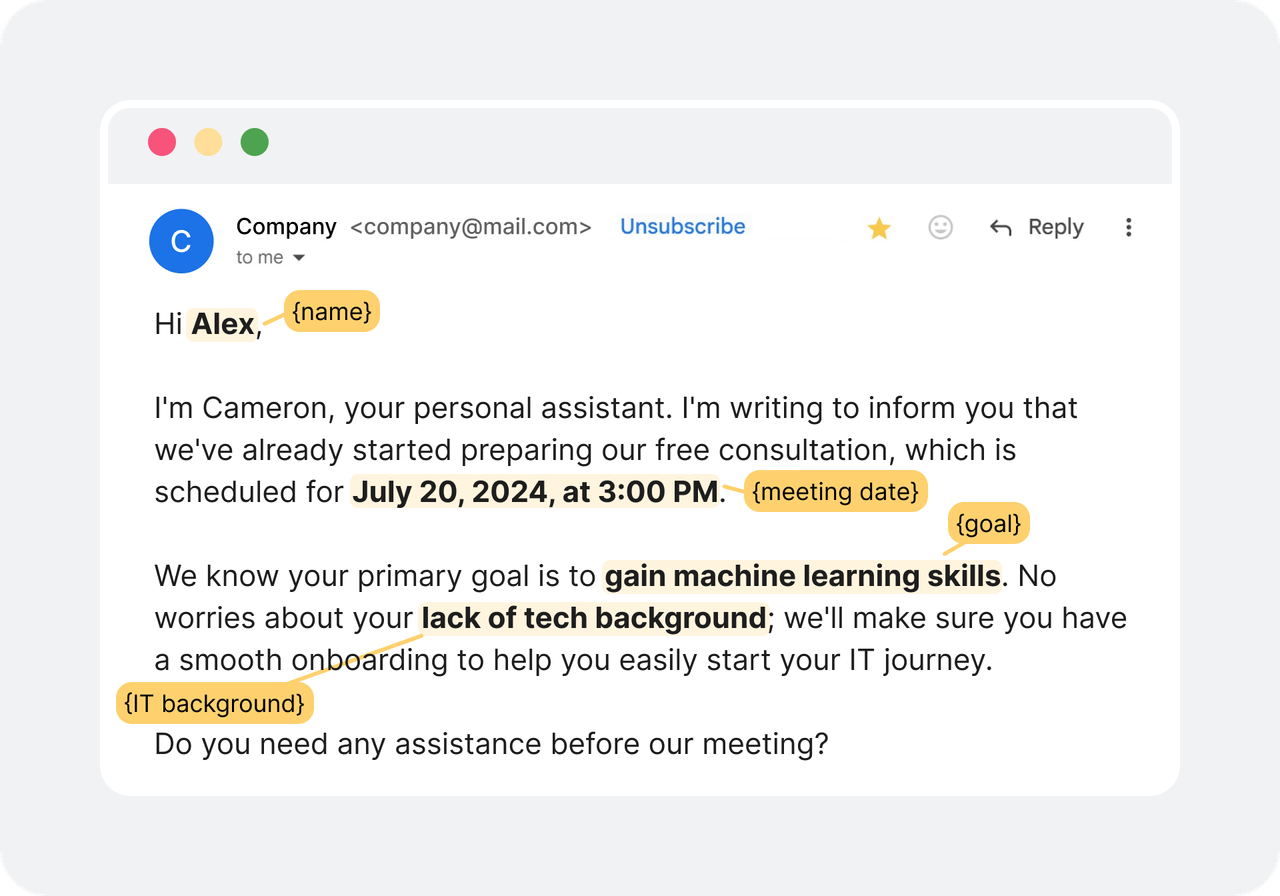
The more personalized your outreach, the more engaged your prospects will be. It’s a key funnel optimization tactic that significantly impacts your conversion rates.
Double your SaaS sales funnel metrics with Dashly AI
⭐ Growth the number of qualified leads with conversational quiz
⭐ Increase meetings scheduled with AI lead nurturing campaigns
Optimizing the middle of your sales funnel involves nurturing through well-crafted sequences and personalized communication. These steps help build trust and move leads smoothly to the next stages, improving your conversion rates. Implement these sales funnel optimization strategies to see a noticeable impact on how to increase conversion rate in sales.
Remember, nurturing isn’t about pushing; it’s about guiding. Keep your prospects engaged, informed, and feeling the value you provide.
Bottom of the funnel: improve sales closing techniques
We’ve reached the bottom of the sales funnel. This is where the Evaluation and Purchase stages come into play. Here, it’s all about sealing the deal. Note that changes made at the bottom of the funnel make the greatest difference in your eventual revenue.
So let’s talk about how to improve sales conversion rate and close those deals like a pro.
Leverage personalization
Can’t highlight this enough.
Personalized offers can make or break your closing game. You’ve already collected valuable information during the Interest and Consideration stages. Use that data to craft offers that resonate with your prospective customers. Show them exactly how your product can solve their specific pain points and meet their unique needs.
Tailored solutions: Customize your pitch to address the prospect’s issues directly.
Specific benefits: Highlight features that are most relevant to their situation.
Personalized offers hit home. They show the prospect that you understand them and that your solution is the perfect fit. This level of personalization can dramatically optimize sales funnel closing rates.
Read also: Top 10 Benefits Of Sales Funnel To Skyrocket Your 2025
Invest in social proof, testimonials, case study
Never underestimate the power of social proof. In today’s decision-making process, reviews and testimonials can tip the scales in your favor. Use case studies from customers in the same industry or who face similar challenges. These real-world examples serve as powerful endorsements of your product.
Testimonials: Collect and share reviews from satisfied customers.
Case studies: Showcase detailed examples of how your product solved problems for others.
Social proof builds credibility. It reassures prospects that they are making the right choice. It’s a critical component of any effective sales funnel optimization strategy.
Remember that the most important thing at any step of the sales funnel is to experiment. The tips from the article will give you a strong start, but always be on the lookout for new ideas. Test different approaches and find what works best for your audience and your sales funnel optimization strategy.
A/B Testing: Try different pitches and offers.
Feedback loops: Listen to prospect feedback and adjust accordingly.
By optimizing the bottom of your sales funnel with personalized offers and compelling social proof, you can significantly improve your closing rates. Combine these strategies with a mindset of constant experimentation (or Growth Mindset), and you’ll see a noticeable boost in your ideas on how to improve sales conversion rates.
A/B testing your sales funnel: what to test first
A/B testing is the engine behind ongoing funnel optimization. Every stage has elements worth testing, but not every test moves the needle equally. Start where traffic and drop-off are highest.
Start with high-traffic, high-drop-off pages
Test only pages where you can reach statistical significance in 2 to 3 weeks. For most B2B SaaS funnels, that means your main landing page (500+ visits/month) or your demo request page. Test one element at a time: headline, CTA text, number of form fields, or the social proof block above the fold.
Test your lead qualification flow
The qualification bot is one of the highest-leverage test surfaces in a B2B funnel. Try 3 questions vs 5, reorder them by friction (easy first), or change the phrasing (“What’s your team size?” vs “How many people are in your sales team?”). Dashly AI agents let you run parallel flows and compare qualified lead rates directly.
Test nurture email subjects and send timing
Subject line tests routinely produce 15 to 30% differences in open rate. Timing tests (day 2 vs day 4 after lead capture) affect reply rate significantly. One Dashly client achieved an 83% open rate for lead nurturing emails by personalizing subject lines using qualification data collected during the bot conversation.
One test at a time, two-week minimum
Run one variable per test and let it run for at least 2 weeks or until you have 200 conversions per variant. Stopping tests early is the most common A/B testing mistake and produces false winners that hurt conversion rates when rolled out.
Top sales tools for funnel optimization
Optimizing your sales funnel can be a complex task, but the right tools make it manageable and effective. Here’s a breakdown of five essential tools to optimize to convert more leads efficiently. They’re all responsible for different stages of the funnel, so you can pick those that correspond to your needs the most now.
Dashly
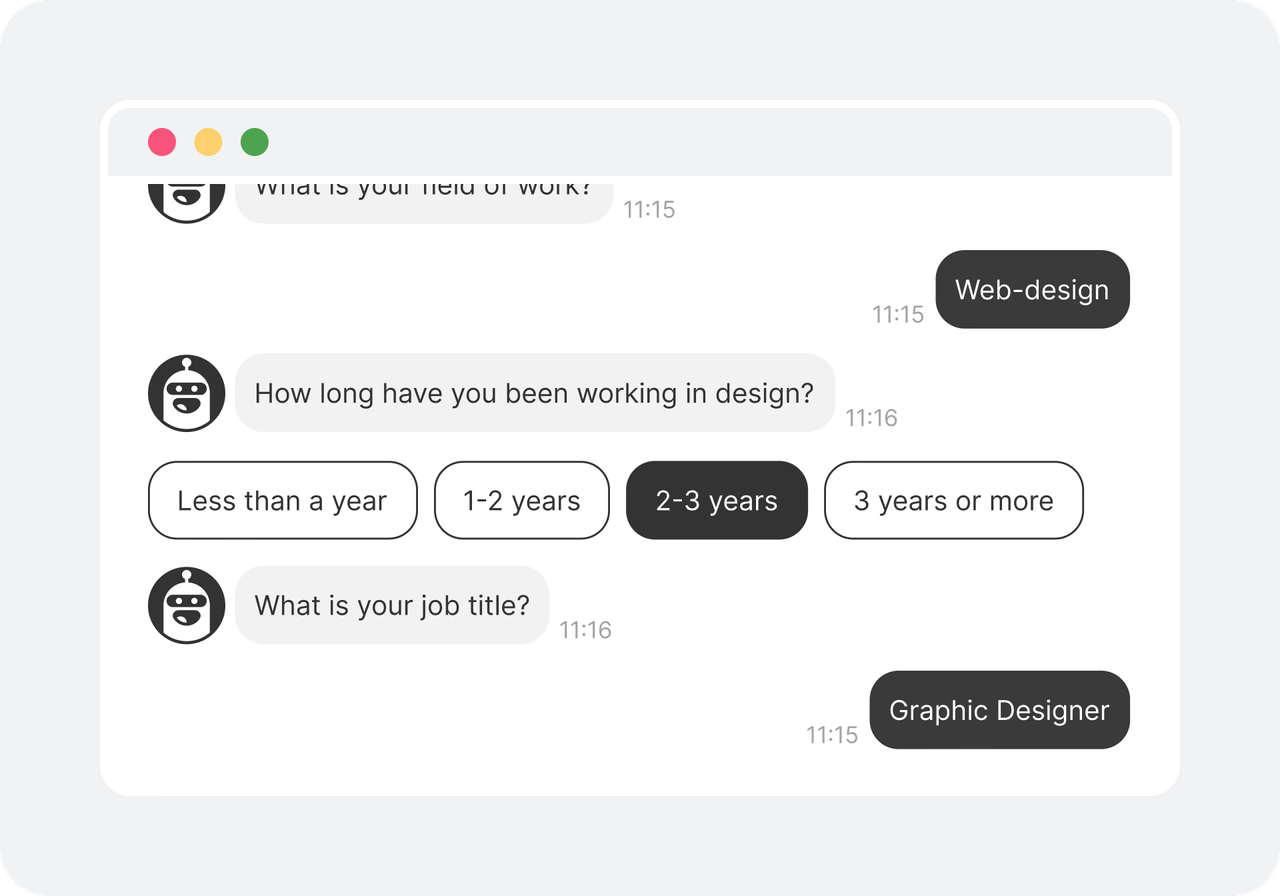
Dashly is an AI agent platform for B2B inbound funnels. Its AI agents qualify leads through conversational flows, automatically book demos with high-fit prospects, and run personalized nurture sequences until the meeting happens. Built for teams that rely on inbound demos as their primary conversion path.
AI agents:
- Automates chat sequences to qualify users,
- Sets up a meeting with the most promising ones;
- Nurtures leads to the meeting with personalized email campaigns.
Double your SaaS sales funnel metrics with Dashly AI
⭐ Growth the number of qualified leads with conversational quiz
⭐ Increase meetings scheduled with AI lead nurturing campaigns
Mixpanel
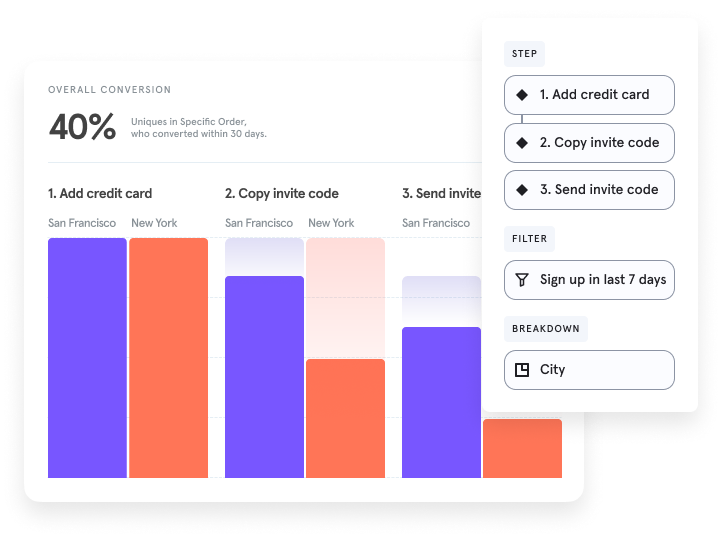
Mixpanel is an advanced analytics tool that provides insights into user behavior and engagement. It’s geared towards making informed optimization decisions.
With Mixpanel, you can:
- Track user behavior across the funnel;
- Analyze conversion rates for different stages;
- Measure the effectiveness of marketing campaigns.
ClickFunnels
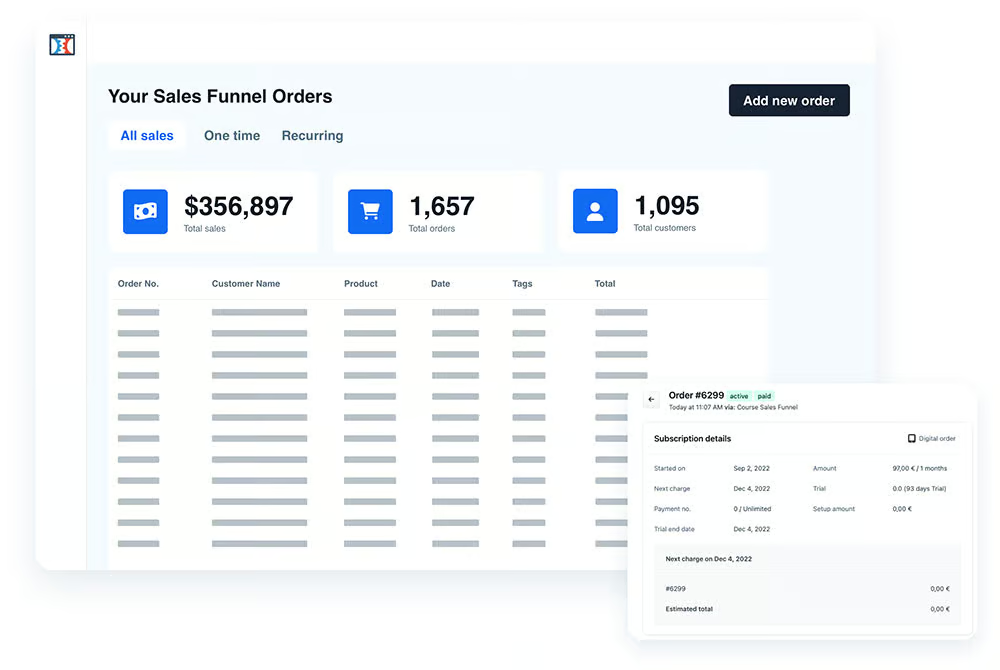
ClickFunnels is a funnel-building software that aids in designing high-converting sales funnels. It’s ideal for businesses looking to optimize their web funnels.
The product allows you to:
- Build customized landing pages;
- Automate follow-up sequences;
- Integrate with other marketing tools.
Google Ads
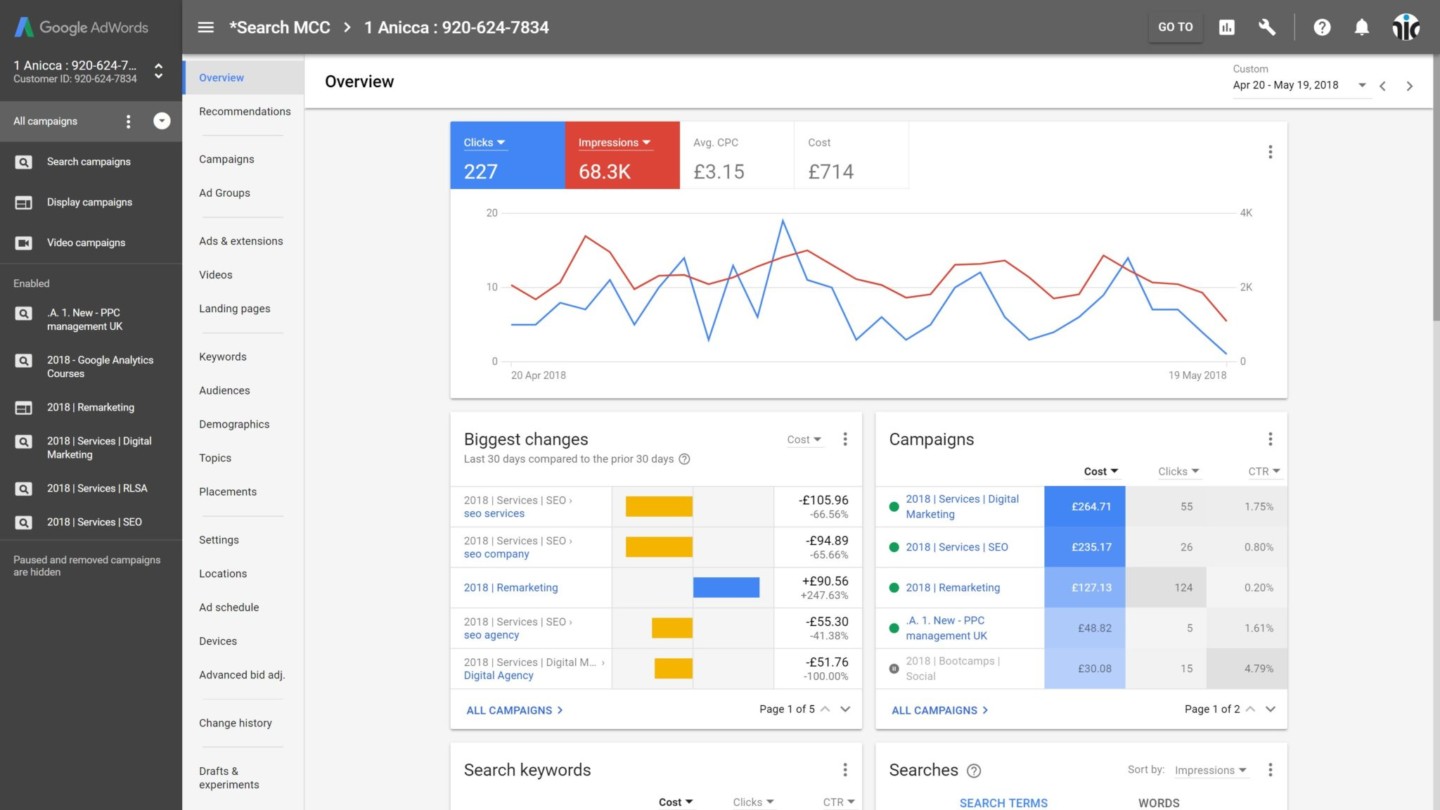
Google Ads is essential for driving targeted traffic to your sales funnel. It’s great for improving your reach and getting quality leads.
With Google Ads, you can:
- Optimize ad targeting to attract the right audience;
- A/B test different ad copies;
- Analyze campaign performance for better results.
GetLeadForms
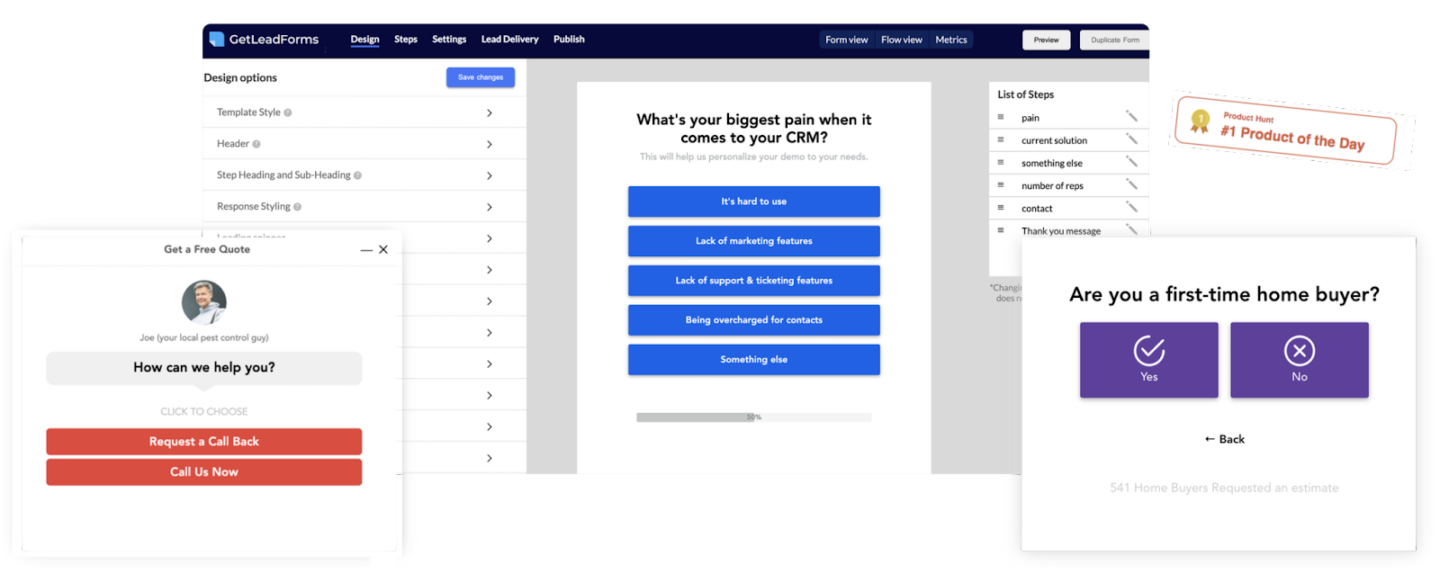
GetLeadForms is a form-building tool that helps capture leads effectively. It’s perfect for integrating into websites for increased lead capture.
Use GetLeadForms to:
- Create eye-catching forms for lead capture;
- Integrate seamlessly with CRM tools;
- Personalize lead capture forms to improve engagement.
These tools are invaluable for sales funnel optimization. From automating qualification and nurturing with Dashly to tracking metrics with Mixpanel, building funnels with ClickFunnels, running targeted ads with Google Ads, to optimizing lead capture with GetLeadForms, each tool plays a pivotal role in making your sales funnel more efficient. Choose the right tools for your strategy and watch your sales skyrocket!
Key metrics: how to analyze your sales performance
When working on sales funnel optimization, always rely on data. Here are key metrics the sales team should focus on to boost sales funnel efficiency:
- Conversion rate: This metric measures the percentage of leads that convert into actual sales. It’s vital because it directly reflects how effective your sales funnel is at turning prospects into customers. Track conversions at each stage of the funnel.
- Lead-to-customer ratio: This metric shows how many leads are needed to acquire a single customer. A lower ratio means a more optimized funnel, indicating that you’re attracting high-quality leads.
- Sales cycle length: This metric gauges how long it takes to close a sale. A shorter sales cycle is often more efficient, indicating a smoother sales funnel process.
- Customer lifetime value (CLV): This metric estimates the total revenue a single customer will bring during their relationship with your business. It’s important for understanding the long-term value of customer relationships.
- Cost per acquisition (CPA): This measures how much it costs to acquire a new customer. A lower CPA means your sales funnel is more cost-effective and efficient.
Monitoring these sales funnel metrics provides invaluable insights for optimization. They help pinpoint areas needing improvement and highlight successful strategies, enabling you to keep your funnel optimized and effective.
Common mistakes while optimizing your sales funnel
When optimizing sales funnels, even well-intentioned strategies can sometimes lead you astray. Here are common mistakes to avoid in the process:
- Ignoring data: A major error is not leveraging the data you have. Failing to analyze metrics prevents you from understanding where your sales funnel might be leaking. Use data-driven insights to guide your sales optimization efforts.
- One-size-fits-all approach: Treating all leads the same way is a mistake. Failing to personalize can result in disengagement. Customize your communication and offers based on the unique needs and behaviors of your prospects.
- Overcomplicating the CJM: Adding too many stages or making prospects take unnecessary steps can confuse them and slow down the sales process. Keep your funnel simple and streamlined to enhance sales funnel efficiency.
- Neglecting the middle funnel: Many focus only on the top and bottom, ignoring the middle stages like nurturing. This stage is crucial for keeping leads engaged and moving them down the funnel. Invest resources here to maintain interest.
- Not testing enough: Failing to experiment with different strategies can hinder optimization. A/B test various approaches to see what works best, from different messaging styles to varied touchpoints.
- Lack of alignment between teams: Sales and marketing teams need to work together. Misalignment can lead to inconsistent messaging and priorities, confusing prospects and harming conversions.
Avoiding these mistakes is key to creating an optimized and effective sales funnel. Stay vigilant, keep testing, and let data guide your strategy for better results in optimizing sales funnels.
Final thoughts on optimization
Sales funnel optimization isn’t just a one-time task; it’s an ongoing necessity for continuous sales growth.
Regular optimization keeps your sales funnel efficient and effective, driving more conversions. Hope this article has been useful and sparked some ideas on how to optimize your sales funnel.
Remember, the key is to experiment. Discover what works best for your business through trial and error. Keep fine-tuning your funnel, and don’t be afraid to try new strategies.
Happy funnel optimization!
Double your SaaS sales funnel metrics with Dashly AI
⭐ Growth the number of qualified leads with conversational quiz
⭐ Increase meetings scheduled with AI lead nurturing campaigns
FAQ
Sales funnel optimization is the process of improving each stage of your sales funnel to increase the rate at which leads move toward purchase. It involves analyzing where prospects drop off, testing messaging and content, and automating repetitive steps like lead qualification and follow-up.
Track five core metrics: stage conversion rate, sales cycle length, lead-to-close rate, cost per acquisition (CAC), and customer lifetime value (CLV). A well-optimized funnel improves conversion rate and shortens cycle length simultaneously.
The most common cause is misalignment between what leads expect and what they receive at each stage. Leads drop off when follow-up is slow or generic, when there are no relevant case studies at the Evaluation stage, or when close friction from complex contracts kills last-minute deals.
Review funnel metrics monthly and run A/B tests on high-traffic touchpoints quarterly. Major structural reviews should happen every 6 to 12 months or after a significant shift in your ICP or go-to-market strategy.
Yes. AI agents handle the most time-consuming optimization tasks automatically: qualifying inbound leads, booking meetings with high-fit prospects, and sending personalized nurture sequences. Teams using Dashly AI agents report up to 40% higher demo-to-close rates by removing manual qualification from the process.
Read also:
– B2B Marketing Sales Funnel Strategies That Drive Results;
– 10 inspiring sales funnel examples to boost your business growth;
– Mastering sales funnel analysis: step-by-step guide, tools, and examples;
– Ultimate guide to an AI sales funnel: the best tips, tools and common mistakes to avoid.