Pipeline generation strategy: 8 proven tactics for B2B SaaS in 2026
 16 minutes
 21.05.2026
B2B teams that document their pipeline generation strategy close deals at a 40% higher rate than those relying on ad-hoc prospecting. Most companies still treat pipeline as a side effect of sales activity, not a designed system.
The result is predictable: revenue spikes when the team is prospecting and collapses when they stop. One strong quarter, one weak one. SDR turnover that wipes out pipeline overnight.
A documented pipeline generation strategy changes that equation. Instead of depending on individual rep activity, you build channels, systems, and processes that generate qualified opportunities at a predictable rate.
This article covers:
- 8 specific tactics;
- Metrics to measure pipeline health;
- 90-day action plan to get inbound leads and qualified opportunities flowing at a predictable rate.
What is pipeline generation?
Pipeline generation is the process of creating qualified sales opportunities that enter your revenue pipeline at a predictable rate. It differs from lead generation, which produces contacts or interest signals. Pipeline generation takes the next step: turning those signals into opportunities with a defined value, a close date, and a clear path through the sales process.
For B2B SaaS teams, pipeline generation covers every channel that creates a qualified opportunity, from inbound leads captured through SEO content and website chat to outbound sequences targeting high-fit accounts to referrals from integration partners. For a fuller picture of how leads feed that process, the inbound lead generation guide covers the upstream mechanics.
Pipeline generation meaning: the systematic process of creating qualified sales opportunities that enter your revenue pipeline, as distinct from simply capturing leads. Where lead generation fills the top of the funnel, pipeline generation ensures those leads convert to opportunities your team can close.
For the fuller picture, including how pipeline moves through each stage and how tactics shift for product-led, enterprise, and SMB motions, see the complete pipeline generation guide.
Pipeline generation vs. lead generation
| Pipeline generation | Lead generation | |
|---|---|---|
| Scope | Creating qualified opportunities with deal value and close date | Capturing interest signals and contact information |
| Output | Sales opportunities in CRM | Contacts, MQLs, opt-ins |
| Who owns it | RevOps, Sales, and Marketing jointly | Marketing |
| How measured | Pipeline value, coverage ratio, win rate | Lead volume, CPL, MQL count |
Understanding the inbound vs outbound pipeline mix matters here. At $1M to $10M ARR, a 50/50 inbound/outbound split is a reasonable starting point. Above $10M ARR, inbound should drive 60 to 70% of pipeline because the inbound engine compounds while outbound stays linear.
What is a healthy pipeline coverage ratio?
Pipeline coverage ratio = total pipeline value / quarterly revenue target.
For a team targeting $500K in new ARR this quarter, a 3x coverage ratio means $1.5M in pipeline. A 5x ratio means $2.5M.
Three times coverage is the benchmark for efficient teams with a win rate above 30%. Early-stage companies or those with lower win rates should target 4x to 5x to absorb deal slippage and forecast variance.
8 pipeline generation tactics that build predictable revenue
There is no single channel that generates all the pipeline a growing B2B SaaS team needs. What works is a portfolio of channels where each one reaches a different segment of your ICP or a different stage of the buying journey. These eight tactics cover the full range, from inbound to outbound to partner to AI-powered capture.
1. Define your ICP before building pipeline
Without a sharp Ideal Customer Profile, pipeline fills with low-fit accounts that take longer to close and churn faster after they do. ICP definition is not a one-time exercise. It evolves as you learn what actually converts and retains.
Four criteria drive ICP definition for B2B SaaS:
- Company size (headcount range and ARR band where your product delivers clear ROI);
- Industry (verticals where the problem you solve is acute and budgeted);
- Tech stack (systems your product integrates with or replaces);
- Buying triggers (funding rounds, headcount growth, compliance deadlines, or new leadership).
Revisit ICP quarterly using win/loss data. A sharp ICP lets your sales team qualify faster, your marketing team target better, and your AI lead capture qualify and route conversations more accurately.
2. Build inbound pipeline with SEO content and lead magnets
Inbound marketing lead generation compounds in a way outbound does not. A well-ranked article targeting a decision-stage query generates qualified traffic for months or years without additional spend.
Gated content converts that traffic to pipeline. Benchmarks, templates, and ROI calculators work better than white papers because they offer immediate utility. A calculator that shows how much pipeline a team should be building creates a natural opening for a demo conversation.
The key is to target decision-stage queries, not awareness queries. “How to choose a B2B sales qualification tool” converts better than “what is sales qualification” because the searcher is already comparing solutions.
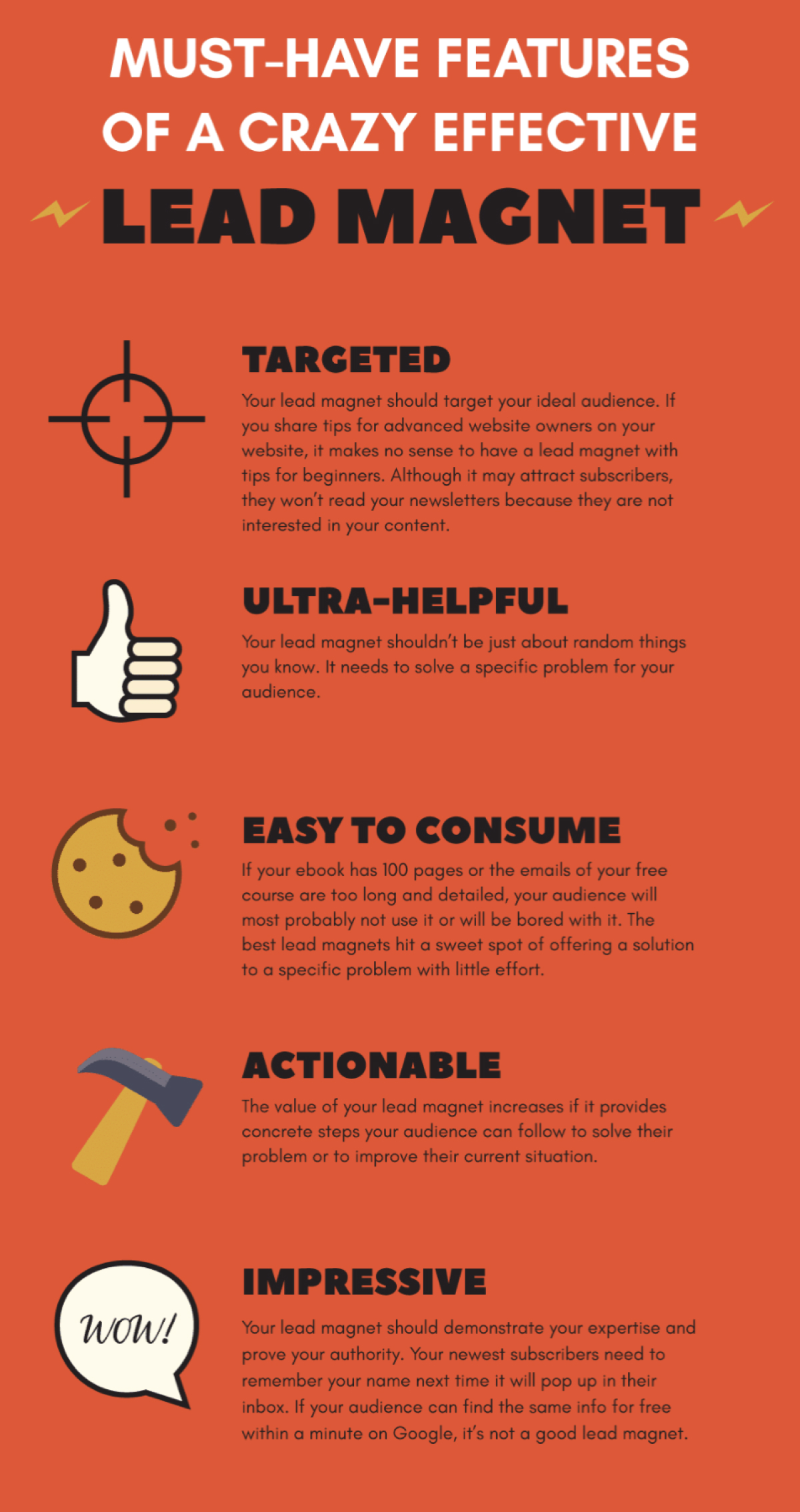
Here are a few tips to make a useful lead magnet:
3. Set up AI-powered lead capture on your website
Most B2B teams focus pipeline generation efforts on outbound and content while ignoring visitors already on their site. Static contact forms convert 0.5 to 1% of website visitors. AI-powered chat on pricing and demo pages converts 3 to 8%, according to Dashly internal benchmark data.
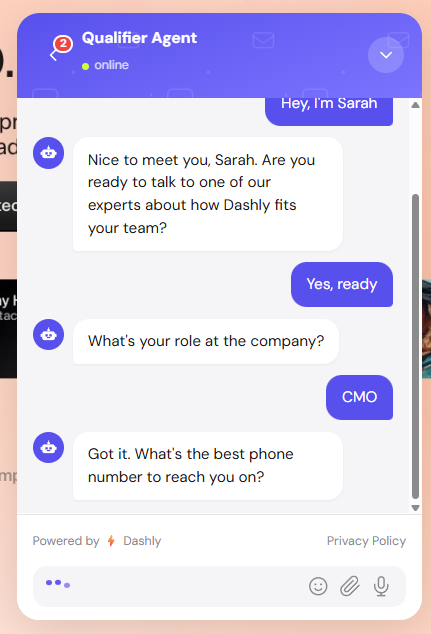
An AI agent on your pricing page greets a high-intent visitor, asks two qualifying questions to confirm ICP fit, and routes a confirmed MQL to calendar booking in the same conversation. No form fill. No waiting for a rep to follow up.
Here’s what the AI agent flow might look like:

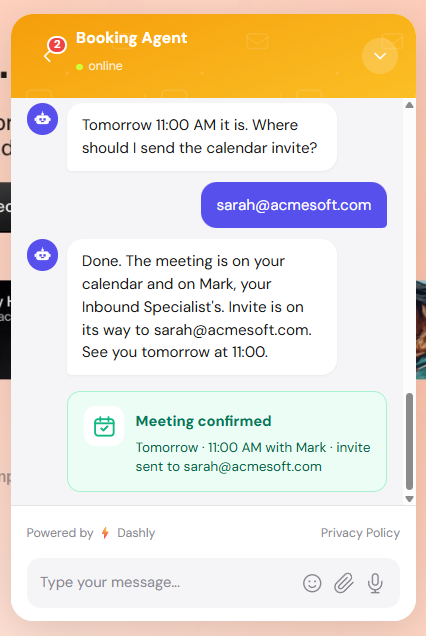
For automated lead generation that runs at scale, AI lead capture is the fastest channel to activate. It works on traffic you already have, without adding headcount or spend.
4. Run structured outbound sequences to high-fit accounts
For high-ACV enterprise accounts that do not self-serve, structured outbound sequences create pipeline at accounts that would not find you otherwise. Inbound sales alone is not enough when your average deal size requires enterprise procurement cycles.
A structured sequence runs 8 to 12 touchpoints over 21 days across email, LinkedIn, and phone. Each touchpoint adds context or a new angle. The first message opens with a relevant trigger: a funding round, a job posting, a recent exec hire. Later messages reference the earlier ones to build continuity.
The goal is not to close a deal. It is to earn a 20-minute conversation. One conversation per 50 targeted ICP accounts is a realistic benchmark for a well-constructed cold outbound sequence.
5. Use account-based marketing (ABM) for strategic accounts
ABM treats a defined list of target accounts as individual markets. Instead of broadcasting demand generation across a broad audience, ABM concentrates personalized campaigns across channels on a short list of high-value accounts where the win would be transformative.
The results are proven. ABM programs generate 208% more revenue than standard demand generation, according to the ABM Leadership Alliance and Momentum ITSMA 2022 Annual Benchmark Report.
At $1M to $5M ARR, a practical ABM list is 50 to 100 accounts. At $5M to $20M ARR, expand to 200 to 500 accounts and use intent data to automate the personalization layer.
6. Activate partner and referral pipeline
Integration partners, agency partners, and satisfied customers are a low-CAC pipeline source most B2B teams underinvest in. Partner-sourced leads are 53% more likely to close than cold leads, per ELG Insider benchmark data. They close faster because trust and context transfer from the referring party.
Two activation moves:
- Build a simple partner program with shared pipeline tracking in Crossbeam or a similar co-selling tool;
- Build an active post-onboarding email sequence that asks satisfied customers to refer one account with a similar problem.
Budget 90 days before the first referral-sourced opportunities appear consistently. Partner pipeline takes longer to build than outbound, but it compounds and carries a higher close rate once the flywheel starts.
7. Convert events and webinars into pipeline
Events and webinars attract ICP buyers in active research mode. A webinar on a problem your ICP is actively trying to solve creates pipeline without cold outreach.
The mechanics: collect qualification data during registration and attendance. Within 24 hours, send a personalized follow-up to attendees that references something specific from the content. That specificity converts attendees to pipeline conversations.
Joint webinars with complementary vendors double audience reach at the same effort level. Look for partners where the audiences overlap but the products do not compete. This is one of the most underused tactics in the pipeline generation mix.
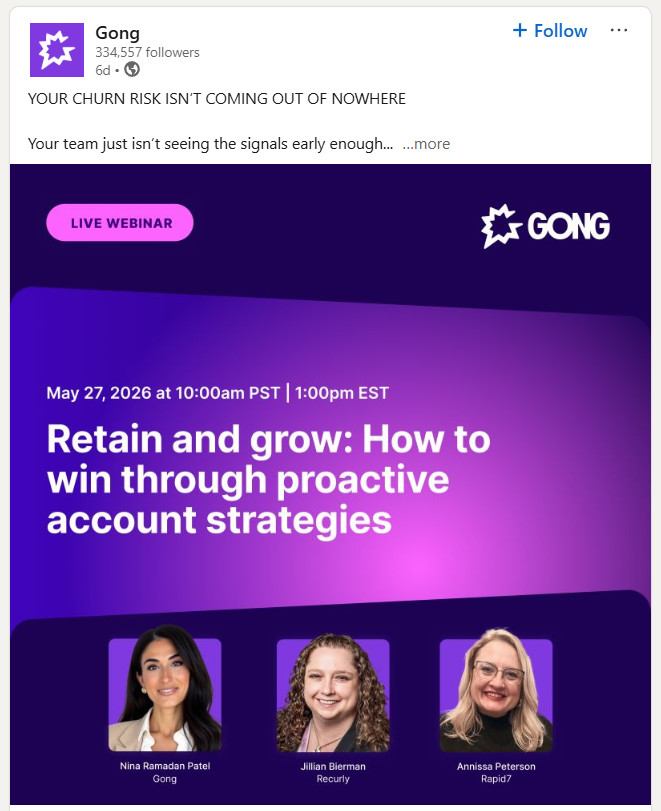
Talk about your upcoming event everywhere: website, social media, email. Here’s an example of a webinar announcement in the Gong’s LinkedIn:
8. Generate reviews on G2 and Capterra for organic pipeline
G2 and Capterra visitors are late-stage buyers comparing solutions, not early-stage researchers. A strong review profile generates pipeline from buyers in decision mode who have not found you through other channels. These are often the highest-intent visitors you will ever get.
The activation path: a post-onboarding email sequence sent to satisfied customers 60 to 90 days after they achieve first value, with a direct link to leave an honest review. Track review volume monthly. Each incremental review lifts organic ranking on both platforms and drives more late-stage traffic to your profile.
Don’t let all your strategies go to waste. Once a new visitor landed on your website, convert them to a lead. Dashly’s AI inbound revenue agents will help!

How to measure pipeline generation performance
Pipeline health requires more than counting open opportunities. Volume and quality answer different questions, and relying on one metric alone produces dangerous blind spots. Here are the five metrics that give a complete picture.
Pipeline coverage ratio
Formula: total pipeline value / quarterly revenue target. Benchmark: 3x for teams with a 30%+ win rate; 4x to 5x for early-stage teams or those with lower win rates.
Pipeline velocity
Formula: (number of open opportunities x win rate x average deal size) / average sales cycle length in days. Use velocity to diagnose the bottleneck. Low velocity with a healthy pipeline size signals either a long sales cycle or a low win rate. Each problem needs a different fix.
MQL-to-SQL conversion rate
Benchmark: 15 to 21% for B2B SaaS, per 2024 pipeline benchmark analysis across 939 B2B companies. Below 10% signals ICP mismatch at the lead capture stage. Above 30% usually means the qualification threshold is too low, and low-fit accounts are entering the pipeline.
Win rate
Benchmark: 20 to 30% for mid-market B2B SaaS. Below 15% signals ICP mismatch further down the funnel or a competitive positioning problem. Review win/loss data quarterly to identify the pattern. Inbound marketing tools that track pipeline attribution help keep this analysis current.
Cost per pipeline opportunity
Formula: total demand generation spend / number of new pipeline opportunities created in the same period. This is the unit economics metric for pipeline generation. Compare it across channels to find where each incremental dollar generates the most pipeline.
How to increase pipeline without increasing headcount
Adding more SDRs to your team is not the only way to generate more pipeline. It is often not the most efficient way, especially when the bottleneck is response time rather than outreach volume.
Speed-to-lead is the biggest single lever for converting existing inbound pipeline. Leads contacted within five minutes are 21 times more likely to be qualified than leads contacted after 30 minutes, per 2024 analysis of over 250,000 B2B lead response events. Despite this, the median B2B company takes 42 hours to respond to an inbound lead.
Closing that gap does not require more headcount. An AI agent responds in seconds, qualifies the lead against ICP criteria, and routes a confirmed MQL to calendar booking automatically.
Three automation moves that increase pipeline without adding reps:
- AI lead capture: Qualifies and routes inbound visitors in real time, responding within seconds of page visit
- Lead nurturing sequences: Automated follow-up for leads not ready to buy today keeps your pipeline warm over a 90-day window without manual outreach
- Lead scoring: Prioritizes the existing pipeline so reps focus first on the highest-fit accounts with the strongest engagement signals
Here’s how Dashly’s AI agent qualifies a lead:

The compound effect: same team size, more qualified pipeline output. The math improves further when AI qualification rates exceed manual follow-up rates, which they typically do because AI agents respond consistently and at any hour.
Build your 90-day pipeline generation plan
A 90-day plan forces prioritization. Most teams that stall on pipeline development try to activate every channel simultaneously and execute none of them well. The structured approach below runs three channels in sequence, measures results at each gate, and scales only what is working.
For context on how this fits into your broader inbound marketing funnel, treat the 90-day plan as the demand capture layer. The inbound sales funnel is what converts those opportunities to closed revenue.
Weeks 1 to 2: define ICP criteria
Document your ICP with at least four criteria: company size, industry, tech stack, and buying trigger. Map the top five questions your buyers ask during the sales process. These questions become the basis for your first content asset and your AI agent qualification script.
Weeks 3 to 4: set up lead capture on your website
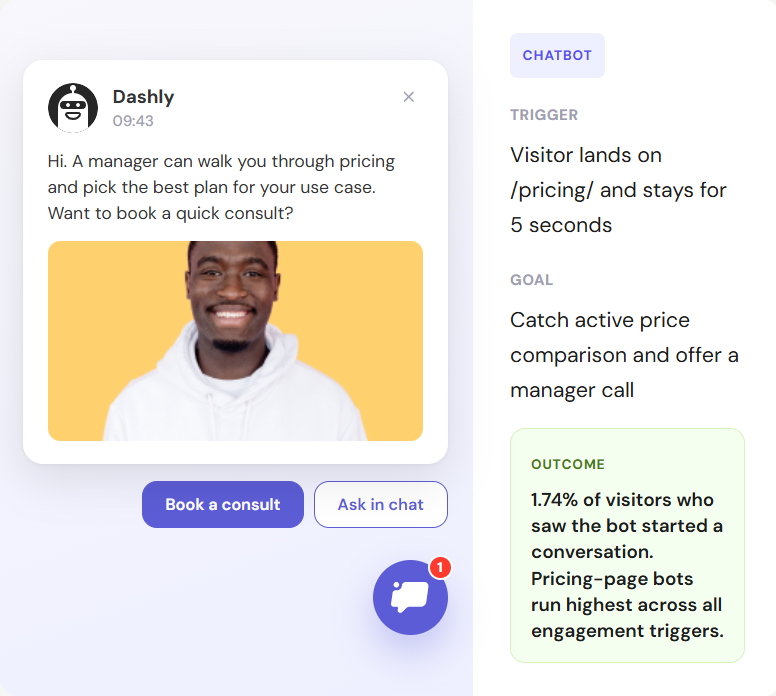
Add AI chat to your pricing and demo pages. Create a lead magnet, a benchmark report, template, or ROI calculator, for your highest-traffic page. Both moves activate existing traffic before you add new pipeline channels.
Personalize your engagement message based on data you know about the user. It will raise your chance to capture their contact:
Weeks 5 to 6: launch outreach sequence and first inbound content
Publish one decision-stage article targeting a query your ICP searches. Launch a 21-day outreach sequence to your top 100 target accounts. Run both in parallel so you can compare lead quality across channels at the review gate.
Weeks 7 to 8: review pipeline metrics
Measure pipeline coverage ratio, MQL-to-SQL conversion rate, and cost per opportunity by channel. Identify which source produces qualified opportunities versus low-fit leads. Cut the lowest-performing channel and reinvest in the top performer.
Weeks 9 to 12: scale what works, activate partners
Add ABM for your top 10 target accounts. Reach out to five highest-potential integration partners. Launch a review generation sequence to customers who have been live for 90 or more days.
Measure weekly: new pipeline opportunities created, coverage ratio, and MQL-to-SQL rate. These three numbers tell you whether the pipeline generation system is working before a pipeline gap turns into a revenue gap.
How Dashly turns website traffic into qualified pipeline
Most pipeline generation strategies focus on outbound or content while the website itself converts at 0.5 to 1% from static forms. The other 97 to 99% of visitors leave without entering the pipeline.
AI-powered qualification in real time
Dashly’s AI agent for lead capture changes that ratio. The agent greets high-intent visitors on pricing and demo pages, asks two to three qualifying questions to confirm ICP fit, and routes confirmed MQLs to calendar booking in the same conversation. No form, no wait, no dropped lead.
B2B SaaS teams using Dashly see 3 to 8% visitor-to-pipeline conversion versus 0.5 to 1% with static forms. On a site with 5,000 monthly visitors, that difference generates 125 to 375 additional qualified opportunities per month from traffic already in the funnel. The agent runs 24/7, so leads from late-night campaigns and international time zones get qualified the same session, not the next business day.
Want to see how the agent qualifies your leads?
FAQ
A pipeline generation strategy is a documented plan for creating qualified sales opportunities at a predictable rate. It defines which channels generate pipeline (inbound, outbound, partners), how leads qualify into opportunities, and what metrics signal whether the pipeline is healthy or at risk. Without a documented strategy, pipeline depends on individual rep activity rather than a system that compounds over time.
Start with ICP definition, pick two to three channels for the first 90 days, set up AI-powered lead capture on your website, and measure pipeline coverage ratio every week. Avoid running all channels simultaneously. Depth beats breadth in the first quarter. See the 90-day plan section above for a week-by-week breakdown.
Three times your quarterly revenue target is the benchmark for efficient teams with a win rate above 30%. Early-stage teams or those with lower win rates should target four to five times coverage to absorb deal slippage and forecast variance. Calculate it as: total pipeline value divided by your quarterly revenue target.
The fastest lever is converting existing website traffic. Add AI chat on pricing and demo pages, set up a lead magnet on your highest-traffic content, and launch a 21-day outbound sequence to your top 50 target accounts. These three moves can generate qualified pipeline within the first 30 days without adding headcount.
Pipeline velocity equals the number of open opportunities multiplied by win rate and average deal size, divided by average sales cycle length in days. It measures how fast revenue is moving through your pipeline. A low velocity number signals you need more opportunities, a shorter sales cycle, or a higher win rate. Volume alone does not tell you which problem to fix.
Focus on inbound channels that compound: SEO content, AI-powered website lead capture, review generation, and partner activation. These generate pipeline without headcount and improve over time. Dashly’s AI agent handles initial qualification and routes confirmed MQLs to booking, replacing manual SDR follow-up on inbound. See inbound lead generation services for a broader overview of what this looks like in practice.
Lead generation produces contacts and interest signals. Pipeline generation takes the next step: turning those leads into qualified sales opportunities with a defined value and close date. Every pipeline generation effort requires lead generation, but not every lead becomes pipeline. The conversion from lead to pipeline is where most B2B teams lose the most revenue.