600% jump in contact-to-meeting conversion: how FitBase’s AI agent replaced manual booking
 15 minutes
 29.09.2026
A strong conversion rate after the sales call means nothing if only a handful of leads ever reach that call. That was the gap FitBase needed to close.
TL; DR
- Company: FitBase, a SaaS platform for owners of fitness clubs, multi-format studios, pools, yoga and pilates studios, martial arts and stretching studios.
- Challenge: book more meetings with a manager. Conversion after the meeting was already strong, so the meeting itself was the metric that mattered.
- Solution: an AI agent (SDR plus Support) in the website chat and Telegram. It qualifies leads against fixed criteria and books the meeting inside the same conversation, synced to Kommo with round robin assignment through Google Calendar.
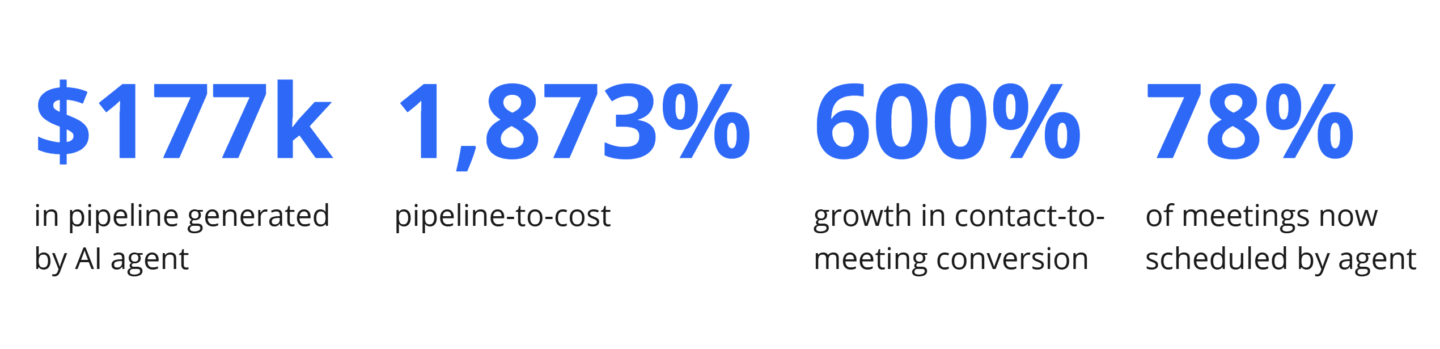
- Results: conversation-to-contact conversion of 30 to 40%, contact-to-MQL around 25 to 30%, and MQL-to-booked-meeting through the agent holding at 30 to 36%. Managers booking manually had ranged from 1% to 42%, month to month.
Company
FitBase is a SaaS platform for fitness business owners, and once one of its SDRs got a lead on a call, the deal usually moved. Getting more leads to that call was the hard part.
| Attribute | Value |
|---|---|
| Industry | SaaS platform for fitness businesses |
| ICP | Owners of fitness clubs, studios, pools, yoga and pilates studios, martial arts and stretching studios |
| Average deal size | ~$900 |
| Sales cycle length | typically closes in ~10 days, though 11% of wins take longer than 60 days |
Goal
FitBase’s SDR team runs the first conversation with every lead. They’d already learned one thing cold: once a lead gets on a call with a manager, conversion into a paying customer sits at or above market average.
So the target was simple. Book more of those meetings, without touching the part of the funnel that already works. More meetings meant more deals.
Solution
Setup and channels
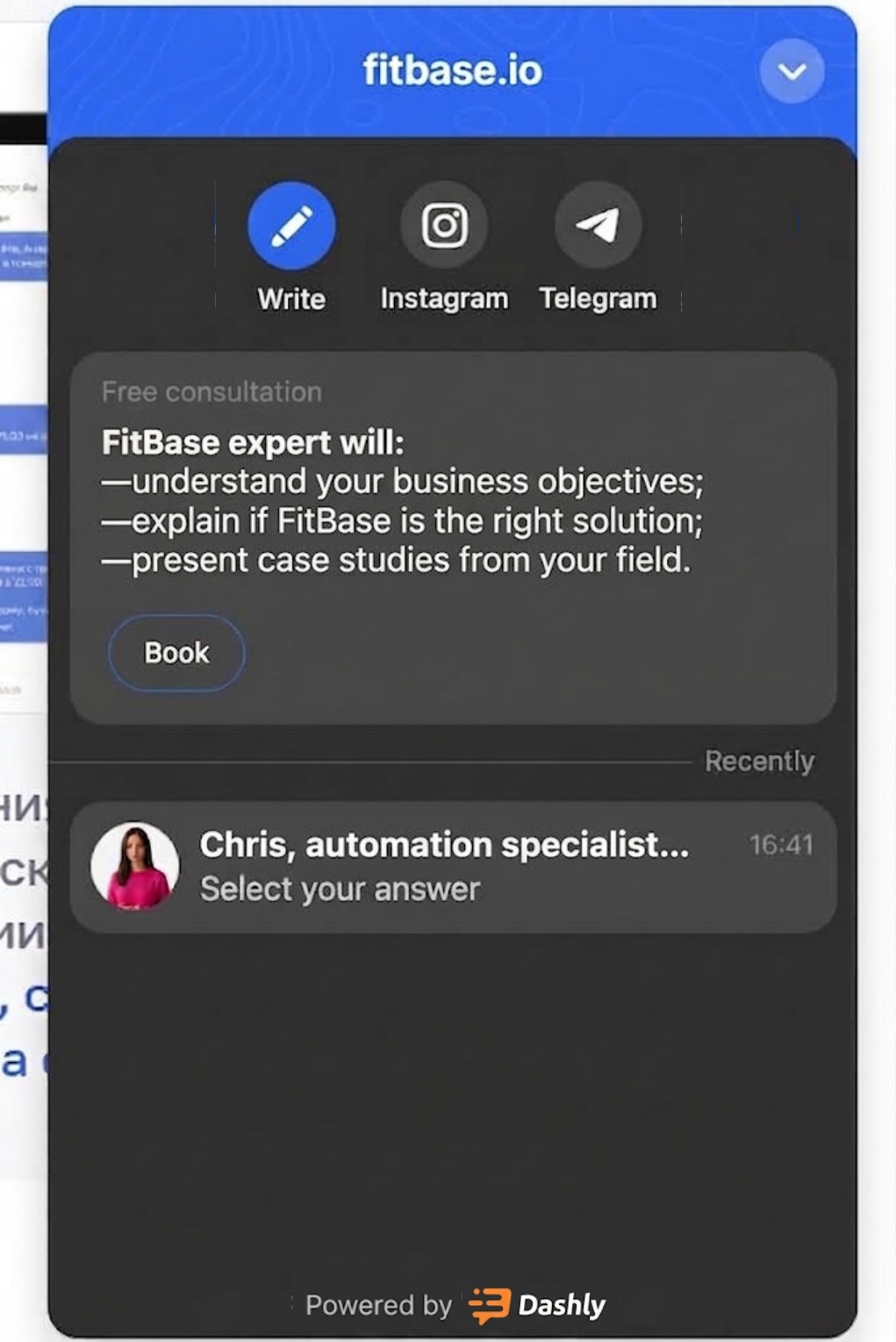
The agent runs as a chat widget on the FitBase website and inside Telegram. On the site, it works as its own funnel: a live conversation that turns anonymous traffic into identified leads before they ever touch a form.
Qualification
A lead becomes an MQL when four things line up:
- The business fits FitBase’s ICP: a fitness club, a multi-format studio, a pool, a yoga or pilates studio, a martial arts or stretching studio.
- The geography is one FitBase supports.
- The business runs 50 or more active clients.
- The agent collects a working contact: a phone number, WhatsApp, or a Telegram handle.
Leads who don’t clear qualification aren’t dropped either. An existing FitBase customer messaging the chat like it’s support gets an answer and a link to the support group on Telegram. A lead outside FitBase’s supported geography, business type, or size gets a clear explanation that the platform can’t serve them yet, plus a link to FitBase’s Telegram channel, so the contact isn’t lost for good.
Booking, built into the conversation
This is the newest piece of the setup introduced in August 2026. The agent used to just drop a booking link in the chat and leave the lead to pick a slot themselves. Now it books the meeting directly: offers available slots to the lead and confirms the time on its own.
Once a lead clears qualification and leaves a contact, the agent books the meeting right inside the chat, with no link out and no second app to open.
The agent leads with whatever slot sits closest to right now. Almost every lead wants to talk within an hour or two, often the same day, and that timing keeps them at peak interest instead of letting them cool off while they wait for a callback.
Booking runs through Google Calendar, and meetings get assigned round robin across the sales team.
Meeting data then syncs to Kommo, along with the manager who owns it. Dashly’s team helped FitBase build automation on the Kommo side as well. Once a meeting is booked, the deal moves itself into the right pipeline stage and the correct manager gets assigned, with no other manager touching it. A notification lands in that manager’s inbox, and they open a deal that’s already staged and ready.
Skip that step, and a booked meeting just drops into the general deal list. Two managers reach for the same lead, or it sits in a queue until someone notices. Building that CRM automation isn’t the AI agent talking. It’s the service and expertise that comes with it.
A reminder sequence runs on top of booking. Cadence adjusts to how far out the meeting sits: a few nudges if it’s three days away, one if it’s an hour out. Email is the default channel, since booking always collects one, and Telegram gets added when the lead is subscribed there. The copy reads like a person wrote it, not a template with a time slot dropped in.
That always-on availability matters for your conversion more than you think. The agent books just as readily on a weekend as on a Tuesday afternoon, and just as readily late at night as first thing in the morning.
A lead who messages late on a Friday gets Monday morning locked in immediately, not a callback request sitting in a queue until someone gets to it. Speed is what keeps that lead from cooling off before the call happens.
A whole team at service
Dashly team didn’t just hand FitBase an agent and walk away. We own the rollout: fitting the agent into the sales process FitBase already runs, rather than adding a new tool on top of it.
Working with the CRM is part of that process. We configured it so deals move stage on their own and every card already carries what a manager needs, the contact, the qualification answers, who owns it, without anyone updating a field by hand. A manager opens a deal that’s already correct.
Results
Since February 2026, the agent alone has produced 197 MQL, worth $177,300 in pipeline.
Here are other significant results FitBase and Dashly managed to achieve:
Agent vs. form + manager, month over month
The metric to watch here isn’t MQLs or contacts. It’s meetings. Once a lead is on a call, FitBase’s own conversion into paying customers takes over, and that part of the funnel was never broken. The question was always how many of those calls happen in the first place.
Forecast ROI ~509%
Based on how the agent has performed since booking went live, and using FitBase’s own benchmark for how many meetings turn into a sale, we expect a forecast ROI of ~509% over the same two months.
Every week, the Dashly team gets together with FitBase for updates and informal feedback on the agent. Sharing some kind words from the FitBase team:
Dashly is my benchmark, for meetings booked, for how many come in relative to total volume. I know booking rates from Dashly are higher than any other channel we use. A lead coming through Dashly is simply warmer.
What’s next
Three things are already moving.
FitBase’s Kommo has plenty of deals stuck in the Hold stage for one reason or another, and a re-engage scenario is next up for those. It will pull each lead’s conversation history, both with the agent and with managers, write a personalized hook message to bring the interest back, then hand the lead to the AI SDR to close the loop into a meeting.
The team is also scoping new entry points for the agent on the site. The quiz in the demo funnel still books through a static link today, with no agent involved, and that’s one of the places a live conversation could replace a form.
Further out, the qualifier itself gets more flexible. Right now the agent works through a fixed set of questions before it moves to booking, close to a script. The next version decides on its own how many questions to ask and when to pivot to booking, based on the lead’s context, their history on the site, and which of FitBase’s marketing cases matches their business. The target is to push MQL-to-meeting conversion from the current 30 to 40% toward 50% or higher, though the team isn’t expecting to clear that bar easily.



![9 steps to master the growth hacking canvas strategy for your business [free template]](https://www.dashly.io/blog/wp-content/uploads/2023/05/Growth-hacking-canvas-free-templates-720x317.png)
![4 steps as Chief Marketing Officer at a new company [Expert guide]](https://www.dashly.io/blog/wp-content/uploads/2022/10/4-steps-as-Chief-Marketing-Officer-at-a-new-company-Expert-guide-720x317.jpg)