
What is an AI SDR?
An AI SDR is an AI agent that does sales development work on leads: it replies to a new lead, asks qualifying questions, answers product questions, and books a meeting with your sales team. Dashly's AI SDR works only with inbound demand, so every conversation starts from what the lead already did on your site.
Want the longer version? Read our full AI SDR agent definition with examples.
Results from Dashly customers
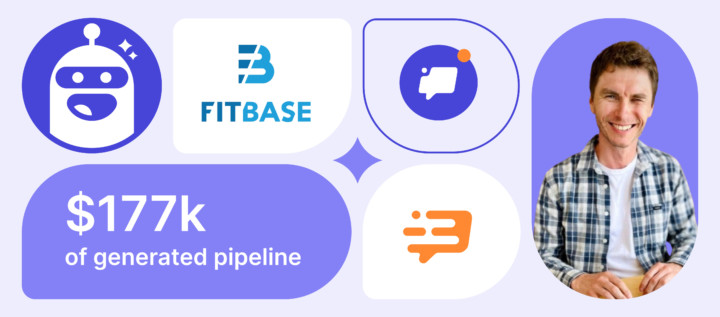
B2B SaaS · Fitness software
FitBase
The AI agent qualifies leads in website chat and books the meeting inside the same conversation, so SDRs spend their time on calls instead of on scheduling.
Read the case →
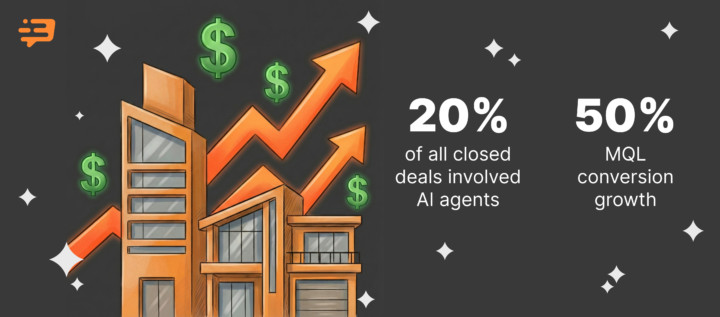
Real estate
Tranio
Visitor-to-lead conversion doubled, from 0.20% to 0.40%. In one month, 69% of all leads came through the AI agents in website chat, WhatsApp, and Telegram.
Read the case →
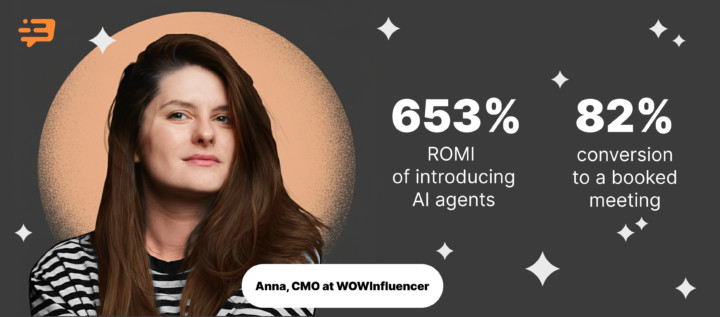
B2B SaaS · MarTech
WOWInfluencer
First reply to a lead went from 4 hours to 1 minute. After cross-channel reminders, 60–90% of booked leads showed up to the meeting.
Read the case →
How Dashly's AI SDR agent works
SDR automation usually means a sequence tool that sends the same five emails to everyone. Dashly's agent runs one conversation per lead, from the first message to the meeting, and decides what to do next based on that lead's data.
A trigger starts the conversation on your site
A visitor compares plans, reads two case studies, or comes back from an ad. A trigger message fires on that behavior, and the AI SDR picks up the conversation. A lead gets an answer in seconds, at 3 pm or 3 am.
Jane Parker
Interest
Viewed the Growth plan twice and read the WOWInfluencer case.
Qualification
Role, company size and industry are known from CRM. The agent won't ask again.
9:39:12 AM
9:31:05 AM
9:28:40 AM
The agent reads the lead profile before replying
Before the first reply, the agent pulls the lead profile: pages viewed, past conversations in any channel, CRM data, and enrichment. It never asks for something it already knows. If the lead's company size is in your CRM, the question doesn't come up.
It qualifies and answers product questions in the same chat
The agent fills in what's missing for your MQL criteria through normal conversation. When the lead asks how an integration works or what a plan includes, the agent answers from your product knowledge and keeps qualifying. Lead tiers are set up to match your funnel.
Qualified leads book a meeting without leaving the chat
The agent offers open slots from your reps' calendars, books the meeting in the conversation, and sends the invite. It works with Google Calendar, Calendly, and cal.com. Leads that don't qualify get a self-service path instead of a sales call.
Tuesday at 14:30: what we'll cover for Northwind
Hi Jane,
Quick note before your call with Alex on Tuesday, Nov 3 at 14:30.
You asked about Salesforce sync, so Alex will show how qualified leads land in your Salesforce pipeline with the contact, MQL status and chat summary.
You also read the WOWInfluencer case. Their first reply went from 4 hours to 1 minute, and Alex can show what that looks like for a 120-person B2B SaaS team.
Here's your link to join the call. If the time no longer works, just reply to this email.
See you Tuesday, Chris
It follows up until the meeting happens, then hands off
A booked meeting is a promise, so the agent sends reminders written for that lead in the channels where they reply. The rep gets the lead's contact, MQL status, and a conversation summary in Salesforce or in your own CRM via webhook.
Inbound AI SDR vs outbound AI SDR
Both are called AI SDRs, but they solve different problems. An outbound AI SDR finds cold prospects and writes first emails. An inbound AI SDR works with people who already came to you: they visited the site, filled out a form, or wrote in chat.
| Inbound AI SDR | Outbound AI SDR | |
|---|---|---|
| Who it talks to | Visitors and leads who came to you | Cold prospects from a list |
| What it knows before the first message | Site behavior, past conversations, CRM data | A row in a contact database |
| Where it works | Website chat, messengers, email replies | Cold email and LinkedIn |
| Main job | Reply fast, qualify, book, get the lead to the meeting | Find contacts and get a first reply |
| What breaks without it | Leads wait hours for a reply and go cold | Reps spend the day on prospecting |
Pick an inbound AI SDR when you already have traffic and demo requests and lose leads between the first visit and the meeting. Pick an outbound tool when you don't have enough demand yet. Dashly is built for inbound only: a cold lead has no behavior or history to work with, so the agent's main advantage disappears.
An AI SDR in your website chat and WhatsApp
The agent runs the conversation in your website chat and in WhatsApp. For the agent, it's one conversation even when the lead switches channels: a lead can start in chat, continue in WhatsApp, and get a meeting reminder by email.
Switching from chat to WhatsApp usually resets everything. The lead becomes a new anonymous contact, and an hour of browsing pricing and case studies is lost. Dashly links the two through a tagged link: the lead opens WhatsApp with a prefilled message, sends it, and the agent continues with the full site history.
"We needed a system that could engage visitors early, qualify them consistently in all channel, and give our senior consultants the context they needed to close deals."
Michael, CEO and co-founder, Tranio
Tranio runs Dashly's AI agents in website chat, WhatsApp, and Telegram. Read the Tranio case.
AI for SDR teams: what the agent takes over
The agent takes the work that has to happen within minutes and at any hour. Your team keeps the work that needs a person.
The AI SDR agent handles
- The first reply to every inbound lead, nights and weekends included
- Qualification against your MQL criteria
- Product questions during qualification
- Booking and reminders until the meeting happens
Your team keeps
- The meeting itself and the sale
- Complex or sensitive requests your rules send to a person
- Deals that need negotiation or a custom offer
Escalation follows your rules. During working hours the agent hands the conversation to a rep with full context. At night it notifies the rep, keeps talking to the lead, and saves the contact, so nobody is left waiting for a reply.
Why the agent knows the lead before it replies
Decisions on lead data, not just good text
The agent works on a data layer: website behavior, every past conversation, CRM records, enrichment, and what you sell and to whom. Two leads asking the same question get different answers.
Optimized for held meetings
We count meetings that took place, not meetings booked. Booking everyone who says yes fills the calendar with no-shows, so the agent qualifies first and follows up after booking.
One agent from first message to meeting
The same agent qualifies, answers product questions, books, and follows up. The lead isn't passed around mid-conversation and never has to repeat themselves.
Follow-ups written for each lead
When a lead goes quiet, the agent builds a follow-up for that person: which channel, how many touches, which offer or case study. It stops the moment the lead replies.
Who Dashly's AI SDR is for
B2B SaaS teams with inbound traffic and a demo funnel: more leads than SDRs can reply to quickly, demo requests that go quiet after the form, and reps who spend the first call on basic qualification. It also works for high-ticket real estate, where leads come from many countries and time zones.
It's not a fit for cold outbound, B2C, or low-ticket sales, where a sales meeting doesn't pay off. It doesn't replace your CRM: it writes to the one you have.
Comparing vendors? See our list of the best inbound AI SDR tools. Setting up an agent? Here's how teams get results with Dashly's AI SDR.
FAQ
Short answers to the questions teams ask before they try an AI SDR.
An AI SDR is an AI agent that does sales development work: it replies to leads, qualifies them, answers questions, and books meetings with your sales team. Dashly's AI SDR works with inbound leads from your website and messengers.
An inbound AI SDR works with leads who came to you: website visitors, chat conversations, and demo requests. It replies in seconds, qualifies the lead using what it already knows about them, and books a meeting. An outbound AI SDR writes to cold prospects instead.
It replies to the lead, asks qualifying questions based on your MQL criteria, answers product questions, books a meeting in your reps' calendar, and follows up until the meeting happens. It can qualify website visitors, people who filled out a demo form and went quiet, and leads who write in messengers.
They work when there's enough inbound demand and clear qualification criteria. At Tranio, visitor-to-lead conversion doubled after the AI agents went live. At WOWInfluencer, first reply time dropped from 4 hours to 1 minute, and 60–90% of booked leads showed up to the meeting.
AI takes over the first reply, qualification, booking, and reminders. The meeting and the sale stay with people. Most teams use an AI SDR so their reps spend time on qualified meetings instead of on leads who were never going to buy.
Pricing depends on your inbound volume, channels, and integrations. Book a demo and we'll go through it for your funnel.
Yes. The agent runs conversations in your website chat and in WhatsApp. When a lead moves from chat to WhatsApp through the agent's link, the conversation continues with the full history.
Yes. The agent writes the lead's contact, MQL status, and conversation summary to Salesforce or to your own CRM via webhook. For booking, it works with Google Calendar, Calendly, and cal.com.
The agent works from your company profile: offers, case studies, MQL criteria, tone of voice, and escalation rules. For product questions, it uses your documentation and FAQ.
In sales, yes. Both terms describe software that does SDR work. Some vendors use "virtual SDR" for outsourced human reps, so check which one you're looking at.
Resources and insights

Guide
AI SDR meaning: what it is and how it works
Read now →

Tools
Best AI SDR tools compared
Read now →

Guide
AI SDR vs human SDR: cost, performance, and the hybrid model
Read now →
Curious how an AI SDR fits the bigger picture? See what an AI revenue agent is.