What is agentic marketing? Complete guide to next-gen marketing approach
 23 minutes
 11.02.2026
Your marketing team is drowning in manual work. Leads slip through cracks. Campaigns launch late. Personalization at scale feels impossible.
You need systems that don’t just automate tasks but actually think, adapt, and act on their own. Gartner predicts 60% of brands will use agentic AI to deliver one-to-one customer interactions by 2028. The shift to agentic marketing is already happening. Time to keep up 😉
What is agentic marketing?
But before putting this revolutionary approach into practice, let’s figure out what it actually means.
Agentic meaning in marketing context
Agentic marketing means your marketing systems can think and act on their own. Unlike tools that only do what you manually program them to do, agentic AI systems watch what’s happening, figure out the right move, and execute marketing actions automatically.
Think of traditional marketing automation as a sophisticated alarm clock. You set the rules, define the triggers, and it executes exactly what you programmed. Agentic systems are different. They’re more like an experienced marketing manager who understands your goals, monitors customer behavior in real time, spots opportunities, and acts on them immediately.
What makes AI “agentic”?
Traditional AI waits for your commands. It answers questions when you ask, analyzes data when you run it, generates content when you prompt it. Every action requires your input.
Agentic AI operates independently. It perceives changes, decides what to do, and acts on its own to achieve the goals you’ve set.
Three core capabilities define whether an AI system is truly agentic:
- Perception: The system continuously monitors customer behavior and campaign performance, interpreting what’s happening and why.
- Autonomous decision-making: When it spots an opportunity, the system chooses the best course of action based on your goals without manual intervention.
- Action and learning: It executes decisions across your marketing stack and learns from every outcome to improve future performance.
Benefits of agentic AI in marketing
The shift to agentic AI changes how marketing teams operate and what they can achieve.
Improved customer understanding and engagement
Traditional marketing tools collect data. Agentic AI interprets it. The system analyzes behavior patterns across touchpoints, identifies intent signals you’d miss manually, and understands where each customer is in their journey. This means every interaction is informed by context, not just predetermined rules.
Real-time transformation of marketing interactions
No more waiting for weekly reports to spot problems. Agentic AI detects changes as they happen and responds immediately. When a high-value prospect shows buying signals at 2 AM, the system engages them right then, personalizing messaging, recommending relevant content, and routing to sales when appropriate. The transformation is instant.
Enhanced marketers’ productivity
Marketers stop spending time on repetitive tasks. No more manually segmenting lists, building basic workflows, or responding to routine questions. AI handles the execution while your team focuses on strategy, creative direction, and high-touch relationships that actually require human judgment.
Scalable personalization
You can’t manually personalize marketing for thousands of prospects. AI can. It tailors messaging, timing, and channel selection for each individual based on their behavior and preferences. What used to require separate campaigns for different segments now happens automatically at the individual level.
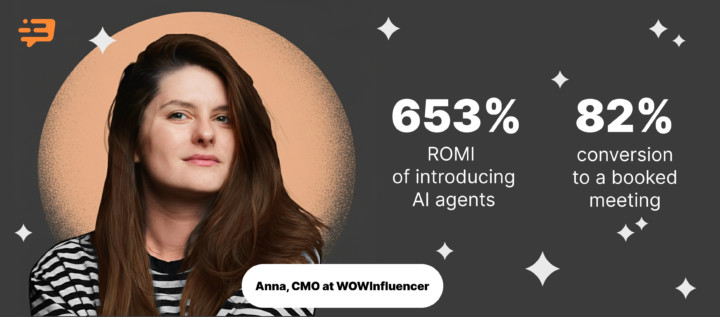
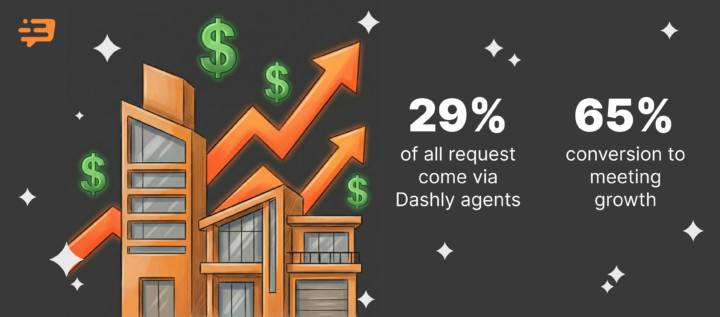
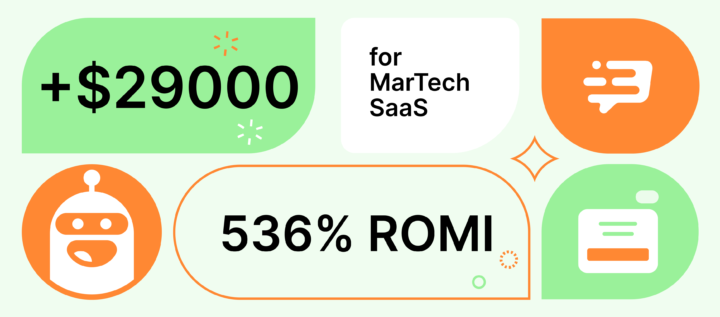
Check out real case studies of companies that introduced AI into their work with pipeline and raised their covnersions:
Agentic marketing vs traditional automation: What’s the difference?
Both marketing automation and agentic marketing use technology to handle repetitive work. But they operate on fundamentally different principles.
How marketing automation works (rules-based workflows)
Traditional marketing automation follows if-then logic. You build workflows manually: if someone downloads a whitepaper, wait two days, then send email A. If they click, add them to list B. If they don’t, send email C three days later.
Every scenario requires explicit commands and pre-defined logic. Your team maps out the customer journey, defines the triggers, and configures the actions. The system executes exactly what you programmed. Nothing more, nothing less.
This works well for predictable, high-volume tasks. But it breaks down when data reveals patterns you didn’t anticipate or when customer behavior shifts. Someone has to notice the change, build a new workflow, test it, and deploy it. Agentic AI changes that equation entirely.
How agentic marketing works (goal-driven autonomous systems)
Agentic systems don’t wait for instructions. You set the objective: “qualify leads for enterprise deals” or “reduce churn among trial users.” The agents figure out how to achieve it (at first, with your guidance, of course).
They analyze behavioral data in real time, identify which prospects show buying intent, determine the best engagement approach for each individual, and execute across channels automatically. When one tactic stops working, they adapt without requiring you to rebuild workflows.
Automation executes your plan. Agentic marketing builds and optimizes the plan for you, continuously learning from every interaction.
The result? According to IDC research, 41% of organizations see an increase in conversion rates after adopting agentic AI.
How agentic AI transforms the marketing workflow
The agentic workflow replaces linear, manual processes with intelligent orchestration across your entire marketing stack.
Real-time customer data processing
Traditional marketing systems batch process data. You run reports, wait for insights, then act on information that’s already outdated.
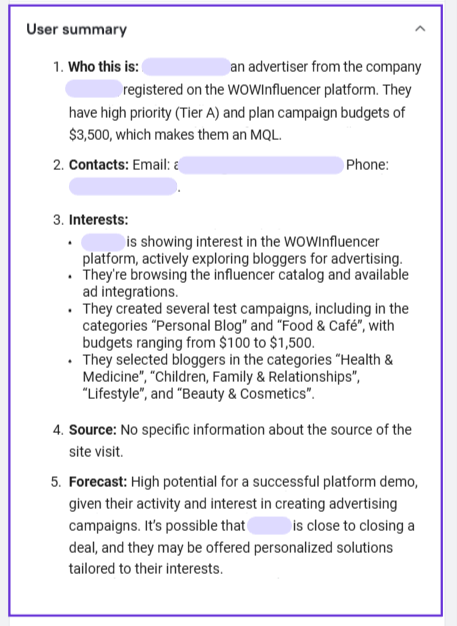
Agentic AI processes customer behavior as it happens. Someone visits your pricing page three times in one day? The system registers that intent signal immediately, updates their profile, adjusts their engagement score, and determines the next best action. All done in seconds.
Here’s an example of a lead card with live insights on their behavior in Dashly:
Autonomous decision-making and orchestration
Here’s where orchestration matters. Agentic systems don’t stop on collecting data or executing single tasks. They coordinate complex sequences across multiple channels and tools without human intervention.
When a high-intent prospect engages, the system decides whether to send personalized content, trigger a chatbot conversation, route to sales, or wait. It considers dozens of factors: browsing history, company size, previous interactions, time of day, sales team availability. Then it acts.
Multi-channel customer engagement at scale
Marketers can’t manually personalize conversations across email, chat, SMS, and social media for thousands of prospects. Agentic AI can.
It maintains context across every channel. A prospect who starts a conversation via website chat, continues via email, and asks a question on LinkedIn gets consistent, contextual responses. The system remembers everything, coordinates marketing touchpoints, and ensures every interaction moves them forward.
That’s the real transformation: turning disconnected marketing tools into a unified, intelligent system that works around the clock.
The role of marketers in the agentic era
Let’s be clear: agentic AI aims to free marketers, not replace them.
Your job shifts from executing repetitive tasks to strategic oversight. Instead of manually building email sequences or segmenting lists, you focus on marketing strategy, brand positioning, and high-touch customer relationships that actually require human judgment.
From tactical execution to strategic direction
AI handles the execution. You set the vision. You define customer engagement goals, establish brand voice, determine which markets to enter, and decide which customer segments matter most. Agentic AI takes those objectives and figures out how to achieve them through thousands of interactions your team couldn’t manage manually.
Think of it as managing a highly capable team member who never sleeps. You give them direction, monitor performance, and adjust strategy based on results. They handle the repetitive engagement work.
The human advantage
AI can’t build authentic brand relationships. It doesn’t understand nuance the way you do. It can’t navigate complex enterprise deals that require reading the room and building trust.
What AI does well:
- processing data,
- spotting patterns,
- executing at scale,
- responding instantly.
What marketers do well:
- creative thinking,
- strategic planning,
- relationship building,
- understanding cultural context,
- making judgment calls when data conflicts.
The best marketing teams use agentic AI to amplify their capabilities. You become more effective, not obsolete.
Agentic AI in action: Dashly’s data-driven agents for inbound funnels
Theory is great. But let’s see agentic AI working in practice.
Dashly uses data-driven AI agents to automate your entire inbound funnel, from first website visit to booked meeting. Unlike rule-based tools, these agentic systems analyze behavioral data in real time, make intelligent decisioning calls, and act autonomously to move prospects forward.
AI Lead Insight Agent — your data intelligence foundation
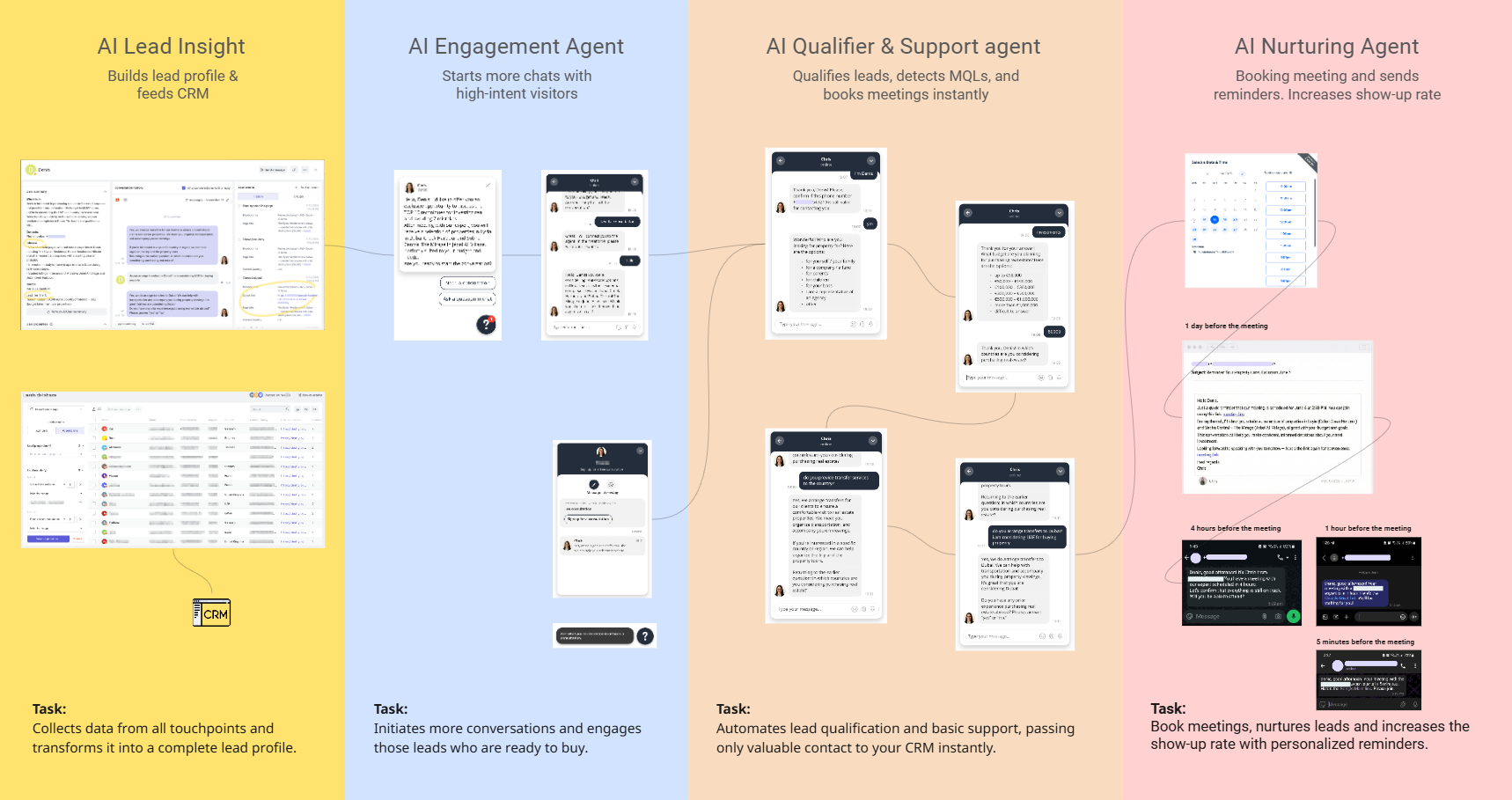
Before any marketing action happens, you need context. The Lead Insight Agent collects data from every touchpoint (website activity, CRM records) and builds a complete profile for each visitor.
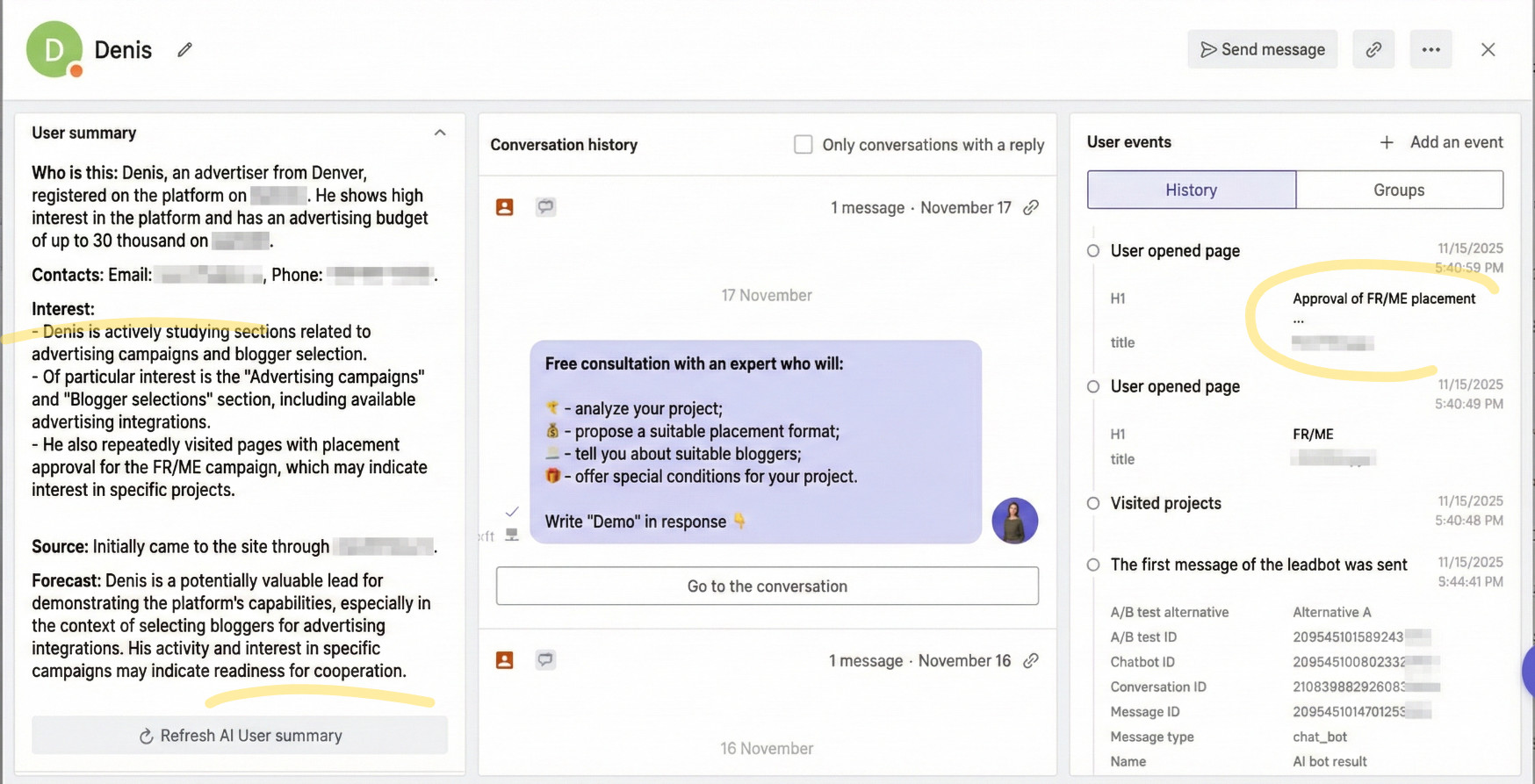
Real-time intent analysis powers personalized engagement
Using real time behavioral data, the agent determines visitor intent and readiness level. Then the Engagement Agent acts on these insights, triggering personalized chat messages at the optimal moment based on each visitor’s profile. The user checked out certain landing pages? The agent will mention the most relevant features. They read your Real Estate case studies? The agent will personalize the message for the industry.
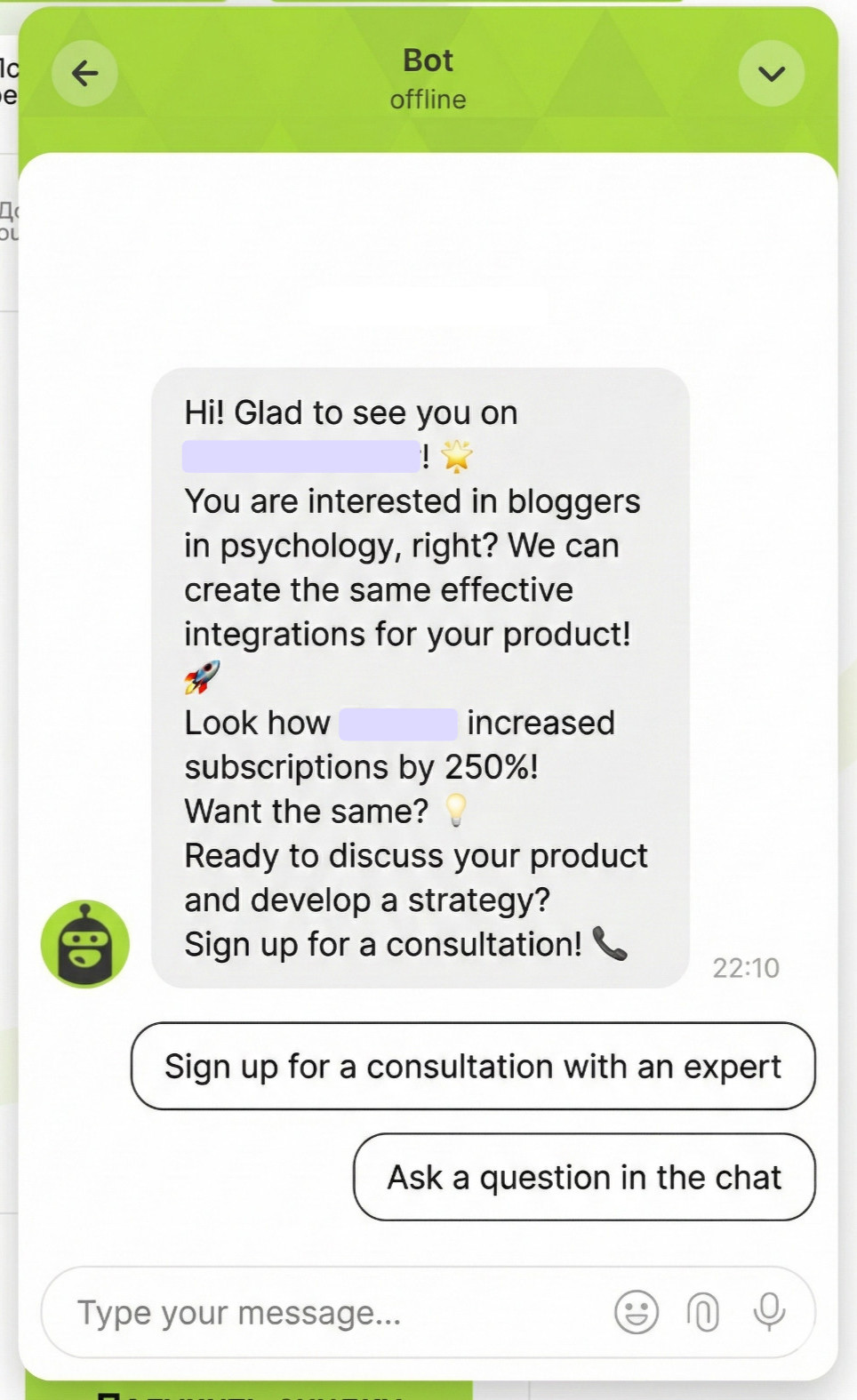
The result? 66% of qualified leads come through agent-initiated conversations. It’s 4x higher than standard forms.
AI Qualifier & Support Agents for seamless customer experience
These agentic systems work as a team in the chat. AI Support answers product questions instantly while AI Qualifier guides natural conversations to determine lead readiness. Together they create smooth decisioning flows, consulting 24/7 and qualifying simultaneously through conversational AI intelligence.
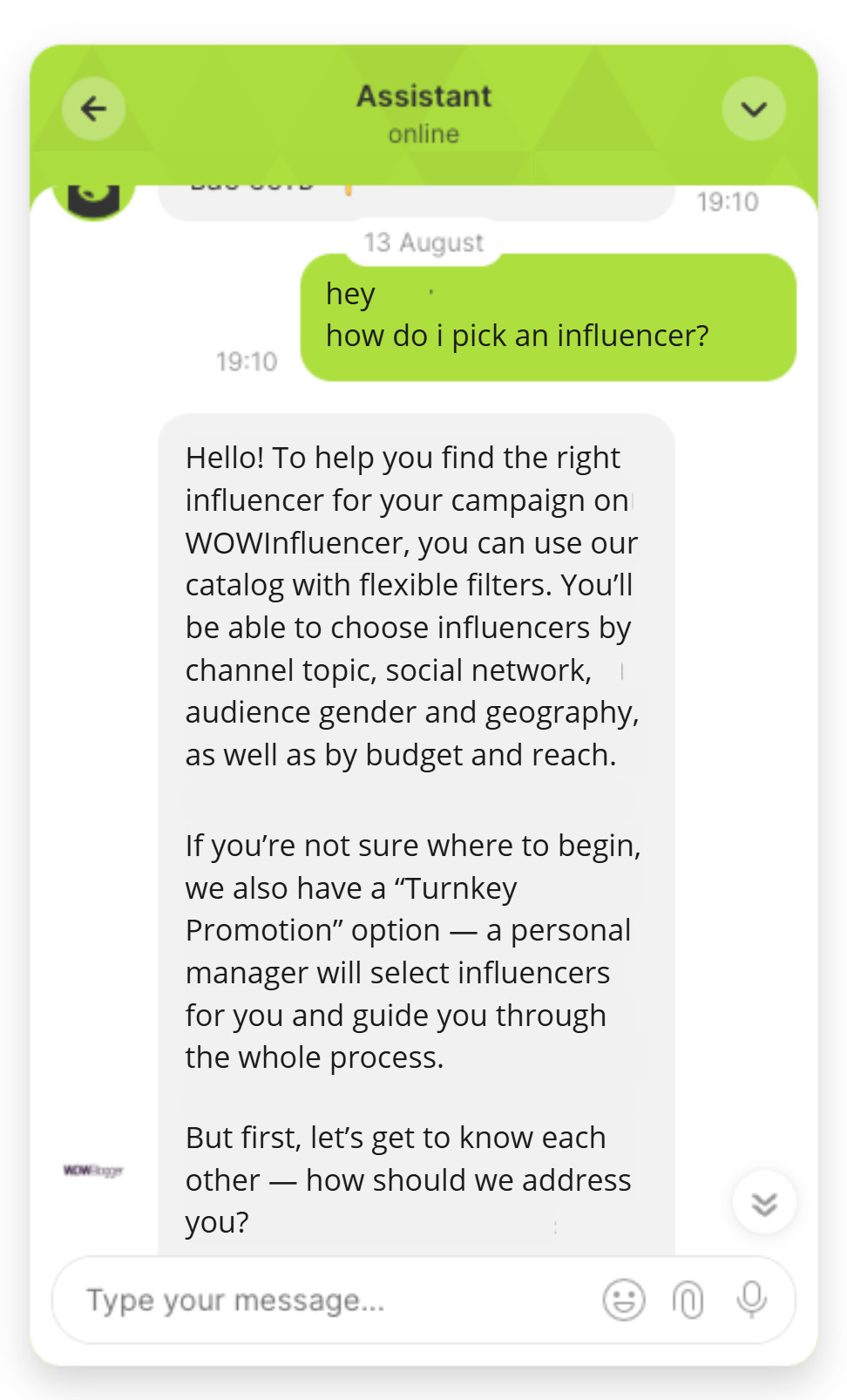
Context-aware qualification without repetition
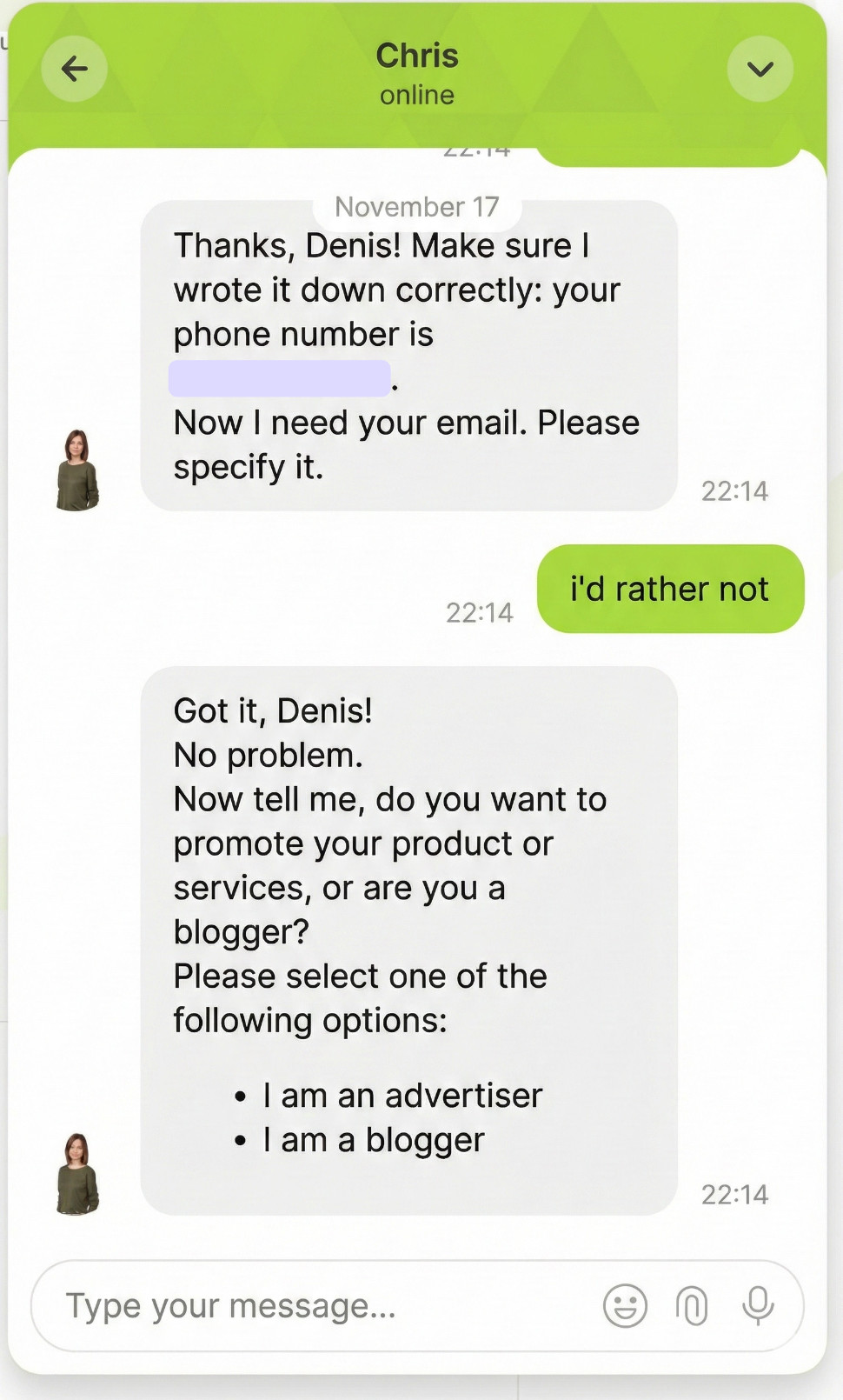
The agents remember everything. They use context from previous conversations and CRM data, never asking the same questions twice. Once qualified, leads get categorized (A/B/C priority) and passed to your marketing team with complete conversation history. 82% of qualified conversations convert to next steps automatically.
AI Nurturing Agent for lead engagement
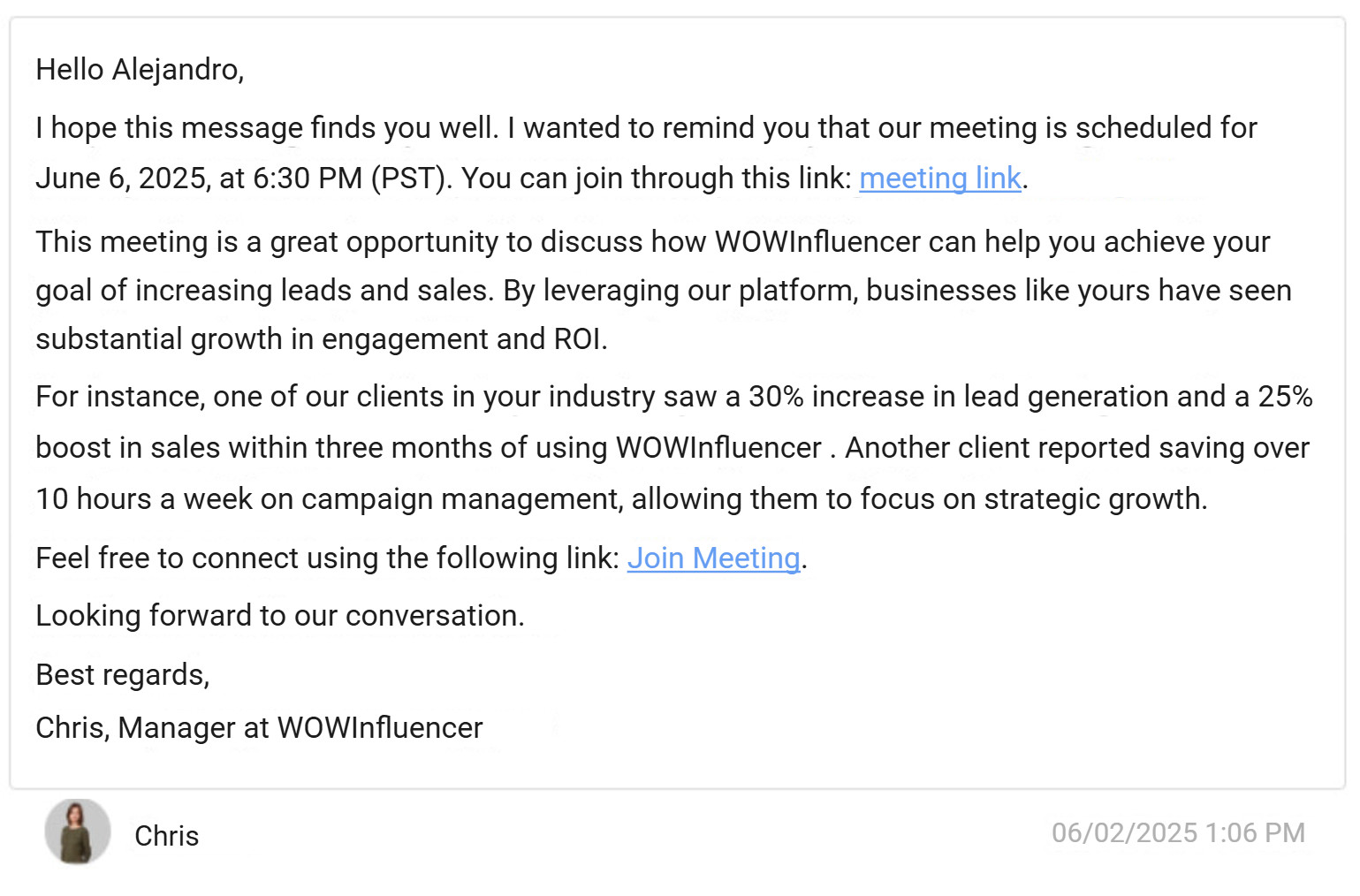
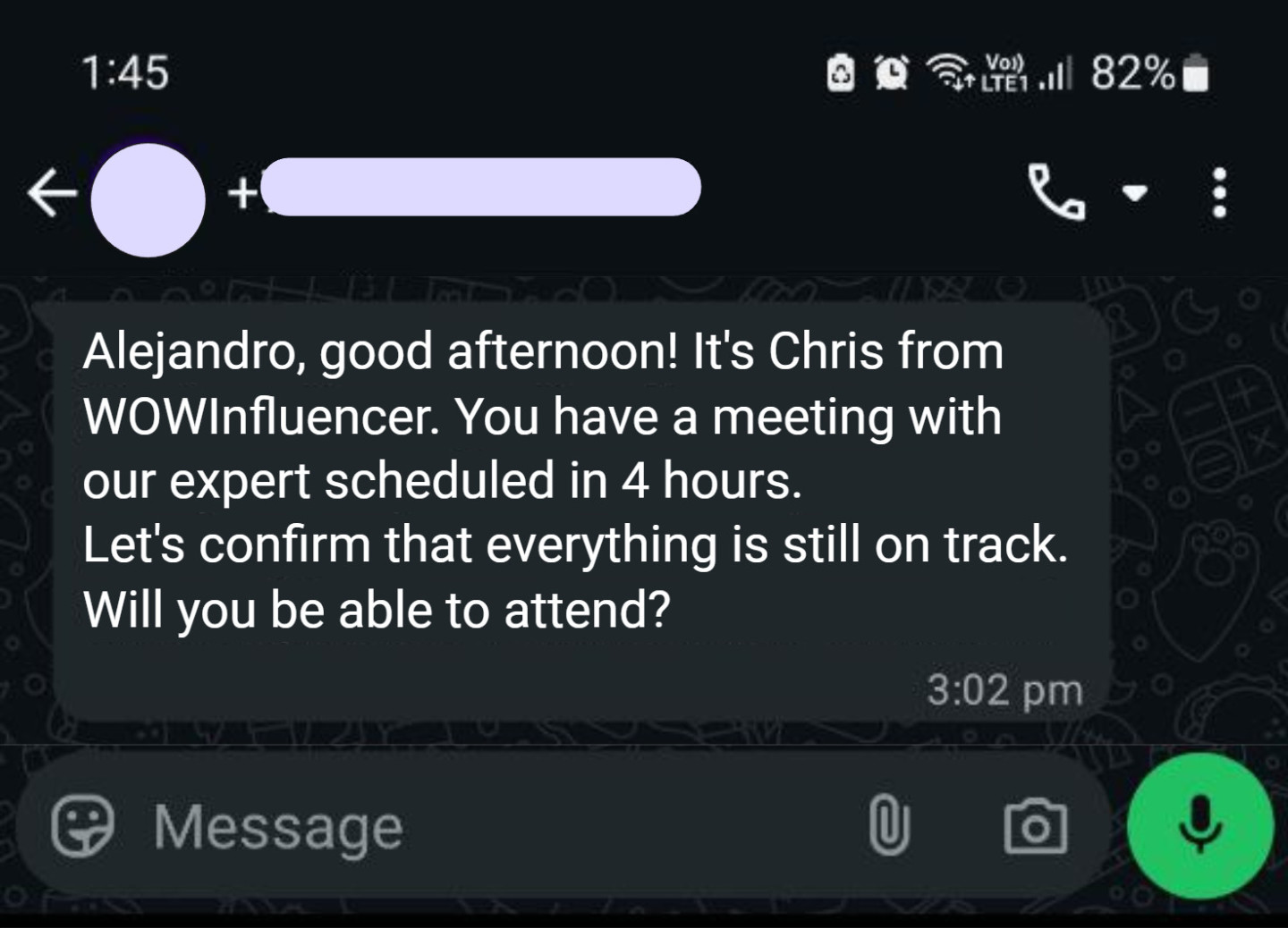
After booking, the Nurturing Agent sends personalized reminders via email, WhatsApp, and Telegram.
Personalized reminders across multiple channels
Each message is unique and timed strategically (confirmation, 24-hour reminder, final alert) driving 60-90% attendance rates autonomously.
How Dashly’s agents drive marketing ROI
Dashly customers see measurable impact fast. One MarTech SaaS client achieved 653% ROMI, with 66% of marketing qualified leads coming through agent-initiated conversations.
Another real estate company tripled conversion from site visit to meeting. The agentic approach delivers results traditional marketing automation can’t match.

Top agentic marketing platforms and solutions
Several platforms now offer agentic AI capabilities for marketing teams looking to automate pipeline generation and customer engagement.
Qualified — AI SDR agents for pipeline generation
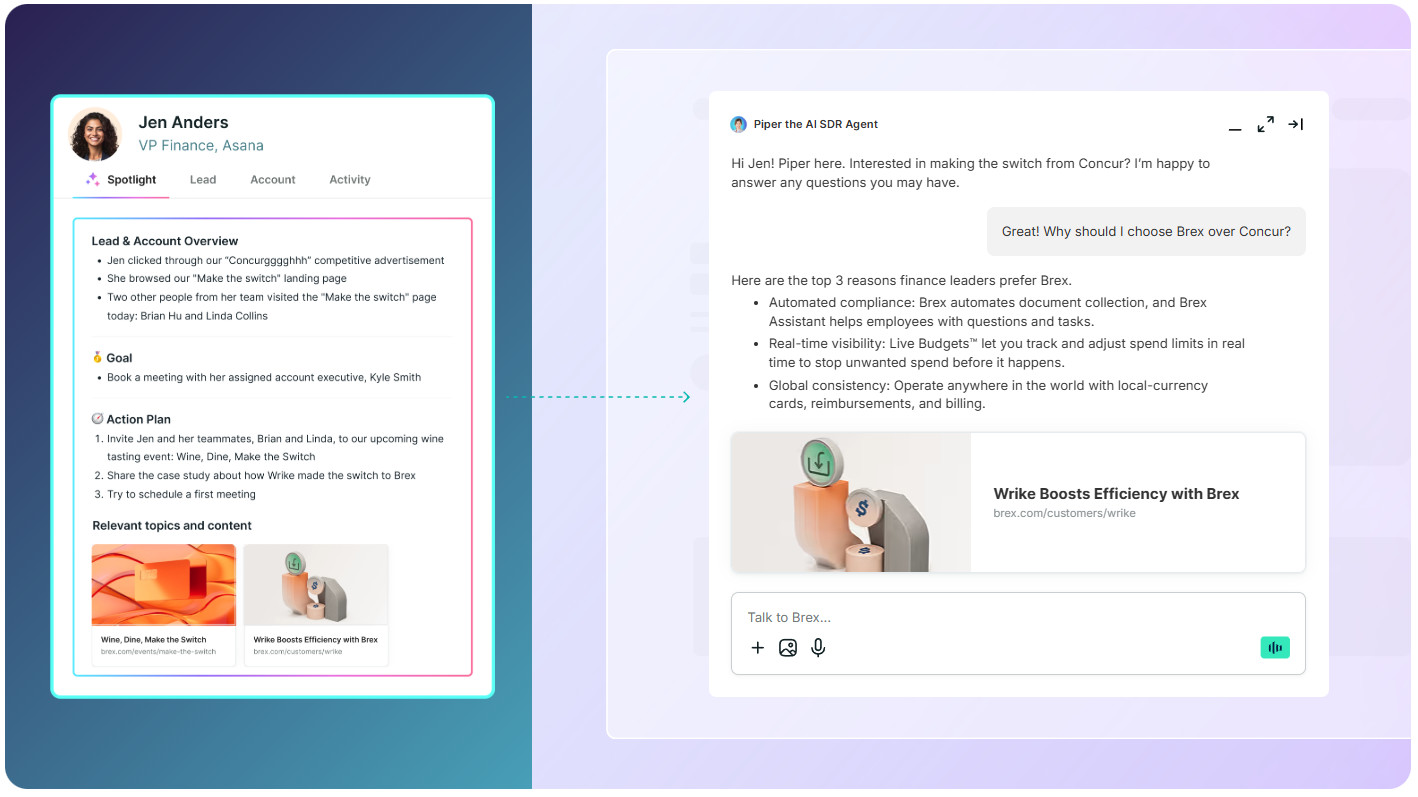
Qualified’s Piper AI SDR agent converts inbound website visitors into pipeline through autonomous conversations. Unlike basic chatbots, Piper thinks and strategizes to qualify leads most effectively.
Key capabilities:
- Engage high-intent visitors in real-time across web, email, and video
- Qualify buying committees and answer product questions 24/7
- Book meetings and route opportunities to the right sales reps
- Synthesize CRM data and website behavior for content-aware responses
Braze — Autonomous journey optimization and decisioning
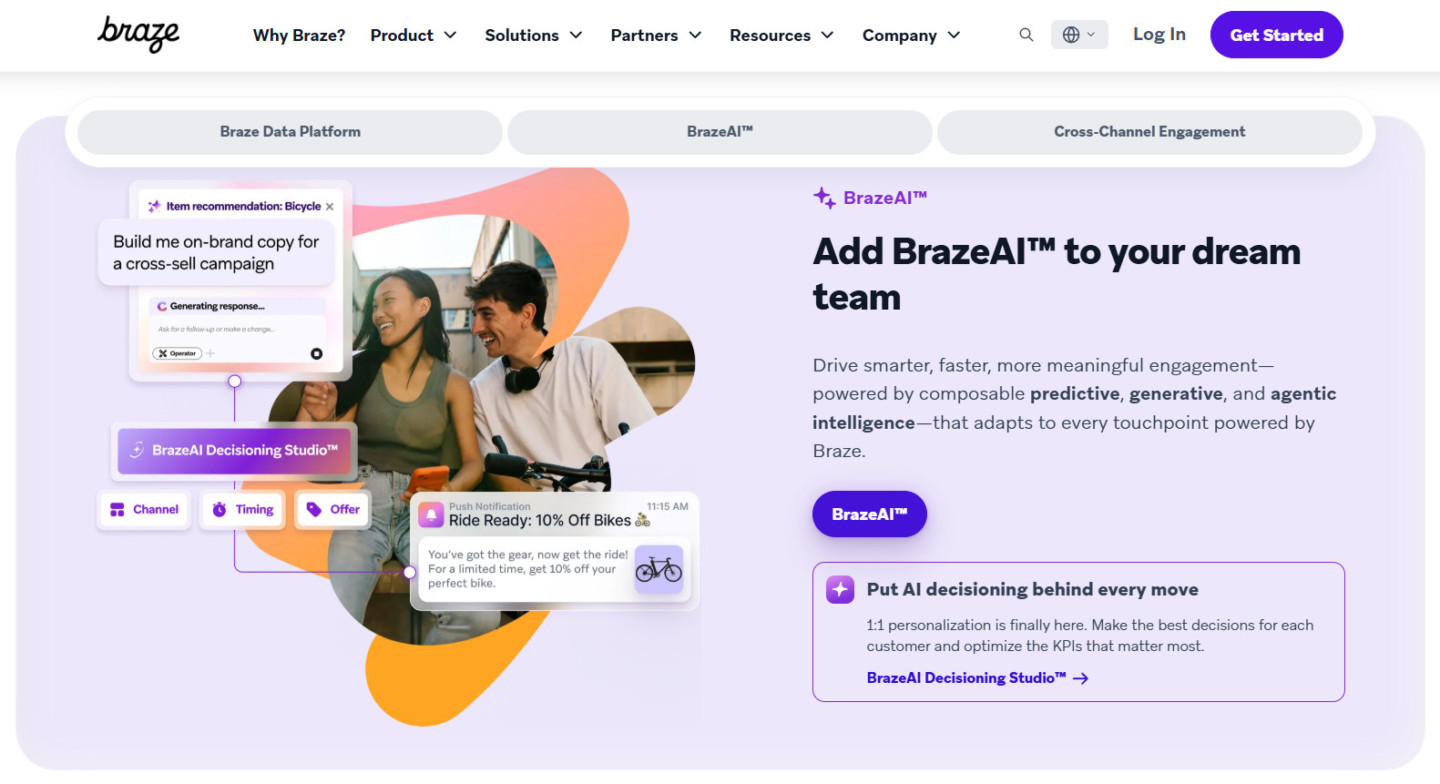
Braze uses agentic AI decisioning powered by reinforcement learning to personalize customer experiences at scale. The platform makes 1:1 decisions across messages, channels, and timing to optimize specific marketing goals.
What it automates:
- Autonomous journey optimization based on real-time customer signals
- Personalized content selection and offer recommendations
- Channel mix and timing decisions for each individual
- Continuous testing and strategy updates through generative AI
Optimove — Self-optimizing campaigns and customer engagement
Optimove delivers agentic marketing through self-optimizing campaigns that learn and improve automatically. Rather than winner-takes-all A/B testing, the platform adjusts performance based on individual customer response patterns.
Core features:
- AI-led A/B/n testing with content agentic optimization
- Real-time personalized marketing across all channels
- Self-learning campaigns that maximize customer engagement
- Automated marketing action optimization for each customer
Agentforce Marketing and enterprise solutions
Enterprise brands need agentic AI platforms that handle complexity at scale. Agentforce Marketing and similar enterprise solutions orchestrate entire marketing operations across teams, channels, and customer touchpoints.
Salesforce Agentforce marketing capabilities
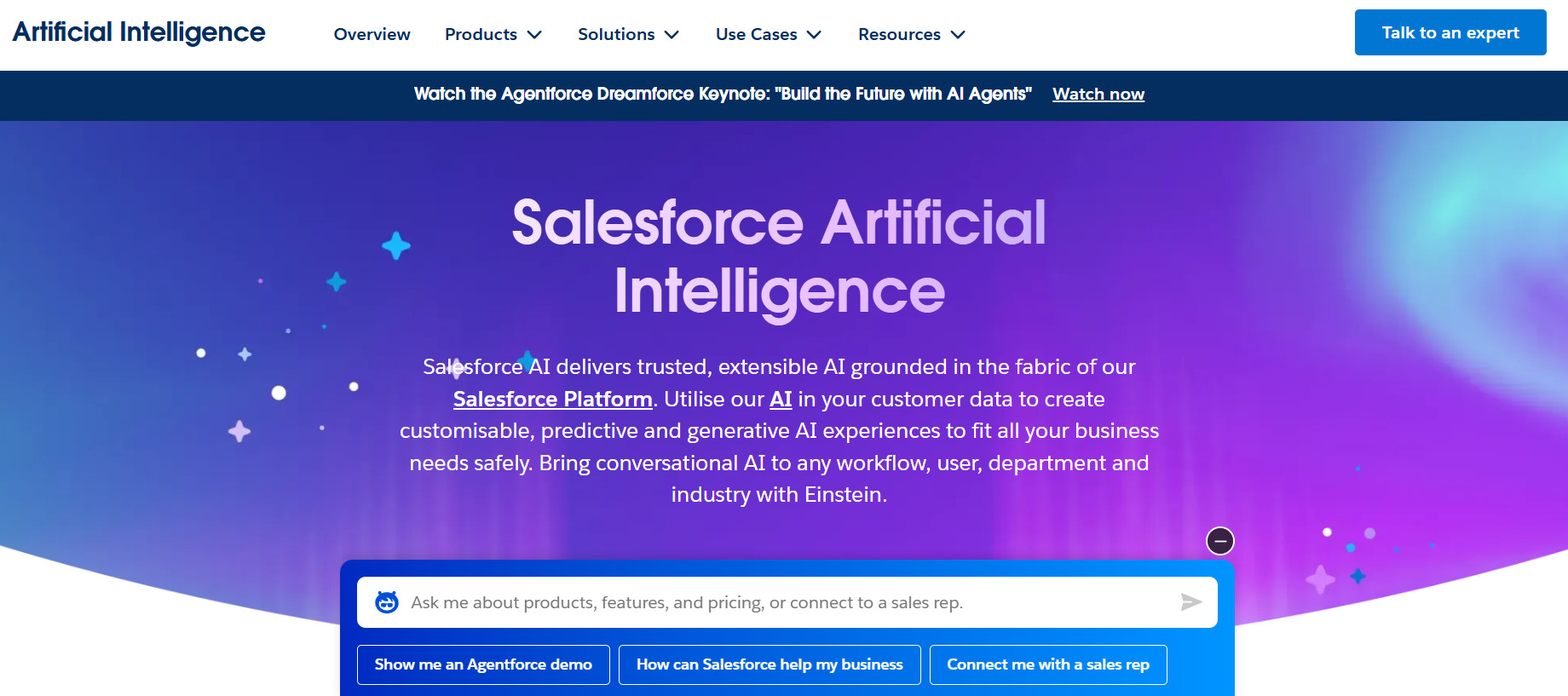
Salesforce Agentforce Marketing transforms traditional channels into two-way conversations using autonomous AI agents. Unlike standard automation where marketers manually configure every workflow, Agentforce lets you define strategy while agents handle execution across campaign creation, personalization, and optimization.
What it automates:
- Campaign brief creation with audience segments and content drafts across email, SMS, and WhatsApp
- Real-time personalization and product recommendations across every channel
- Paid media optimization that pauses underperforming ads and reallocates spend automatically
- Two-way customer conversations with AI agents answering questions and completing tasks 24/7
- Loyalty promotion creation and deployment with simple prompts
Enterprise agentic marketing platforms
Zeta Global’s platform uses agentic AI through Athena, a superintelligent marketing agent that replaces static dashboards with conversational interfaces. Marketers speak their intent, and AI translates that into outcomes, from strategy to execution.
Core capabilities:
- Unified identity layer connecting marketing and adtech data for cross-channel decisioning
- AI-native orchestration across CRM, media, analytics, and activation
- True Value of Marketing (TVM) attribution quantifying full economic impact
- Generative UI that assembles purpose-built interfaces on demand
How to choose the right agentic marketing solution for your team
Not all agentic AI platforms deliver equal value. The choice of marketing agents depend on your team size, technical capabilities, and specific marketing goals.
Evaluating your team’s needs and use cases
Start with your biggest pain point:
- Does your team struggle with lead qualification?
- Personalization at scale?
- Campaign optimization?
Choose agentic systems that solve your most urgent problem first.
Consider team capacity too. Some platforms require extensive setup and ongoing maintenance, while others offer agentic solutions that work autonomously from day one.
Map your current workflows before evaluating platforms. Document where manual work creates bottlenecks: whether that’s responding to inbound leads after hours, segmenting audiences for campaigns, or qualifying prospects through repetitive conversations.
The clearer your pain points, the easier it becomes to identify which agentic capabilities deliver immediate ROI.
Key features to look for in an agentic marketing platform
Prioritize autonomous decision-making capabilities. The best agents don’t just suggest actions but execute them. Look for real-time data processing, multi-channel orchestration, and learning systems that improve performance continuously.
Transparency matters. Your action agent should explain its reasoning so you maintain strategic control while it handles tactical execution. You need visibility into why the system chose a specific marketing action, which signals triggered the decision, and how it’s learning from outcomes.
Verify the platform’s learning mechanisms. Can agents improve qualification accuracy over time? Do they adapt messaging based on what converts? Systems that learn from every interaction become more valuable as they process more data, while static rule-based tools plateau quickly.
Integration requirements and data infrastructure
Agentic AI only works when it connects to your existing stack. Verify that platforms integrate seamlessly with your CRM, marketing automation tools, analytics systems, and communication channels. Native integrations beat custom API work every time.
Data quality determines success. Clean, unified customer data powers intelligent agentic decisions. If your data infrastructure needs work, address that before implementing marketing automation at scale. Start small with one or two data sources, prove the value, then expand your agentic implementation across additional channels and touchpoints.
Real-world agentic marketing examples
Let’s see how agentic AI works in practice. These real-world use cases show how agents transform marketing operations from reactive to proactive.
Use case: Personalized customer journeys
Traditional marketing tools send everyone through the same predefined paths. AI funnel automation build unique journeys for each person.
When a visitor downloads a pricing guide, the system analyzes their behavior, company size, and industry. It determines they’re a high-intent enterprise prospect and immediately triggers a personalized sequence: next-day email with relevant case studies, retargeting ads featuring enterprise features, and a direct outreach from an account executive within 48 hours. All orchestrated automatically based on real-time signals.
Use case: Predictive lead scoring and sales handoff
Agentic AI doesn’t just score leads based on static criteria. It predicts buying intent by analyzing hundreds of behavioral signals.
The system tracks website visits, content engagement, email opens, and third-party intent data. When a prospect hits the optimal conversion threshold, agents automatically book a meeting, route to the right sales rep based on territory and availability, and brief the rep with complete context. No manual qualification needed.
Here’s what this journey look like with Dashly:
Use case: Brand messaging optimization
Agentic AI continuously tests and optimizes marketing messages across channels. The system analyzes which headlines, CTAs, and value propositions resonate with different segments.
When one message underperforms, agents automatically pause it and deploy better-performing variations. This happens across email, ads, landing pages, and social media without manual A/B test setup. The result? Messaging that evolves based on actual performance, not assumptions.
Use case: Autonomous customer engagement
B2B SaaS companies use agentic chat tools to engage thousands of website visitors simultaneously. The AI SDR agents answer product questions, qualify leads through natural conversation, and handle objections in real time.
Unlike scripted chatbots, these agents adapt responses based on visitor behavior and CRM data. They remember previous conversations, never ask redundant questions, and escalate complex queries to humans seamlessly.
What is agentic performance marketing?
Agentic performance marketing takes paid campaign management to a new level. Instead of manually adjusting bids, budgets, and targeting, agentic AI handles these decisions autonomously based on real-time performance data.
Think of traditional performance marketing: you launch campaigns, monitor results, make adjustments, repeat. It works, but it’s reactive. By the time you spot underperforming ads or budget allocation issues, you’ve already burned cash.
Agentic AI changes that equation.
Autonomous campaign optimization across channels
AI agents monitor campaign performance continuously across Google Ads, Meta, LinkedIn, and other channels. When an ad underperforms, the system pauses it automatically and reallocates budget to better-performing creative. When a customer segment shows strong intent signals, agents increase bids and expand targeting immediately.
Platforms like Meta Advantage+ and Google’s Performance Max use agentic AI to autonomously optimize bids, budgets, and creative across ad networks. Tools like AdScale take this further by coordinating optimization across both platforms simultaneously, using first-party store data to make cross-channel decisions.
No waiting for weekly reviews or manual spreadsheet analysis. The system acts in real time.
ROI-driven decisioning powered by customer data
Agentic systems don’t optimize for vanity metrics. They focus on what actually drives revenue. The AI analyzes which campaigns generate qualified leads, which messaging resonates with your ICP, and which channels deliver the best customer acquisition cost. Then it makes budget decisions based on that data, not assumptions.
Continuous testing and learning at scale
Traditional A/B testing requires manual setup, statistical significance calculations, and winner declaration. Agentic AI for marketing runs continuous multi-variant tests automatically, learning from every impression and click. The system identifies winning patterns faster and deploys them across campaigns without human intervention.
The result? Performance marketing that improves itself while you focus on strategy.
Implementation challenges and solutions
Implementing agentic AI for marketing isn’t plug-and-play. Most teams hit the same three roadblocks.
Data quality and integration
Your agentic systems are only as smart as the data they access. Incomplete CRM records, disconnected tools, and inconsistent customer identifiers create blind spots that limit AI decision-making.
The fix?
- Audit your data infrastructure first.
- Map how customer information flows between your CRM, marketing automation platform, analytics tools, and support systems.
- Identify gaps where data doesn’t sync properly.
- Clean up duplicate records and standardize field formats before launching agentic campaigns.
Start small with one or two data sources, validate accuracy, then expand.
Read also:

Technology stack considerations
Agentic AI requires native integrations with your existing stack. If your CRM, email platform, or analytics tools don’t connect seamlessly, agents can’t act autonomously.
Before committing to a platform, verify integration depth. Can agents read and write data? Do they access real-time information or batched updates? The difference determines whether your agentic system responds in seconds or hours.
Change management and team training
Your marketing team needs to shift from tactical execution to strategic oversight. That’s a bigger mindset change than most organizations expect.
Invest in training that builds understanding of how agentic systems make decisions. Your team should know when to intervene, how to refine agent parameters, and which metrics indicate healthy autonomous performance. Without this foundation, resistance kills adoption before results appear.
The future of agentic AI marketing
The shift to agentic AI for marketing is just beginning. Three trends will reshape how marketers work over the next few years.
Emerging trends in autonomous marketing
Agentic systems will move beyond campaign execution into strategic planning. Early versions optimize bids and qualify leads. Next-generation agents will:
- analyze market trends,
- recommend positioning changes,
- predict which product launches will resonate before you invest budget.
Expect marketing agents that collaborate with each other. Your content agent will brief your distribution agent on messaging themes. Your analytics agent will automatically adjust targeting parameters based on performance signals. Human oversight remains critical, but day-to-day tactical decisions happen autonomously.
Integration with sales and customer success
The lines between marketing, sales, and customer success are blurring. Agentic platforms will coordinate orchestration across the entire revenue cycle.
When a prospect engages with marketing content, agents will automatically brief sales on intent signals, conversation history, and optimal talking points. After the deal closes, customer success agents receive complete context to personalize onboarding.
This eliminates information silos that slow deals and frustrate customers. Every team works from the same intelligence.
The evolution toward fully autonomous marketing clouds
Major platforms are racing toward fully autonomous marketing clouds where agents handle everything from strategy to execution to reporting. Marketers will shift from building campaigns to setting business objectives and teaching agents your brand voice.
The transformation is inevitable, but the timeline depends on how quickly organizations embrace autonomous systems and train teams for strategic oversight rather than tactical execution.

Getting started with agentic marketing at your company
Ready to implement agentic AI for marketing at your company? Start small, measure results, then scale.
Building your implementation roadmap
Successful agentic marketing adoption follows three clear phases.
Phase 1 — Assessment and planning
Audit your current marketing stack and identify bottlenecks. Where do leads drop off? Which customer touchpoints lack personalization? Map your ideal customer journey and pinpoint where agentic systems deliver immediate value.
Step-by-step implementation checklist
- Define one specific goal (lead qualification, engagement, or nurturing)
- Audit data quality and CRM integration readiness
- Select your agentic marketing platform
- Set success metrics and baseline performance
- Train your team on strategic oversight
Phase 2 — Pilot and testing
Launch with one high-impact use case. Test agentic agents on a subset of traffic or a single marketing channel. Monitor performance daily, refine agent parameters, and gather team feedback. Aim for 30-60 days before expanding.
Phase 3 — Scaling and optimization
Once your pilot proves ROI, expand to additional channels and use cases. Add more agentic capabilities across the funnel. Integrate with sales and support systems for full-cycle marketing orchestration.
Measuring success and ROI
Track metrics that matter: conversion rate improvements, response time reduction, lead qualification accuracy, and revenue per customer. Compare pre- and post-implementation performance. Most teams see measurable ROI within 60-90 days.
Scaling your agentic marketing practice
As agentic systems prove value, expand your brand’s AI capabilities. Add more agents, automate complex workflows, and shift your team from tactical execution to strategic direction. The goal? Marketing that runs itself while you focus on what humans do best.
Conclusion: The future of marketing is agentic
The future of marketing is agentic. Agentic AI isn’t aimed to replace marketers. Just free them from routine.
While agentic systems handle repetitive customer engagement and sales qualification, you focus on marketing strategy, creativity, and relationships that drive real business impact.
Marketing becomes more human, not less.
Ready to transform your marketing operations? Start with one agentic AI agent, prove ROI, then scale.
FAQ on agentic marketing
An example of agentic AI in marketing is an autonomous system that detects a drop in customer engagement, automatically creates and personalizes a re-engagement campaign with tailored content and messaging, determines the optimal send time for each customer, and launches the campaign across multiple channels.
Agentic AI systems can autonomously sense their environment, make decisions, and take action to achieve specific marketing goals without human prompts. Non-agentic systems (traditional automation) follow predefined rules and require manual setup and intervention. Agentic systems are proactive and adaptive; non-agentic systems are reactive and static.
The four types of agents in agentic AI marketing are:
1. Planning agents — Develop marketing strategies and customer journey maps
2. Action agents — Execute campaigns and customer interactions
3. Content agents — Generate and optimize marketing content
4. Analytics agents — Monitor performance and provide decisioning insights
Place agentic systems where they deliver immediate ROI: lead qualification, 24/7 customer engagement, or meeting booking. Start with one high-impact use case, prove value within 30-60 days, then scale across additional channels and touchpoints. For all the mentioned cases you try Dashly.